
SPILLERS research presented at prestigious scientific conference

In July, nutritionists, researchers and vets from around the world gathered in Lisbon for the European Workshop on Equine Nutrition, where details of some of the latest scientific research was shared, including eleven studies carried out in partnership with SPILLERS. While some of these studies provide practical advice for the here and now, others are helping to improve our scientific knowledge and shape future research.
This blog is all about the laminitis research presented by our colleagues. To learn more about the microbiome and how we are improving our ability to simulate equine digestion in a laboratory (and why it’s important that we do!), check out part 2.
Summary
Most cases of laminitis are related to high levels of insulin in the blood. In many of these situations, laminitis is triggered by the horse/ pony consuming enough non-structural carbohydrate (NSC) or ‘starch and sugar’ to raise insulin levels. The studies discussed in this blog all relate to the link between NSC in grass and laminitis. Key findings include:
- The level of NSC in spring grass remained high throughout the day and overnight, as did blood insulin levels in insulin dysregulated (ID) horses.
- In late summer, NSC levels in grass were found to be highest at 7pm and lowest early in the morning – insulin levels followed the same pattern in ID horses.
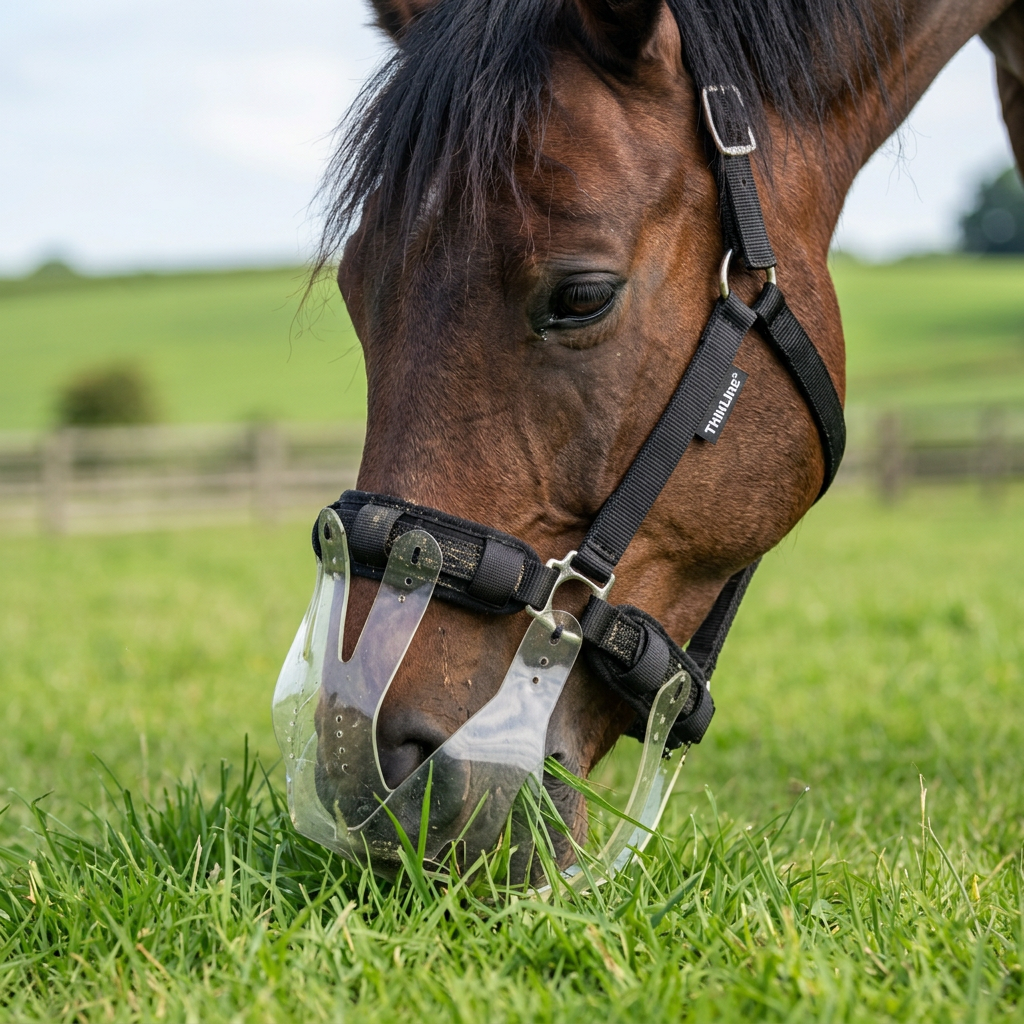
- Grazing muzzles may help to reduce insulin response, but individual monitoring is recommended.
How does the level of sugar & starch in grass affect insulin levels?*
Morgan Askins’ presentation1 included results from a study looking at how NSC levels in grass change (throughout the day and day by day), and the effect this has on insulin levels. Key highlights include:
In late summer, NSC (aka starch and sugar) levels in grass were highest at 7pm and lowest early in the morning. Blood insulin levels followed the same pattern in ID horses e.g., when NSC levels went up, insulin levels went up too. Insulin levels remained low in non-ID horses.
NSC levels in spring grass remained high throughout the day and overnight. Blood insulin levels remained high in all ID horses and in 4 out of 6 non-ID horses.
Moving from grass to a dry lot (grass free turnout) and feeding low NSC hay significantly reduced insulin levels after 24-hours in 5 out of 6 ID horses.
Quick links
Do grazing muzzles reduce insulin response?*
Grazing muzzles can be an effective way of reducing grass intake and by eating less, your horse will of course consume less NSC. But is turning out in a grazing muzzle enough to reduce insulin response? Research presented by Morgan Askin’s set out to help answer this very question!
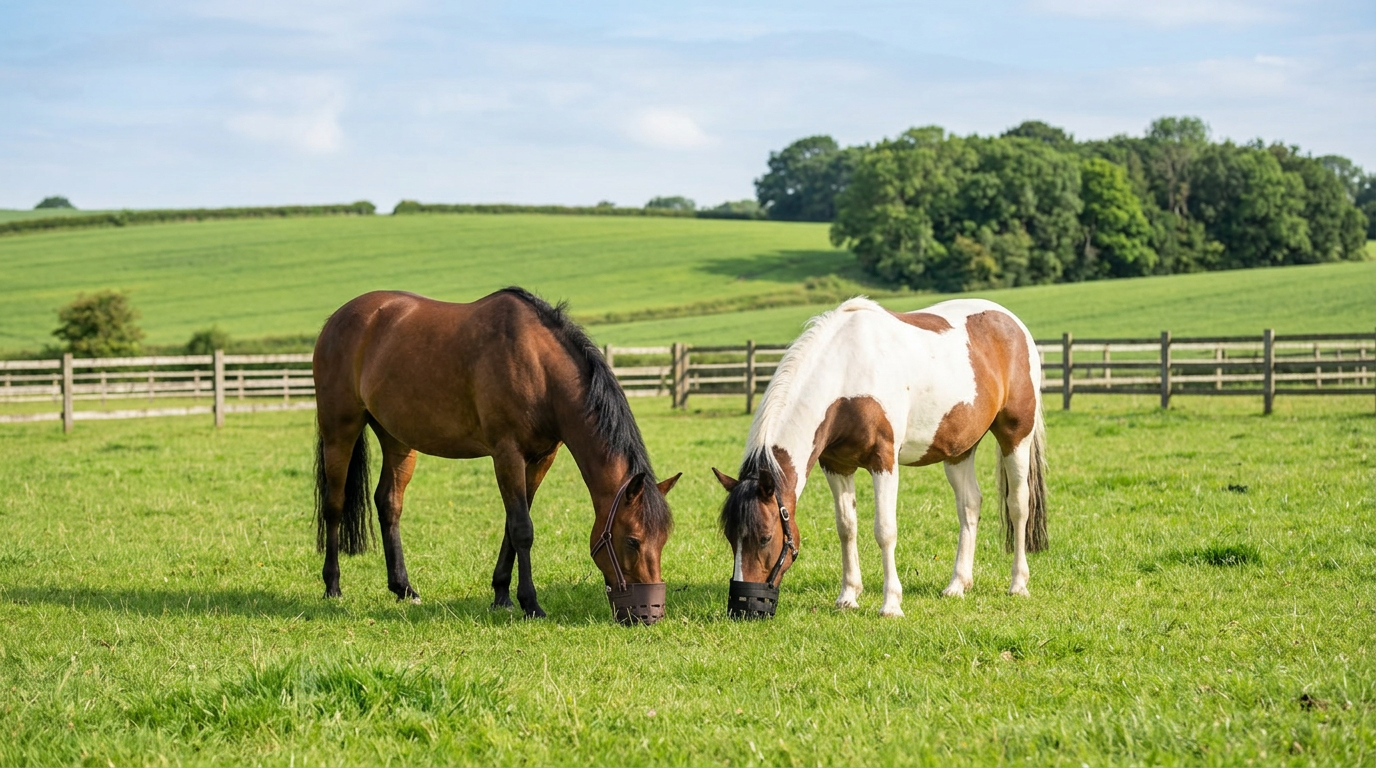
Overall, insulin levels were significantly lower in ID ponies when grazing in a muzzle vs grazing without (10 hours turnout on low NSC summer pasture) but results varied between individuals.
*Research conducted by University of Kentucky in partnership with SPILLERS.
Take-home tips for managing horses and ponies at risk of laminitis
Don’t assume early morning turnout is safe for those at risk of laminitis – restrict or remove from grazing, especially during high-risk times when the level of NSC is likely to be high!
Even horses that are metabolically healthy e.g., those that are not ID (and therefore do not have EMS), may produce high amounts of insulin if turned out on grass high in NSC, putting them at increased risk of laminitis.
ID horses and ponies may produce high amounts of insulin as result of eating low NSC grass (or hay). You may need to restrict grass intake, even if the level of NSC is likely to be low, especially if you have lots of grass!
ID horses and ponies may produce less insulin if grazing in a muzzle, but results vary between individuals. We also don’t know how effective they may be when NSC levels in the grass are high.
Complete removal from grazing may be needed for those at high risk, especially during high-risk times e.g., in spring and autumn when levels of NSC are likely to be high.
Insulin response to eating grass and hay varies between individuals so what works for one ID horse may not work for another. Discuss testing your horse’s response to the forage they are eating with your vet, especially if they are severely ID (this advice applies to feed too!).
The link between weather & laminitis
Verena Schmidt presented the results of a pilot study2 – a sort of ‘test run’ which enables researchers to evaluate research methods and questions on a small scale – aimed at improving our understanding of how recent and local changes in weather conditions such as shade/ sunlight, rainfall and temperature affect water soluble carbohydrate or ‘sugar’ levels in grass and laminitis risk. There’s much left to learn but we hope this small study will help to refine future research into how short-range weather forecasting might help to predict laminitis cases – watch this space!
Research conducted by Scotland's Rural College in partnership with The Rowett Institute and SPILLERS.
Where can I find evidence-based feed and management advice for my horse?
Together with our collaborators, we have published over 100 scientific papers related to laminitis, obesity and EMS resulting from more than twenty years of research. Wherever possible, we translate the findings into practical advice to help owners care for their horses in the best way possible. For evidence-based advice that’s tailored to your horse’s individual needs, reach out to our team of friendly nutrition advisors – simply click here to find out more.
Author
Written by: Sarah Nelson
Product Manager, SPILLERS
Author summary
Sarah joined the SPILLERS team in 2009 and is responsible for the technical management of all SPILLERS products, including feed formulation. She also works closely with our Science & Nutrition Director, Dr Edd Knowles and former Science Director (current Scientific Advisor), Dr Pat Harris, to translate the results of our research into practical, evidence-based advice.
References
1M.J. Askins, P.A. Harris, M.E. McClendon, A.A. Adams, Nonstructural carbohydrates and management strategies influence on horses with insulin dysregulation, Animal - Science proceedings, (2026), 17: 169, https://doi.org/10.1016/j.anscip.2026.06.033.
2V.A.M. Schmidt, C.A. Watson, R.L. Walker, C.McG. Argo, W.R. Russell, M. Neacsu, P.A. Harris, P.K. Morrison, Monitoring laminitis incidence and WSC levels – A citizen science-based pilot study, Animal - Science proceedings, (2026), 2: 168, https://doi.org/10.1016/j.anscip.2026.06.031.