
Balanced Diets

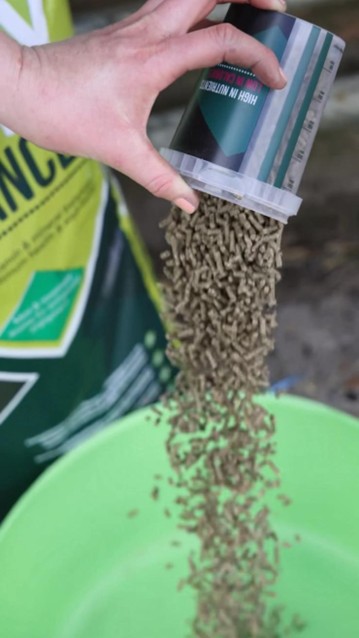
Balanced diets help your horse thrive long term!
If you’ve read some of the other sections of our Slimmers hub, you’ll know that good doers are often the group of horses most likely at risk of not having a balanced diet. However, it is crucial to maintain a balance of essential nutrients to support a horse's long-term wellbeing, and it also helps them perform better!
Calorie restricted diets used to support weight loss often include reduced time at pasture, hay soaking, strip grazing, feeding straw, use of muzzles, grass free turnout and small if any bucket feeds. Although very useful for reducing calorie intake, these practices also contribute to a reduction in nutrients, and these nutrients are essential for everyday wellbeing and a healthier horse. So how do we go about balancing the diet of a good doer when we’re desperately trying to cut calorie
Feed a Balancer
Balancers are nutrient dense feeds (normally pellets), designed to provide a concentrated supply of vitamins, minerals and amino acids. This means they have a small feeding rate – typically just 500g per day for a 500kg horse on a forage only diet – and so they contribute minimal calories, starch and sugar to the diet, making them ideal for good doers. Depending on the balancer you choose, they may also include added functional ingredients such as pro and prebiotics for digestive support or glucosamine and MSM to support joint health.
Cut calories not nutrients!
Lysine, copper, zinc, selenium and vitamin E are among the essential nutrients often lacking in the diets of good doers, those on restricted or forage only diets. These essential nutrients are vital for general health and good bodily function and should be supplied by a bucket feed. The formation of good skin and hoof quality, support of a strong immune system and optimum muscle development, function and repair. Don’t cut calories at the expense of nutrients.
Protein: Why Quality Matters!
Protein quality is just as important as quantity. Proteins are composed of amino acids, with lysine being particularly important. Lysine is essential as it cannot be synthesized by the body and must be supplied by the diet. It plays a significant role in muscle development, function, and repair. A deficiency in lysine can limit protein synthesis, affecting muscle health and overall performance. If protein and in particular lysine requirements are not met, the body will need to break down lean tissue (muscle) to meet requirements. Balancers high in lysine may be of particular benefit for horses and ponies on calorie restricted diets. In addition to compromising your horse’s topline, burning muscle instead of fat slows metabolism.
The truth about ‘lite’ balancers
In the supermarket, ‘lite’ typically means lower in calories so you could be forgiven for assuming that the same applies to balancers. In truth, ‘lite’ balancers are not significantly lower in calories than other balancers due to the small amounts fed per day (stud balancers are an exception to this rule). It really makes no difference whether you choose a lite balancer or a senior balancer for your horse as when you look at the total calories in the diet a balancer only supplies around 6% of the calories needed for light work.
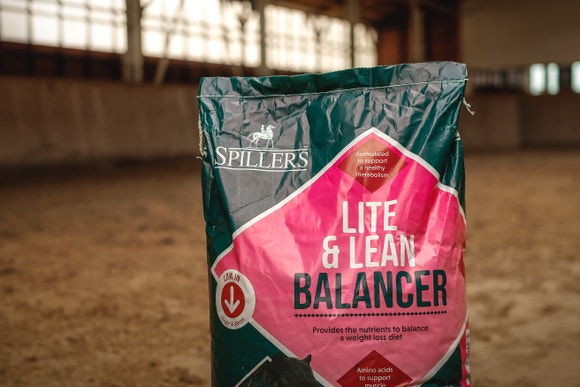
So why choose a ‘lite’ balancer then? Well, some such as SPILLERS Lite & Lean Balancer, are specifically formulated to balance the diets of horses on calorie restricted diets with minimal forage or grass. It also has added functional ingredients to help support a healthy metabolism.
You may also want to avoid balancers with probiotic live yeast. Live yeast may help to improve fibre digestion in the hindgut and while this might sound like a good thing, improving digestive efficiency yields more calories! In fact, recent research by SPILLERS found that in weight loss resistant ponies, microflora involved in fibre digestion may adapt to become more prevalent/ more efficient!
Balancers and laminitics
Some people have been confused into thinking that a combined starch and sugar content over 10% in most balancers is too high when compared to some other feeds specifically designed for laminitics.
However, as with calories, it’s important to consider how much of the feed your horse is eating and not just look at the amount of sugar/ starch the feed contains on a percentage or per kilo basis.
Because of the low feeding rate, the amount of starch and sugar consumed from a balancer is extremely low, making them suitable for laminitics too. For example,
A balancer with a combined starch and sugar content of 15% provides just 75g of starch and sugar when fed at 500g per day - as needed for a 500kg horse.
A feed with a combined starch and sugar content of just 5% provides 150g of starch and sugar when fed at 3kg per day.
Supporting horses prone to laminitis
Weight control, forage management and balanced nutrition are all essential for horses and ponies at risk of laminitis. Explore practical feeding and management strategies designed to help reduce risk while supporting long-term health.
Balancers don't cause weight gain!
The term ‘condition’ can mean different things to different people. To some for example, ‘condition’ may encompass topline as well as skin, coat and hoof health but when it comes to diet, ‘condition’ means fat coverage and ‘conditioning’ feeds are designed to promote weight gain or maintenance in those with high energy (calorie) requirements. While some balancers may contain the same level of calories as a conditioning feed on a kilo for kilo basis, practically they contribute minimal calories to the diet as you feed them in far smaller amounts.
If you feed a 500kg horse the recommended 500g of a balancer which is 11MJ DE/kg your horse will eat just 5.5 MJ DE per day and have a nutritionally balanced diet.
If you feed a 500kg horse the recommended 3kgs per day of a low-calorie high fibre cube which is 8MJ DE/kg your horse will eat 24 MJ DE per day to have a balanced diet.
Balancers vs vitamin and mineral supplements
Confused whether to feed a balancer or a vitamin and mineral supplement? You’re not alone! Here’s what you need to know to decide:
Balancers are usually pellets, while vitamin and mineral supplements are often a powder. This means balancers can be fed on their own (although they are often fed alongside a chaff) whereas vitamin and mineral supplements need to be mixed into a small amount of feed.
Balancers provide amino acids such as lysine in significant amount, while vitamin and mineral supplements contain very few if any amino acids.
Balancers are usually designed to be fed at 500g per day for 500kg horse vs approximately 40-150g for a powdered vitamin and mineral supplement. Although pelleted balancers provide more calories, the difference this makes to the overall diet is negligible in most cases, especially for those with access to grazing.
Balancers, especially those with added functional ingredients such as joint or digestive support, could be more cost effective than choosing vitamin and mineral supplements and then needing to add other supplements as well. This strategy may not of course be suited to each horse’s individual needs.
A balanced diet will help to bring out the best in your horse, from a gleaming shine to stronger hooves and supporting their own energy production for performance. Balancers provide an ideal solution for supplying nutrients without supplying unwanted calories for good doers who don’t need larger meals.