Body Conditioning Scoring

Body condition scoring is a practical method of assessing body fat by eye and, most importantly, by touch. Six areas where fat are most prominently laid down are individually scored using a numerical grading system - most commonly a 1-9 or 0-5 scale. SPILLERS recommend using the more widely validated (scientifically tested) 1-9 scale, but whichever system you use, the important thing is to be consistent. It’s also important to remember that body condition scoring is an assessment of external body fat (the fat you can see / feel as opposed to internal fat around the organs) and not muscle development or ‘topline’.

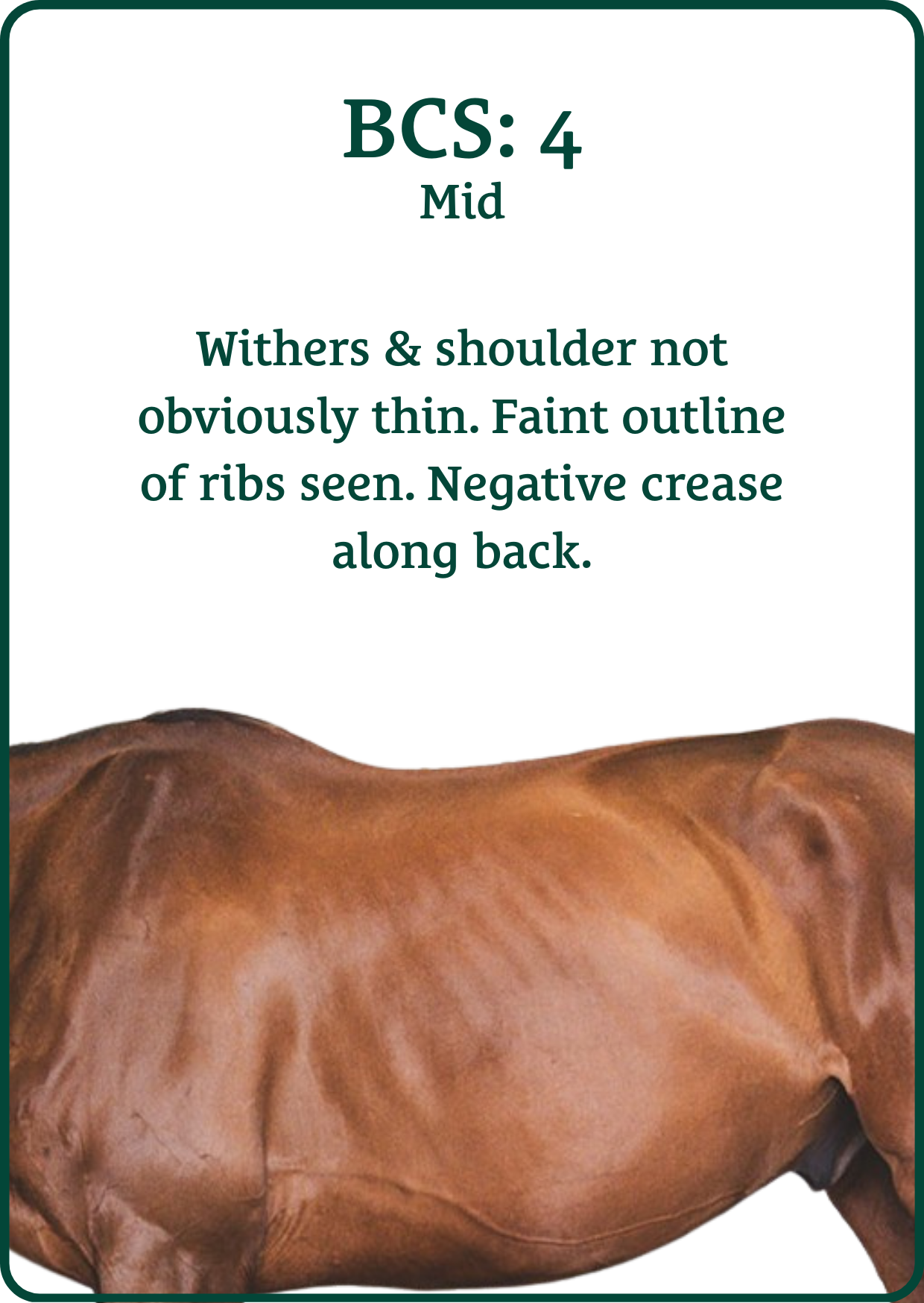
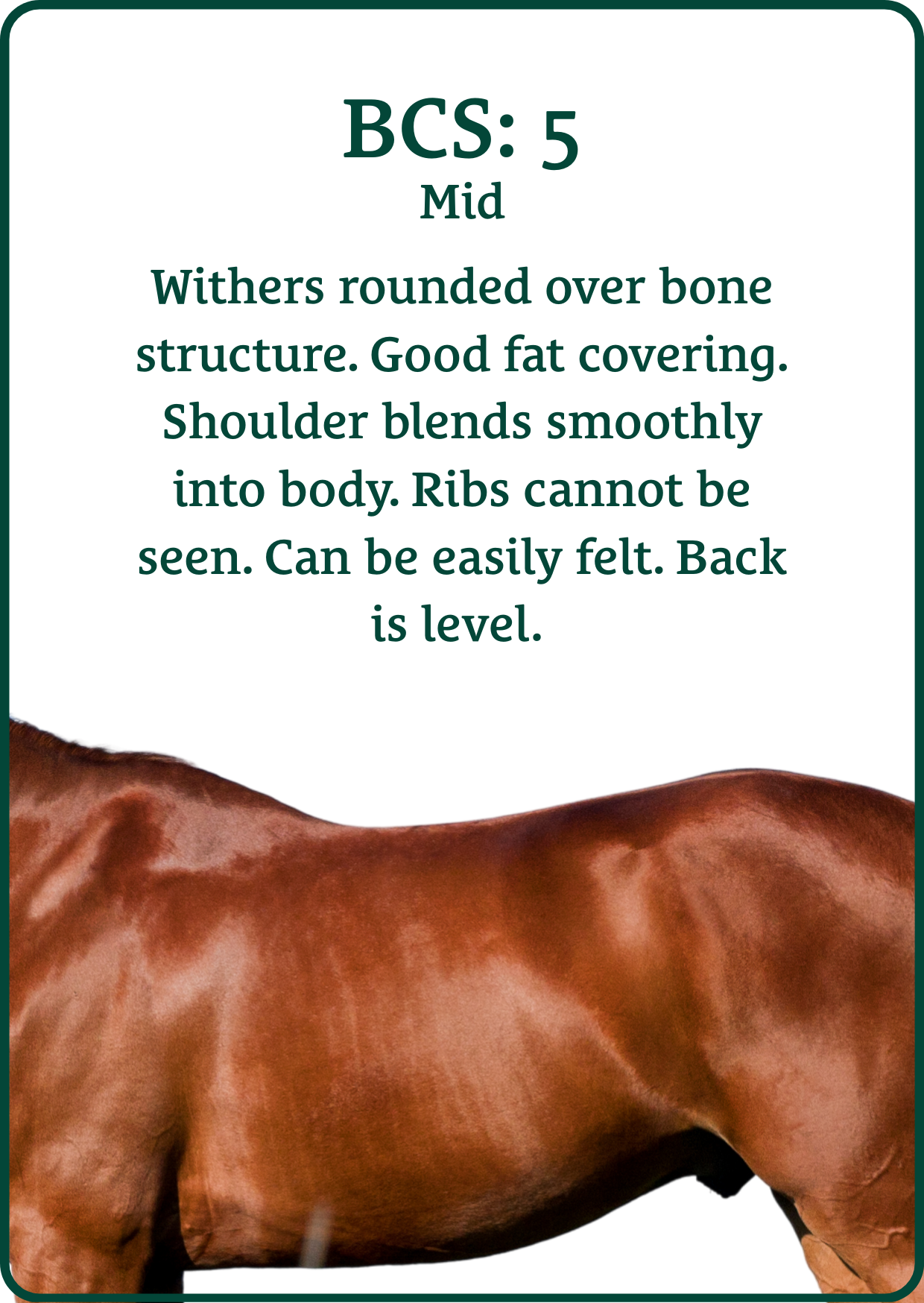
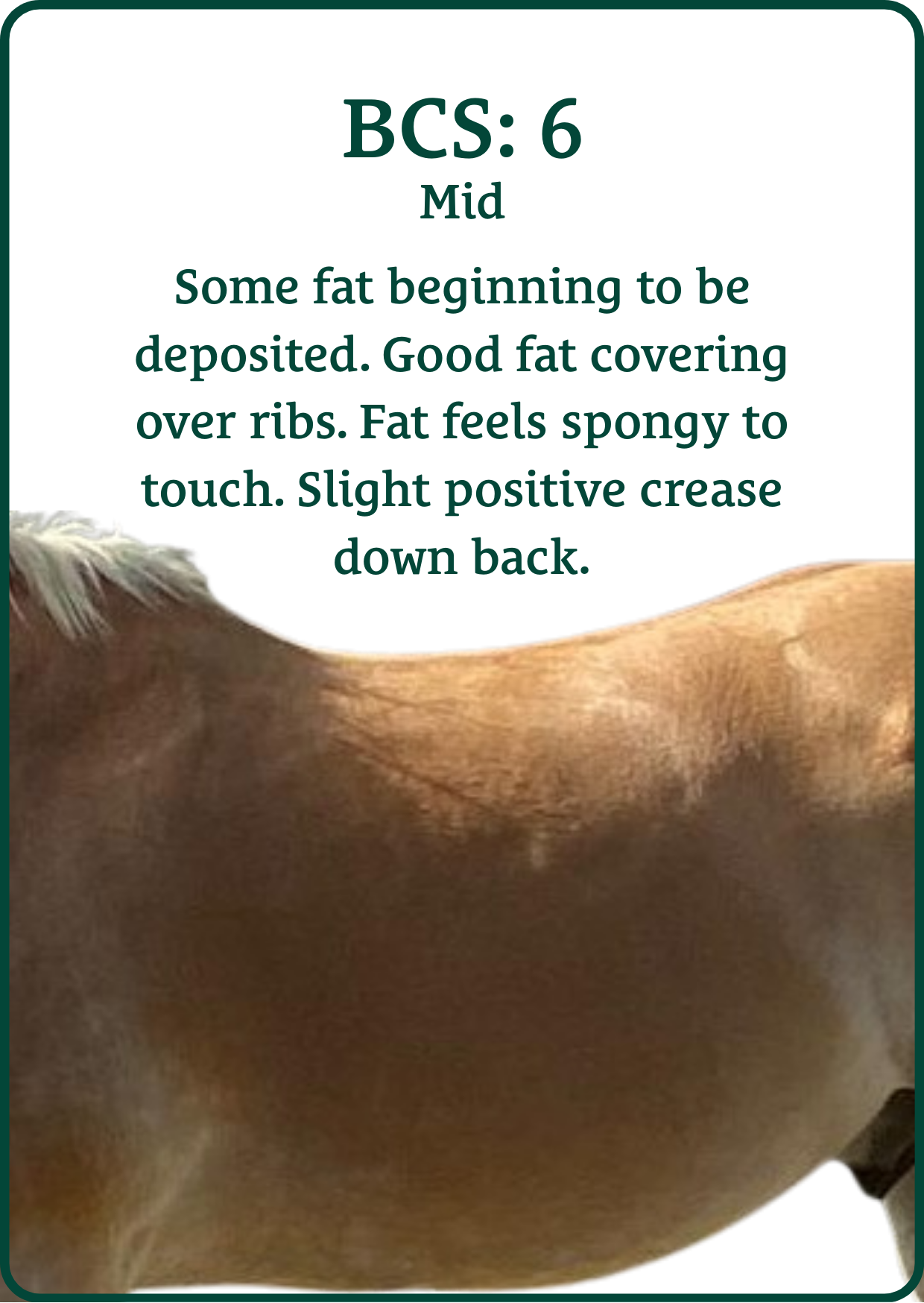
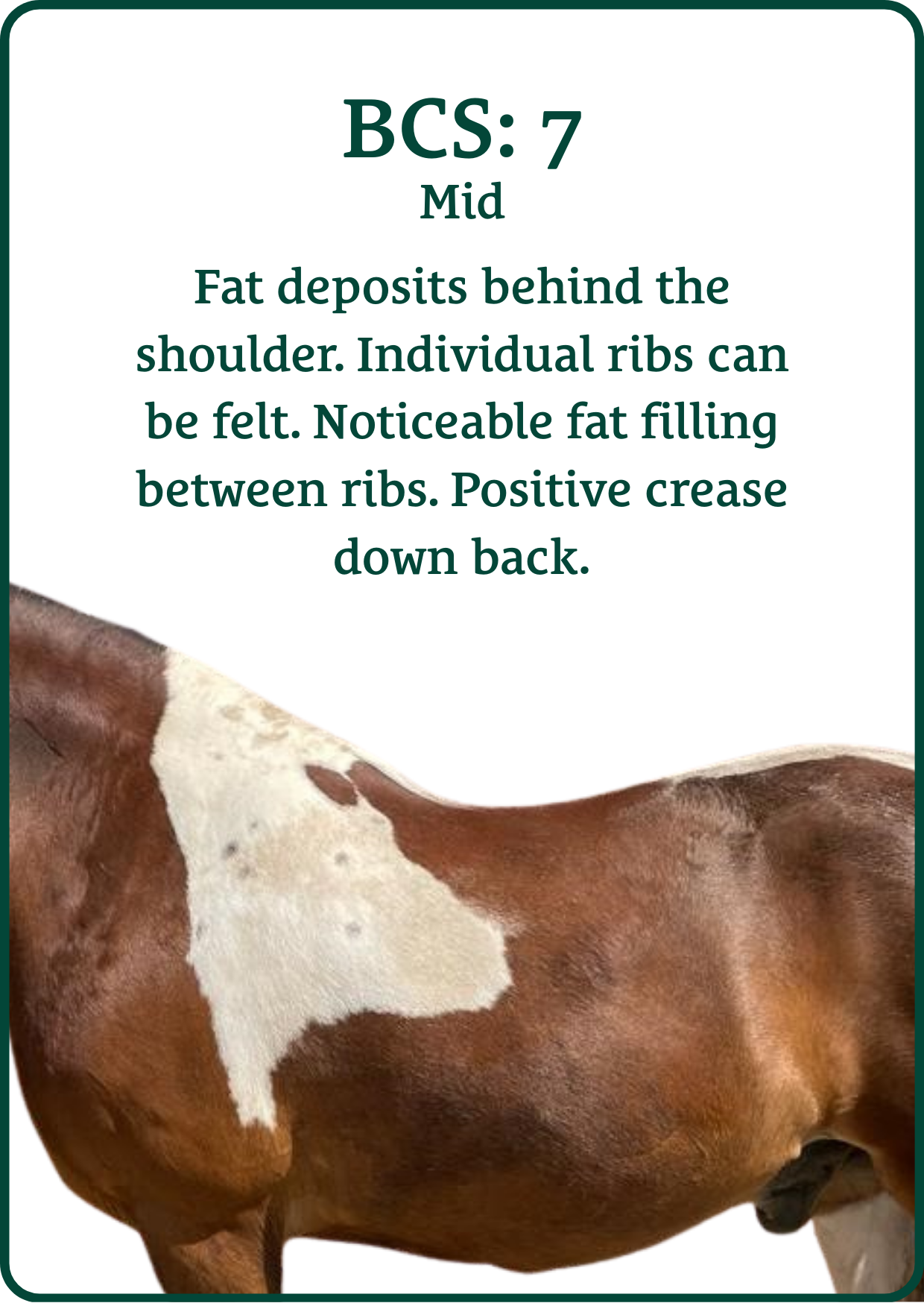
A body condition score (BCS) of 5 on the 1-9 scale is generally considered ideal while a score of 7 or above is considered obese and below 4 signifies your horse is underweight.
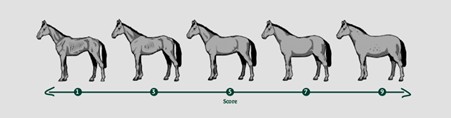
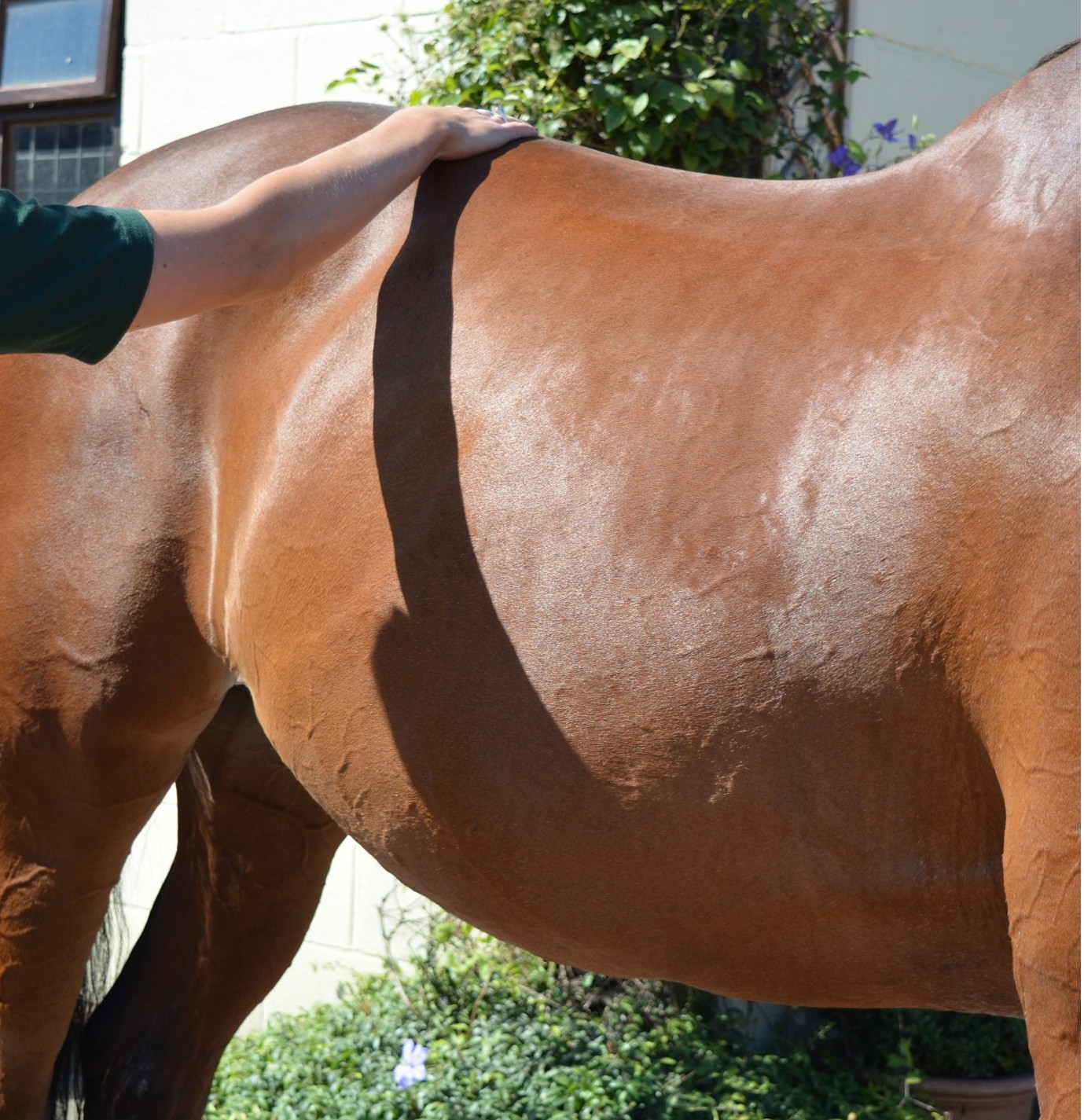
To score a ‘perfect’ 5 the horse or pony should have no hollow areas or raised fat pads - the body should flow smoothly from one section to another with no protruding bones or fatty lumps. Ribs should be easily felt but not seen. Ribs should still be felt even at a body condition score of 7 or 8 although this becomes increasingly difficult.
Seasonal fluctuations are natural, particularly for natives, and what is considered healthy or acceptable may vary between individuals and the time of year. Provided they’re not laminitic and slim down over the winter, a BCS of 6/9 at the end of summer is generally considered acceptable for good doers and may be ideal for poor doers going into winter or mares pre-foaling. At the end of winter, it may be ideal to have good doers at 4.5/9 to buffer weight gain when spring grass comes through.
BCS not only allows you to identify an overweight horse but also an underweight horse. While appearances may give away more obvious signs of a lack of weight, accurate scoring allows you to make changes to the diet before more dramatic weight loss occurs. Particularly helpful with managing seniors or poor doers during the autumn and winter months.
How to body condition score

Make sure your horse is stood as squarely as possible on a firm level surface.

Score each of the six areas (neck, withers, shoulder, loins, ribs and tailhead) individually – half scores are permitted.

Calculate the average (add the scores together and divide by 6) to determine the final score.
Tips for improving consistency:
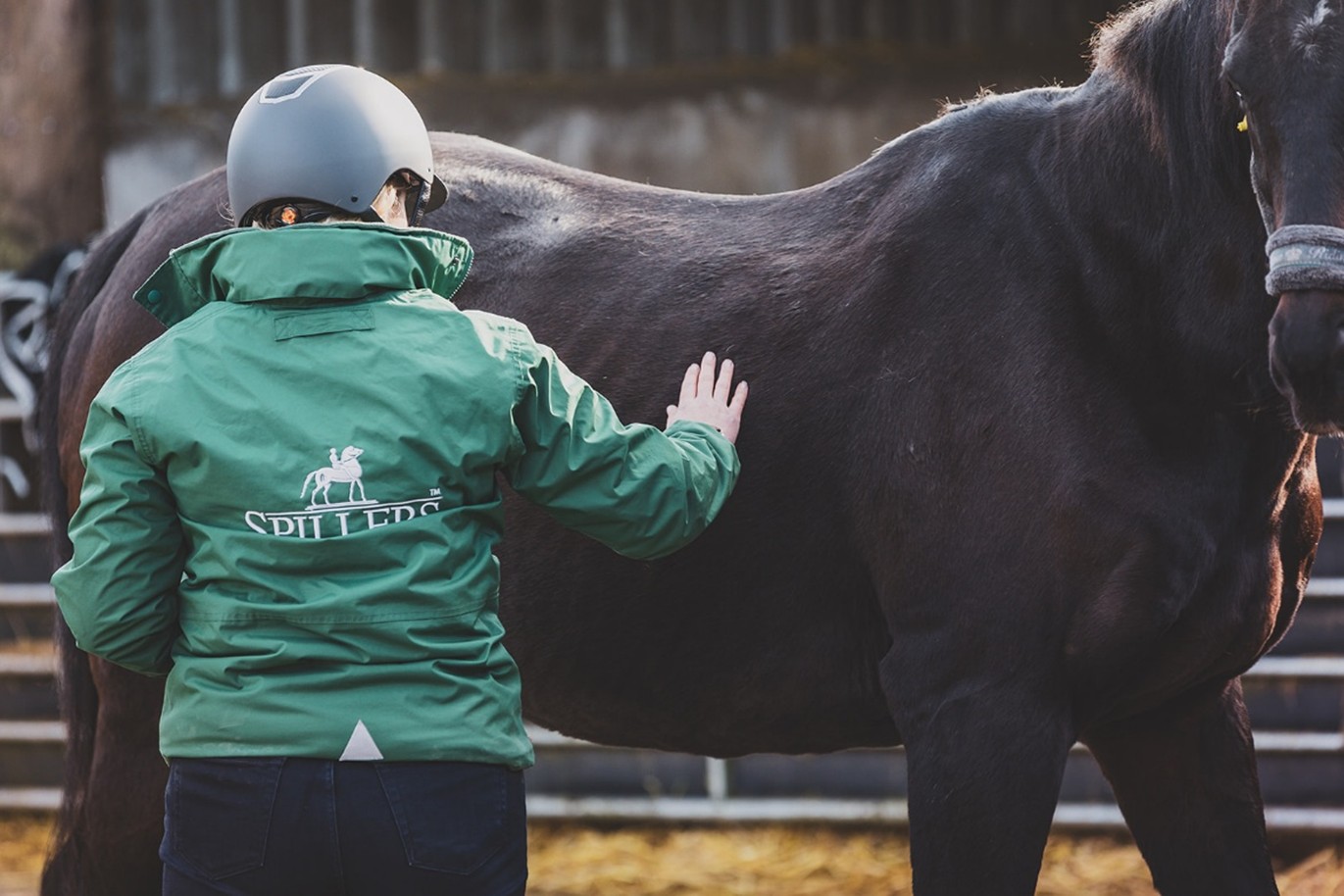
- Body condition scoring is best carried out by the same person but getting a 2nd opinion from time to time may be helpful – staying objective when scoring your own horse can sometimes be difficult.
- Have the score descriptors on hand (below) especially if you don’t have a lot of experience.
- Don’t wear gloves as this can affect what you can feel.
- Don’t be deceived by looks. A round barrel or grass belly doesn’t necessarily mean they’re fat! By contrast, a fit looking horse may have excess fat covering over their ribs.
- Make sure when you’re discussing BCS with a vet or other professional that you’re using the same scale
Muscle vs. fat
It’s important to remember that body conditioning scoring is an assessment of fat, not muscle which means it’s possible for horses to have a health BCS, despite being under-muscled. Fat can’t be converted to muscle so avoid over-feeding in an attempt to improve topline.
Differentiating between muscle and fat can sometimes be tricky, even for experienced owners. In general muscle feels firm and fat feels ‘spongey’ but a loss of muscle tone or ‘softer’ muscle in unfit or older horses may sometimes be confused with fat. Low muscle mass in those out of work or older horses may be mistaken for a lack of fat covering. In turn, Excess fat may be mistaken for topline – the rounded ‘topline’ seen in natives, cobs and warmbloods is often fat rather than muscle. Excess fat can make it difficult or impossible to assess muscle in some areas.
Regional fat deposits
Like people, horses do not always lay down external fat in the same places. Once developed, a large crest may never disappear fully, even if the horse or pony has an otherwise low BCS. Similarly, those with PPID may have large regional fat deposits in areas such as the crest or loin despite being thin overall. We often come across horses and ponies who may score a 4 over the rib cage but a 9 on their tailhead or cresty. In these situations, body condition scoring systems should be used with caution – speak to a nutrition specialist for more advice. Don’t become obsessed by them losing their ‘one fat pad’ at the risk of them becoming very poor overall.
Changes take time

Monitoring your horse’s BCS every two weeks will help you to keep track of gradual changes. Keep a record and make notes along with weigh taping results - we recommend you do this weekly to monitor more subtle changes. However, it’s important to remember that it can take several weeks for changes in BCS to occur, especially with overweight/ obese horses. If your horse needs to lose weight, try not to get too disheartened progress seems slow initially; but they may still be losing internal fat (like people horses can fat on the inside as well as the outside!). But don’t give up hope or patience!
Scoring criteria by area
The neck
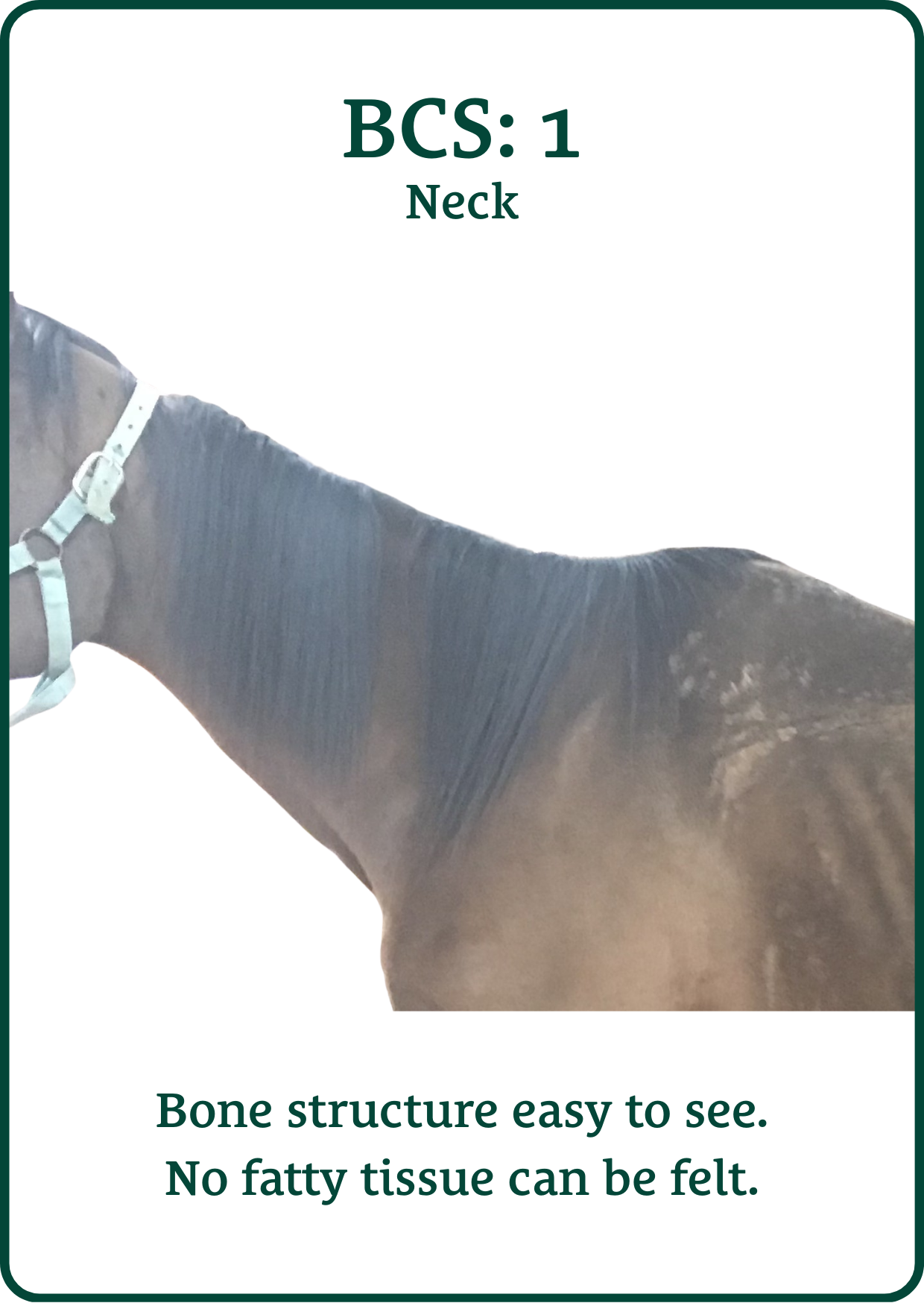
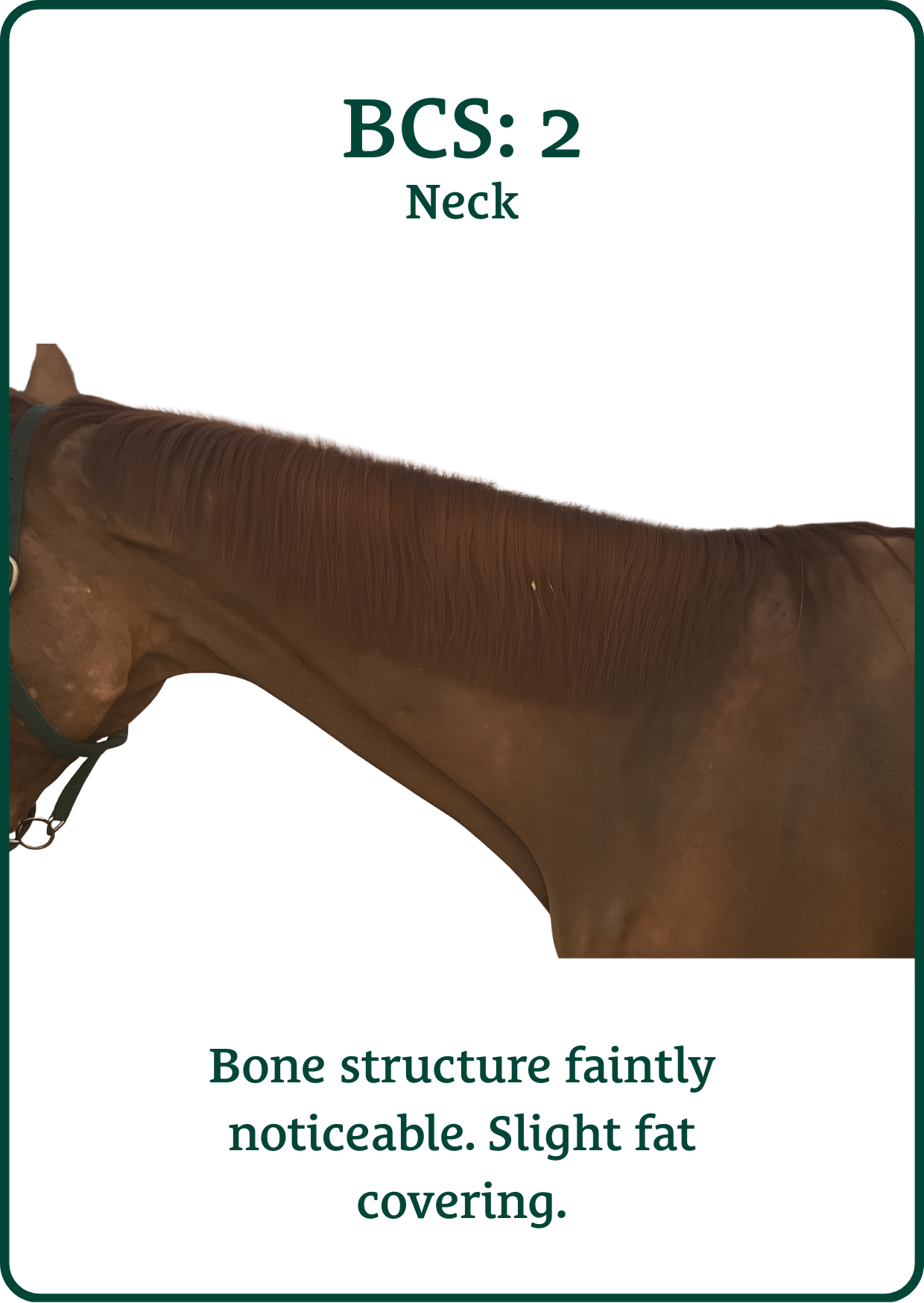
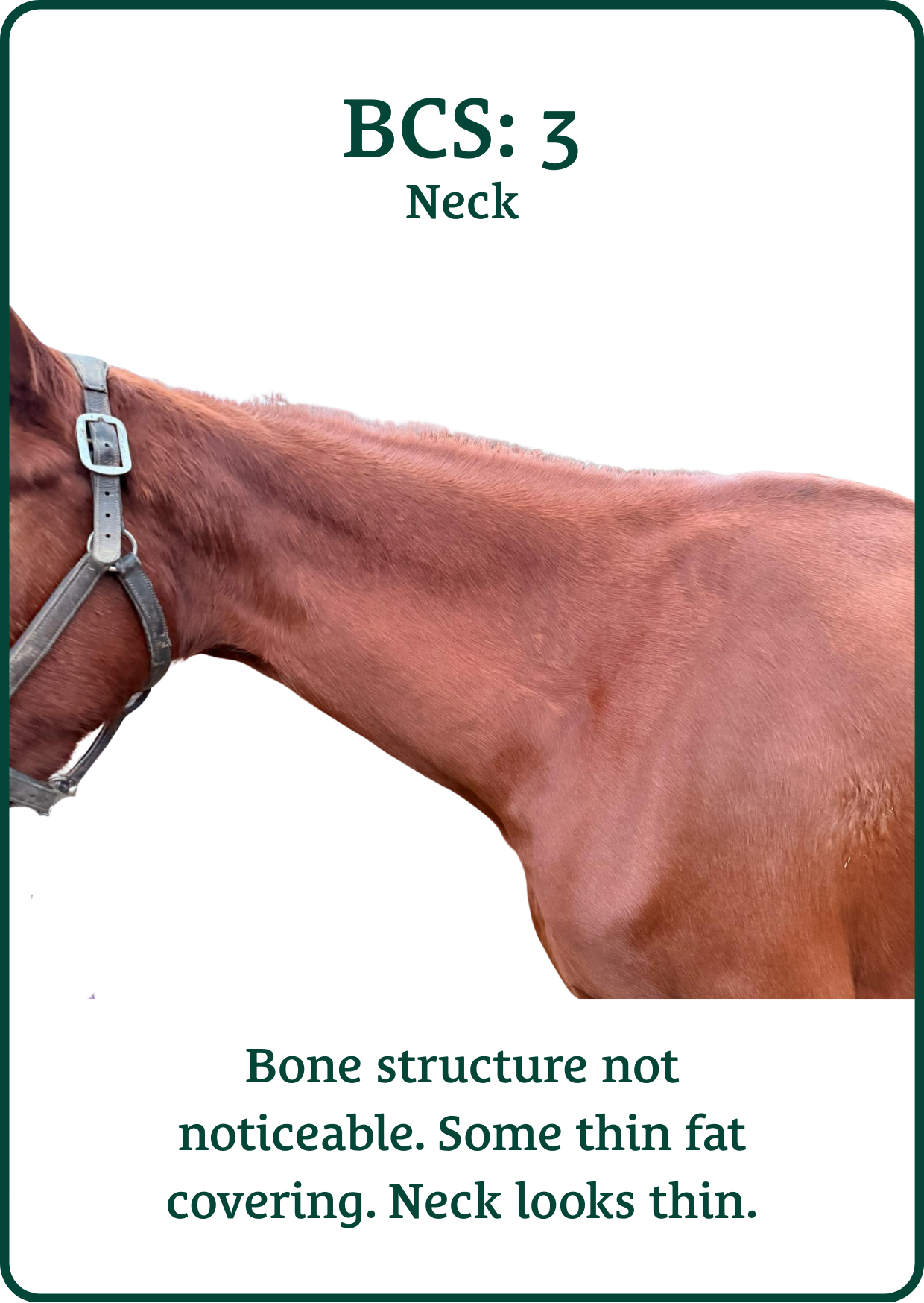
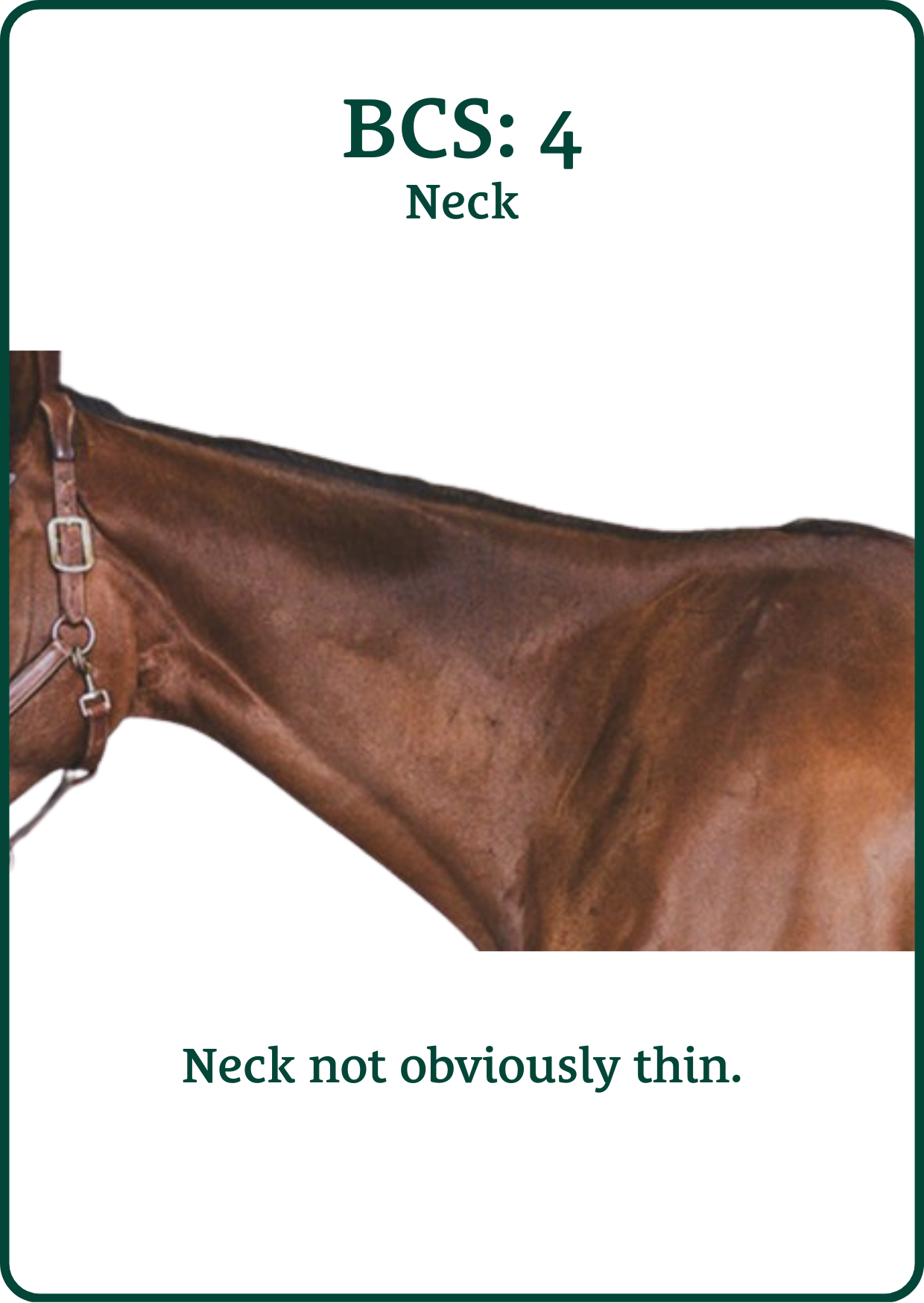
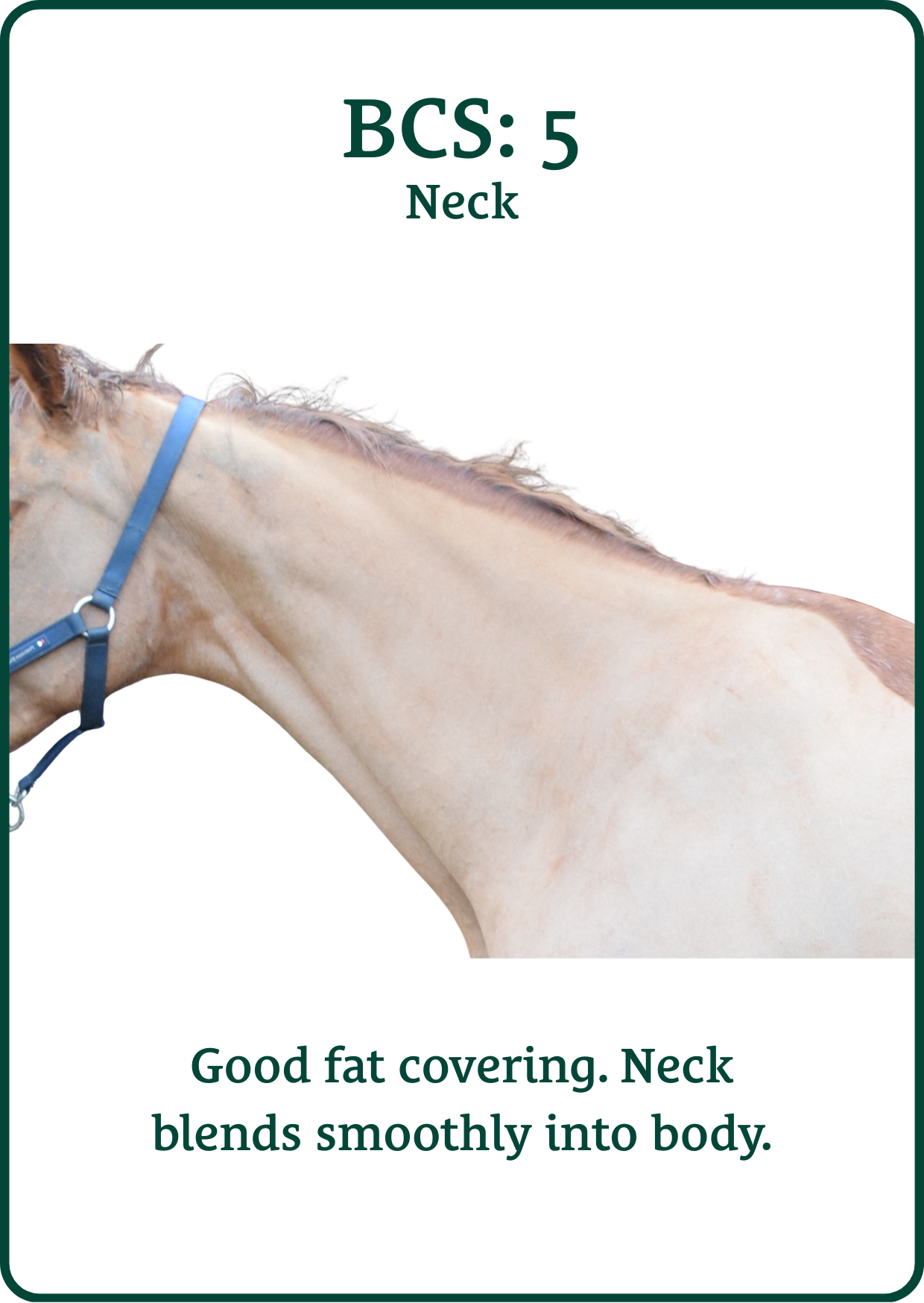
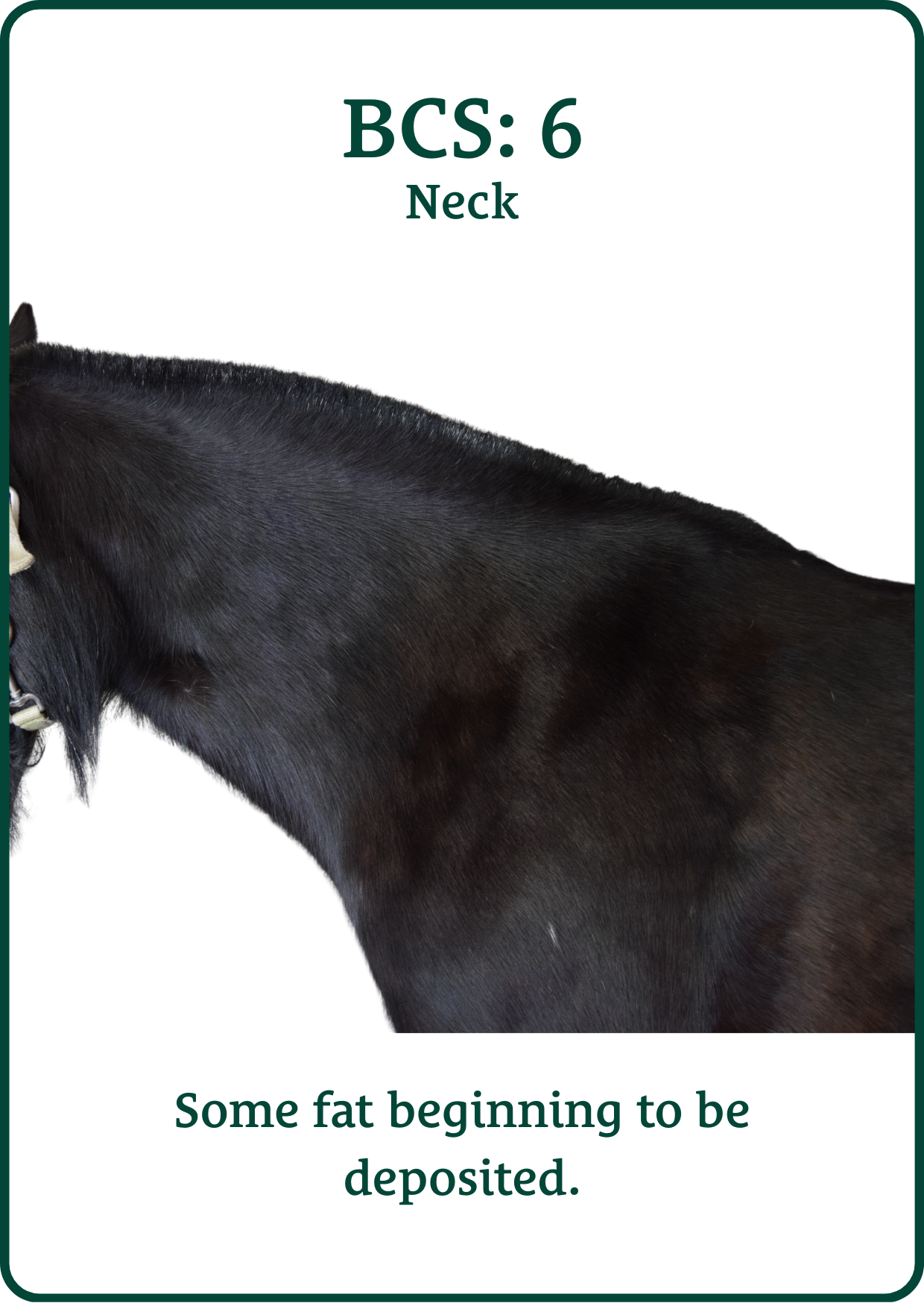
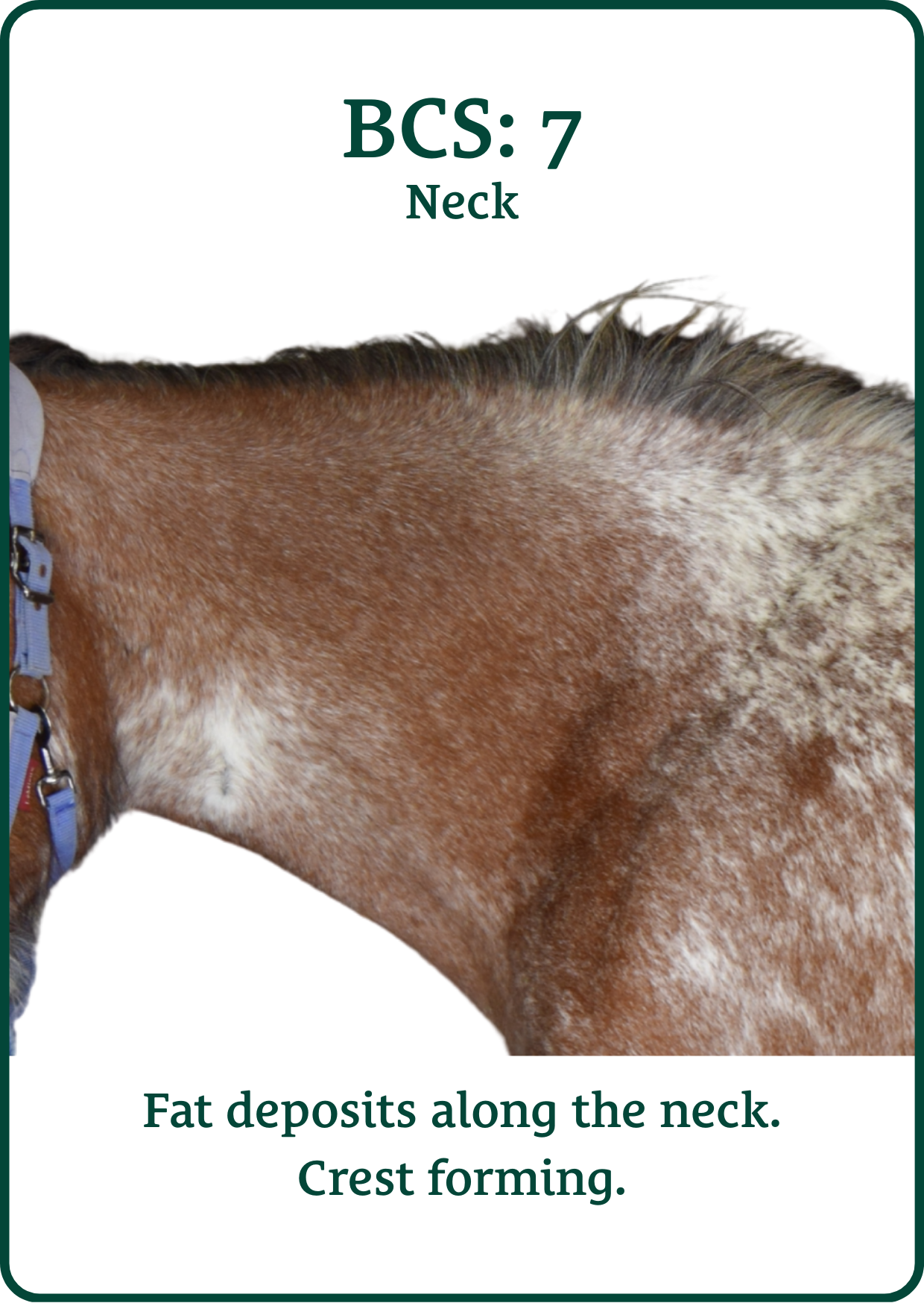
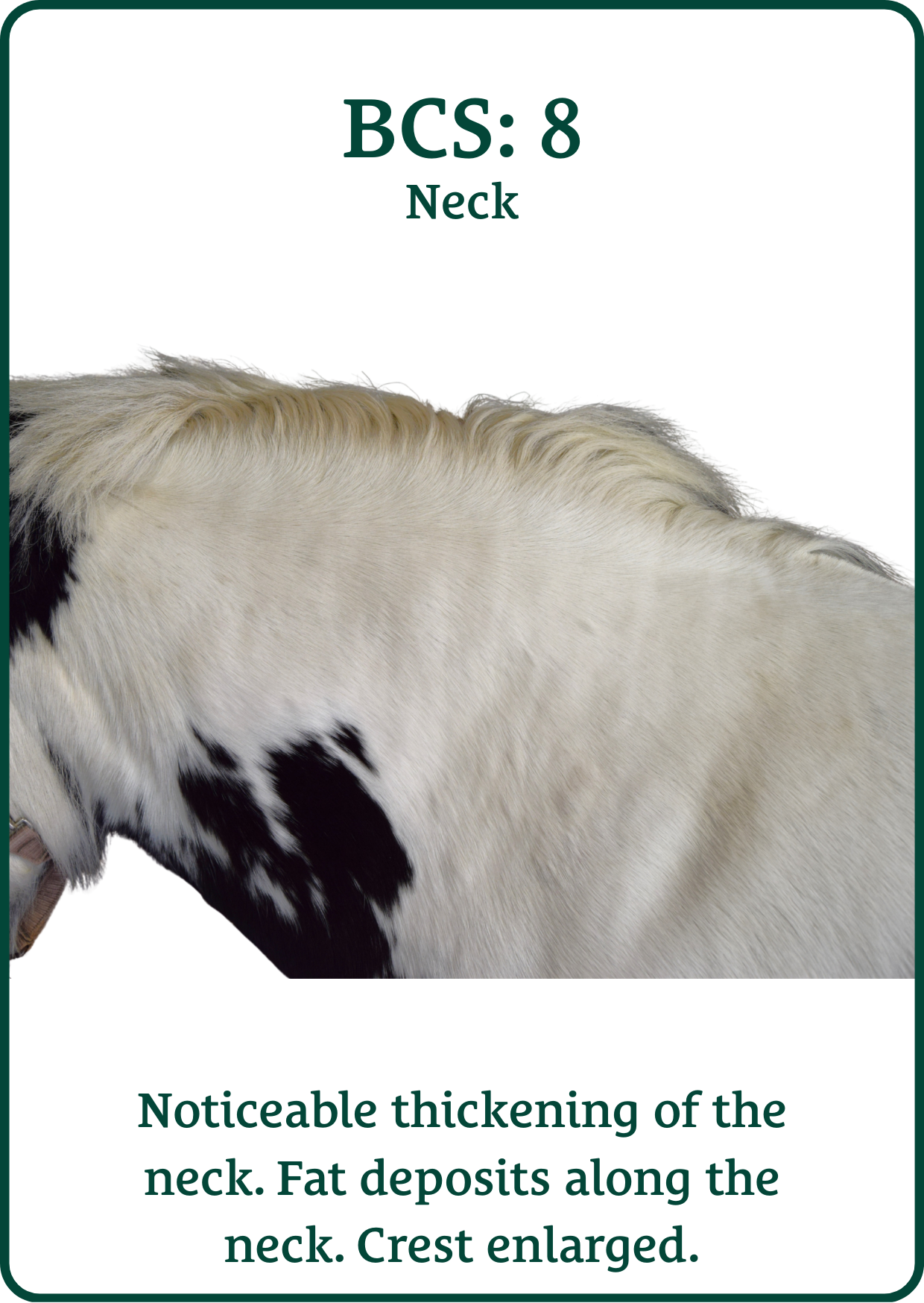
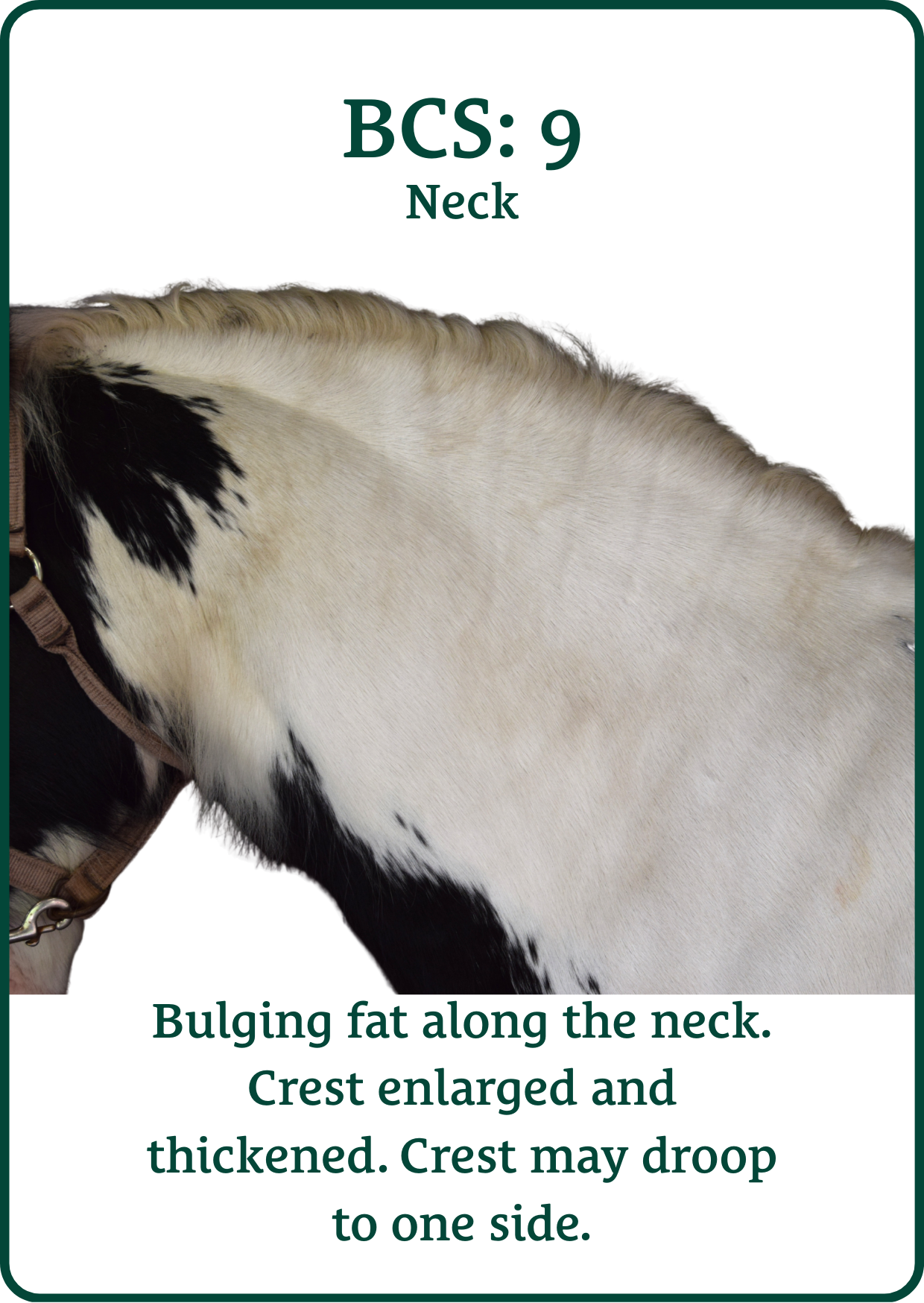
Mid
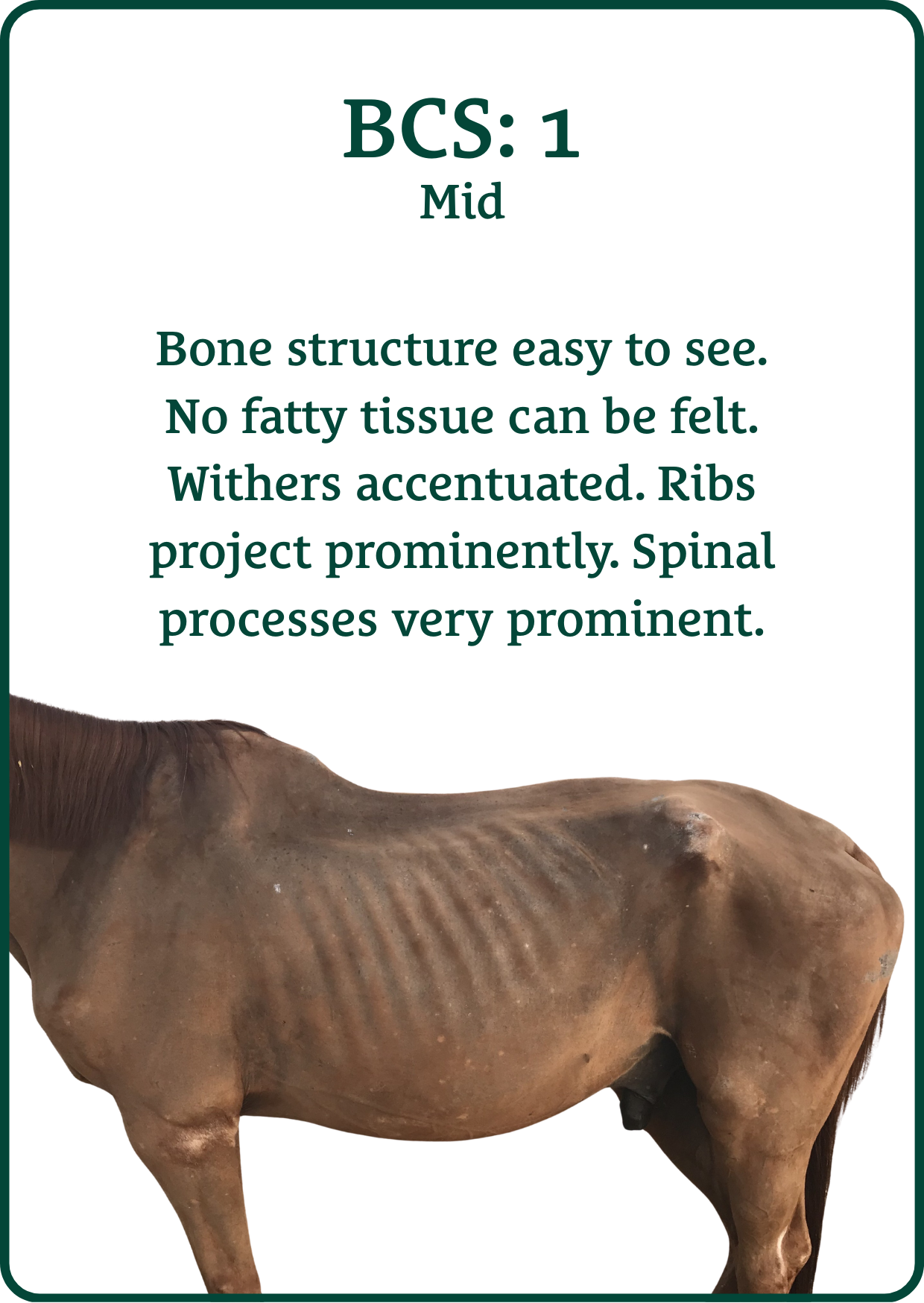
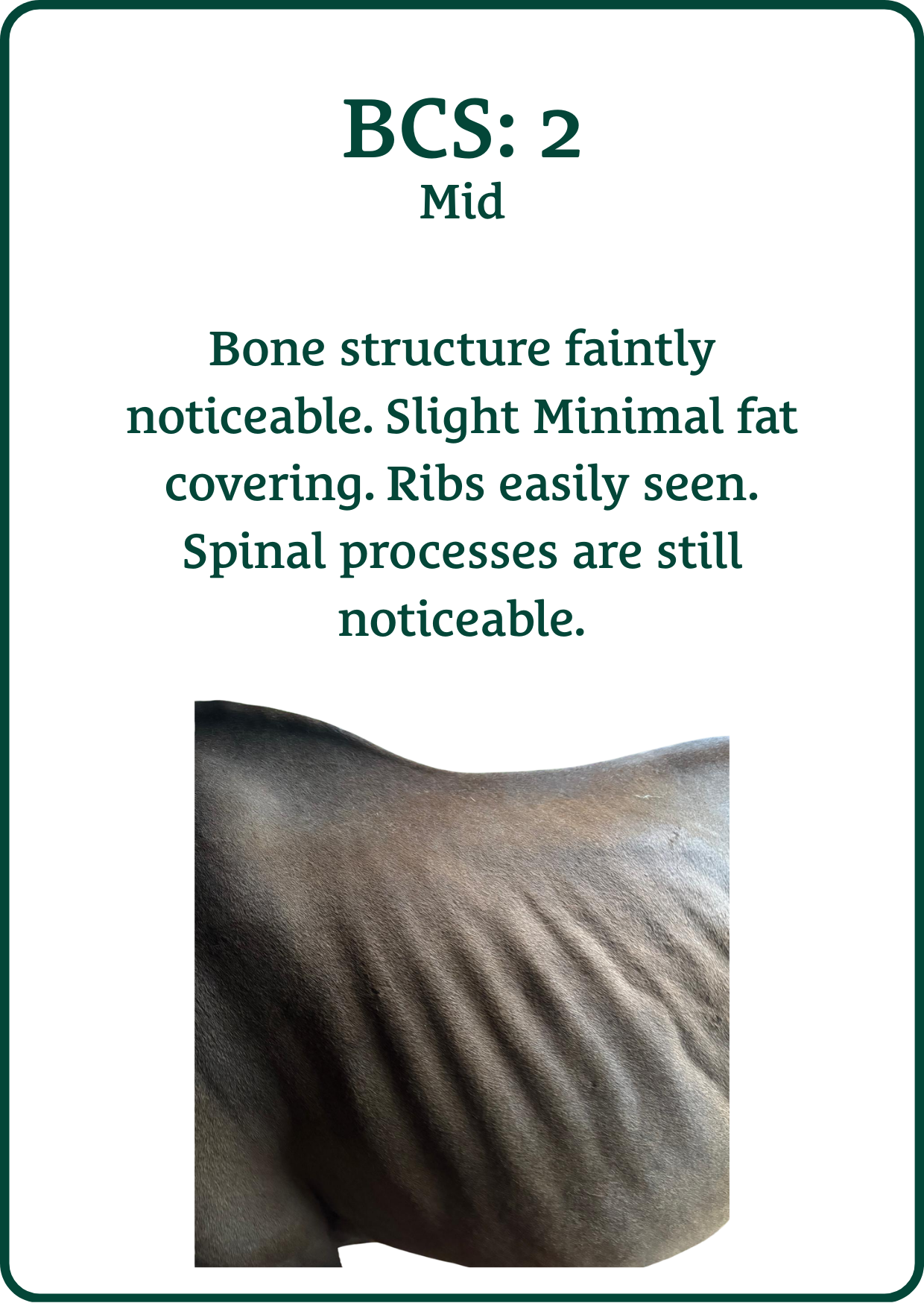
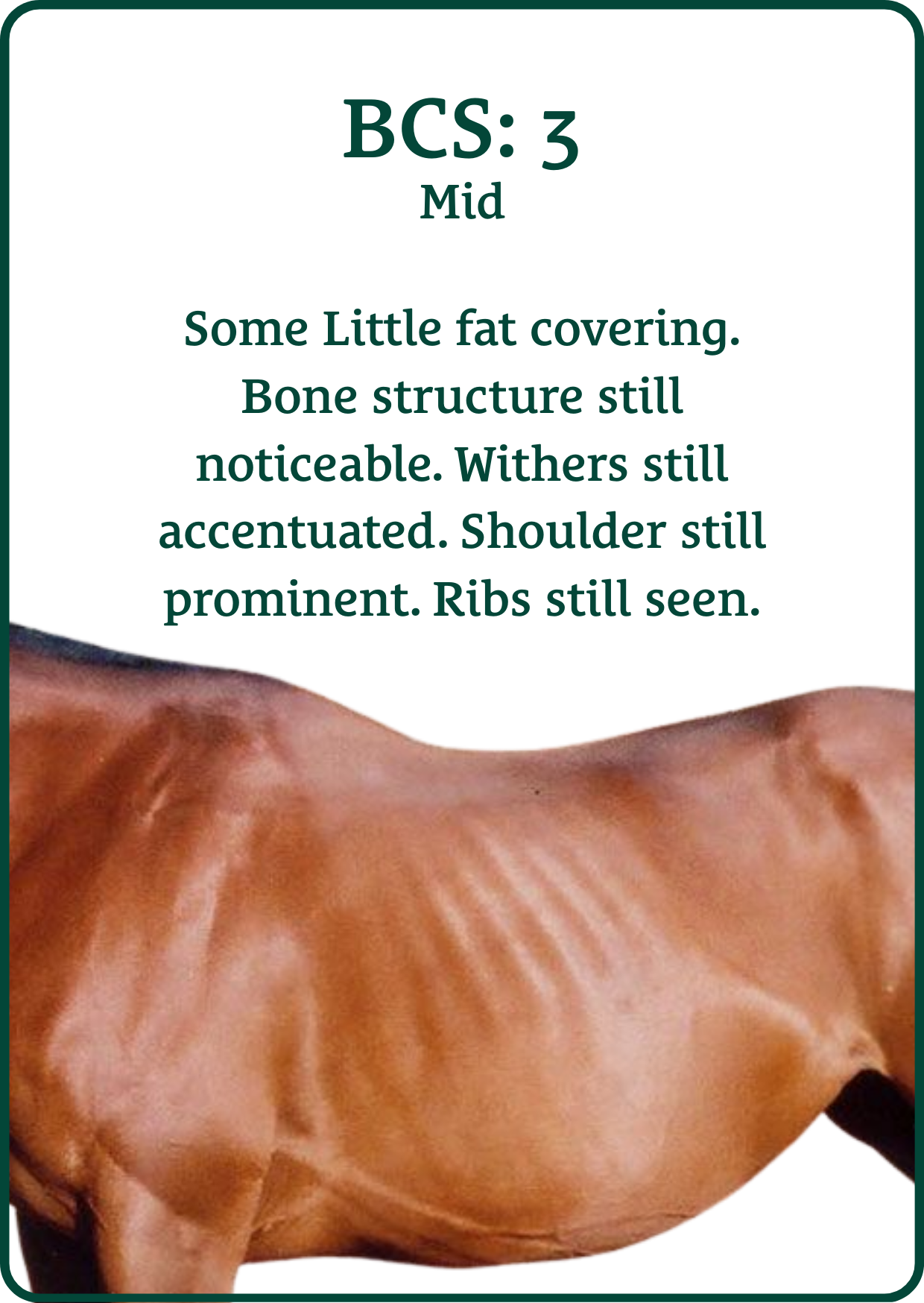
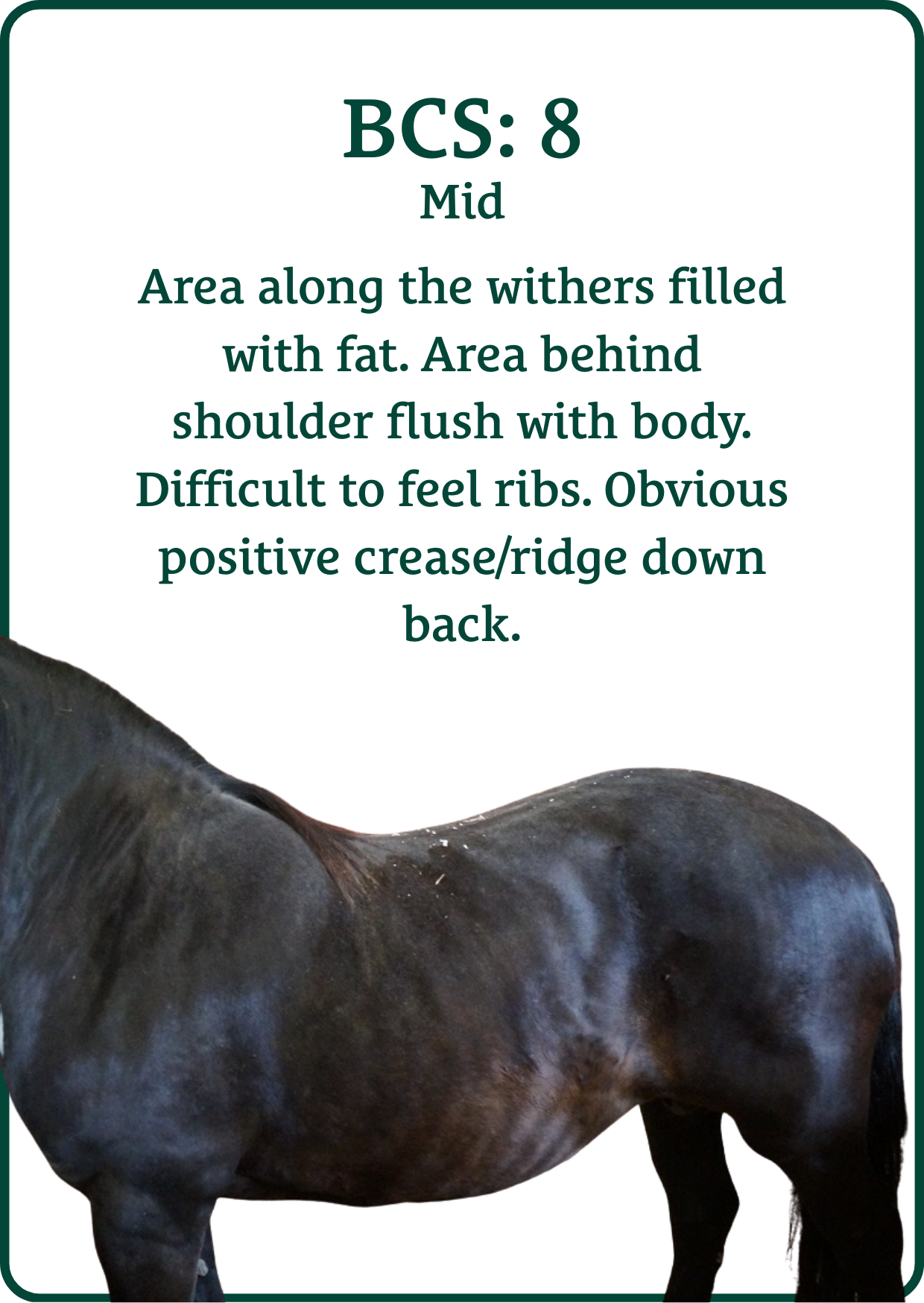
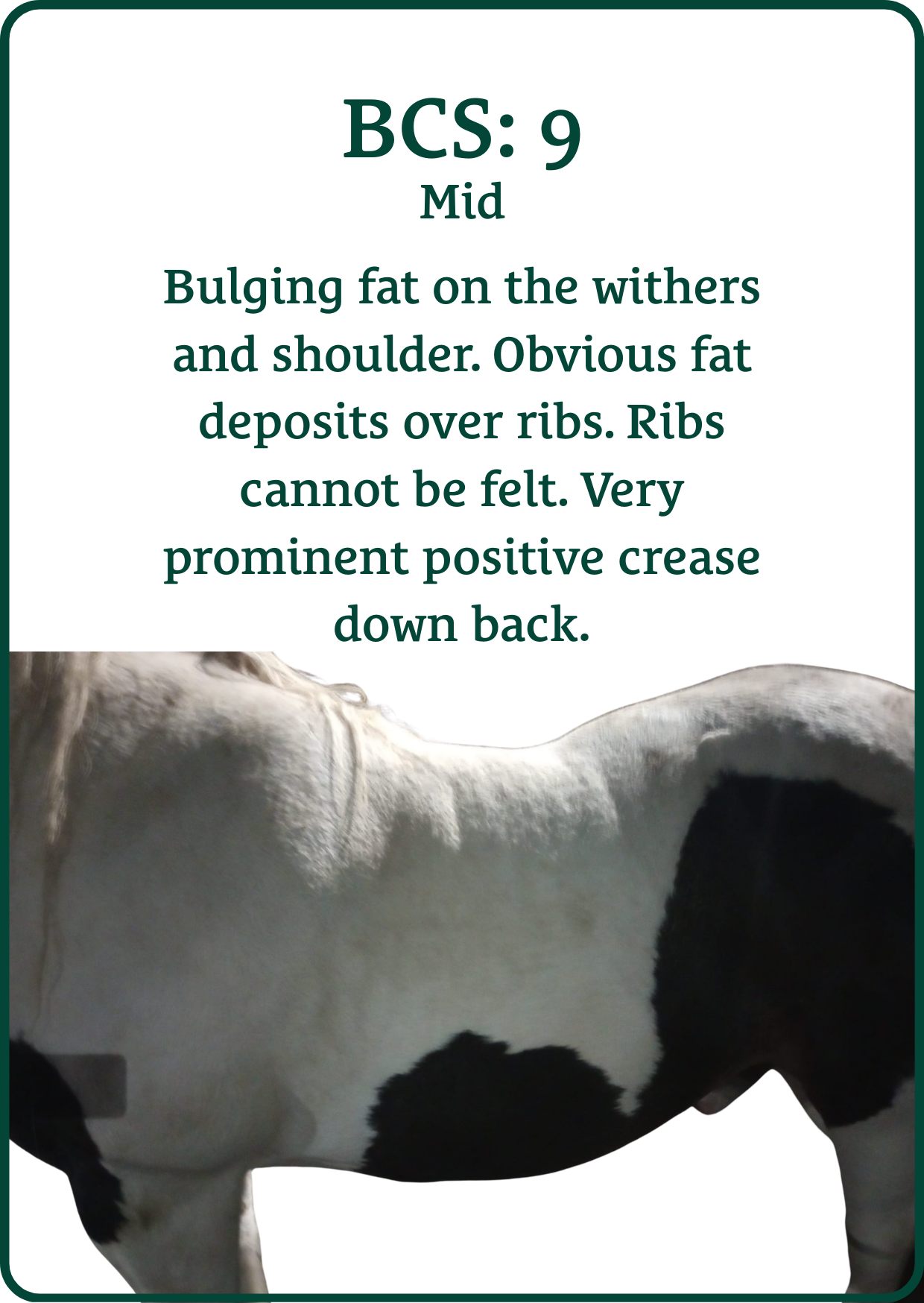
Tailhead
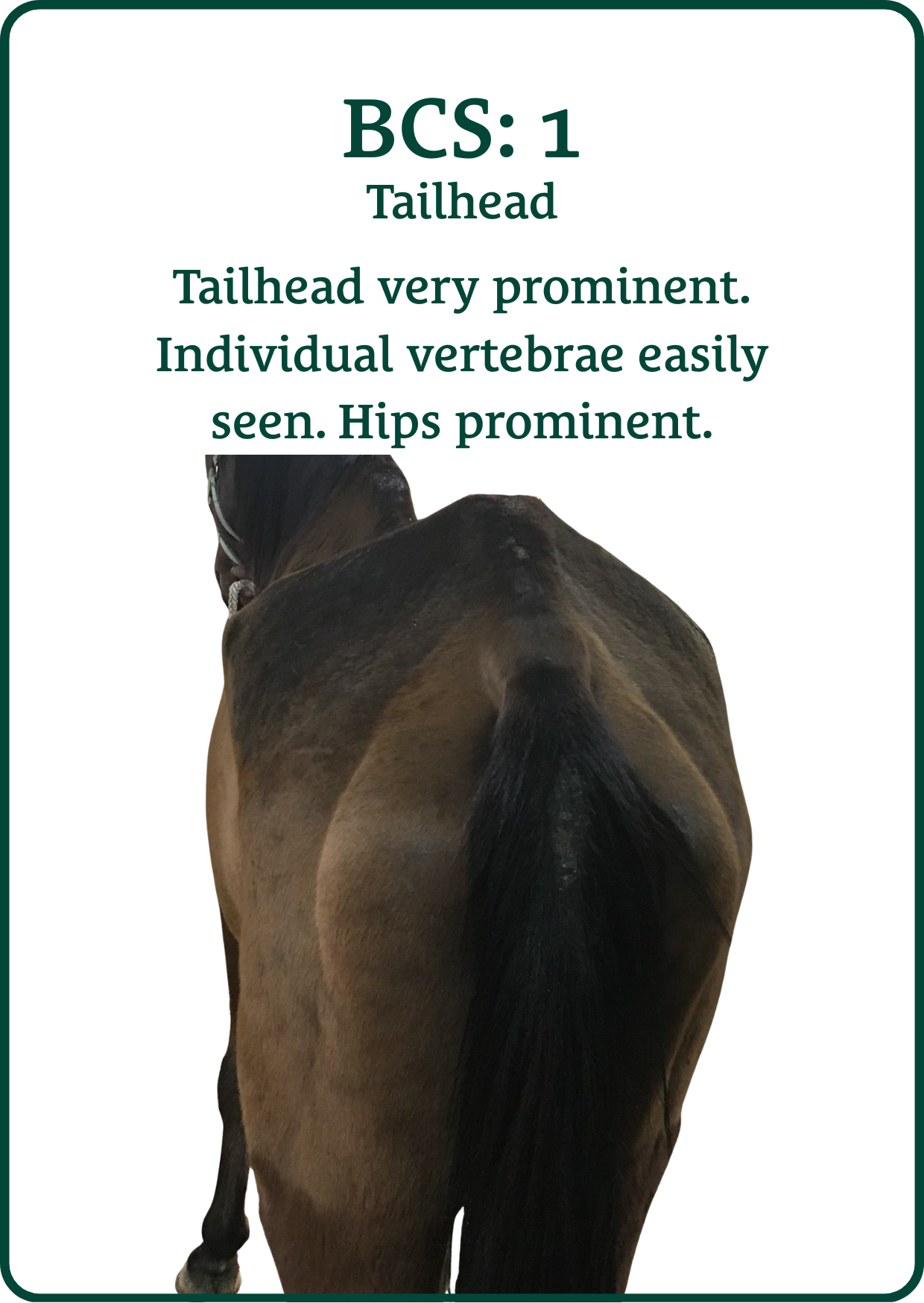
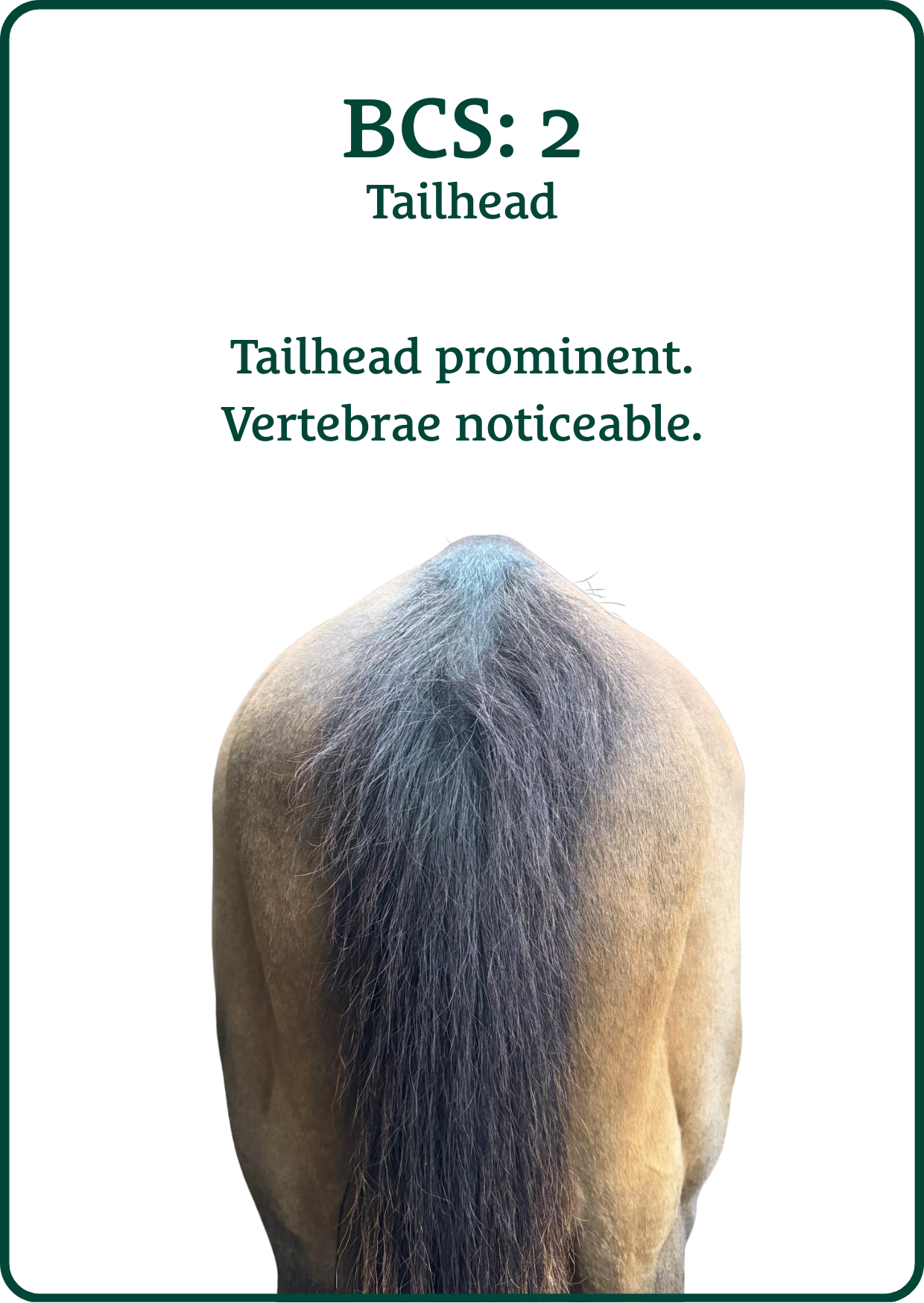
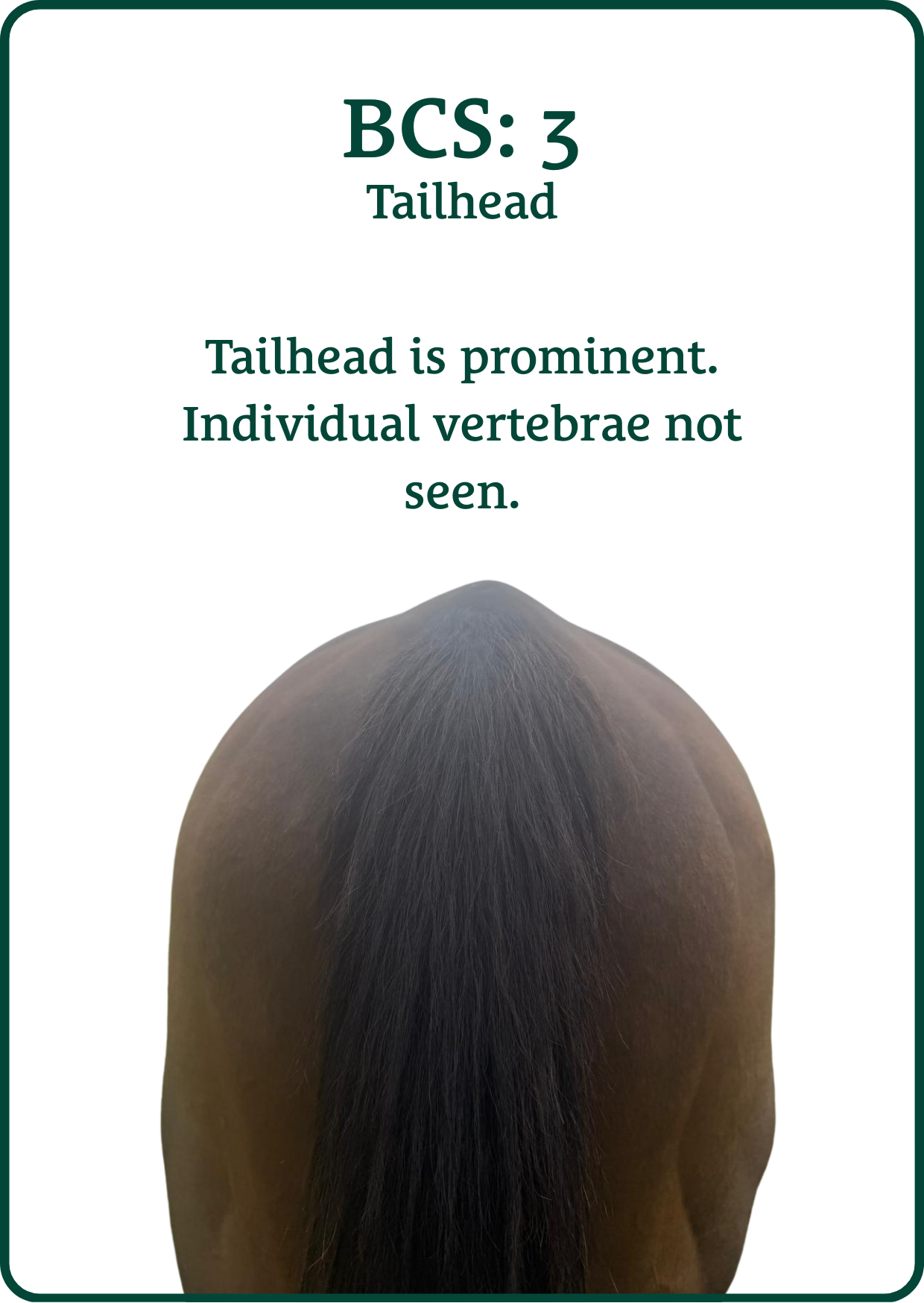
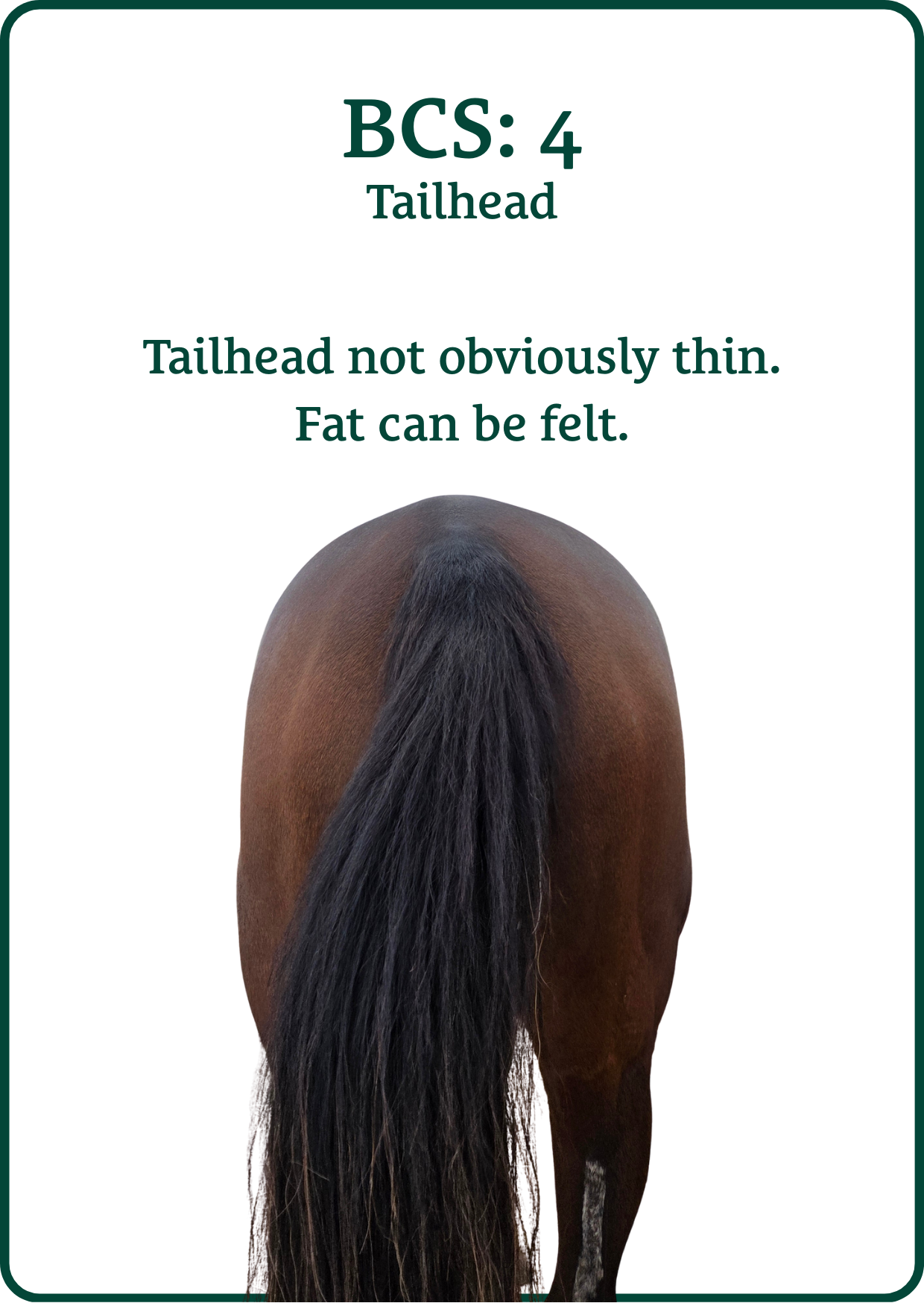
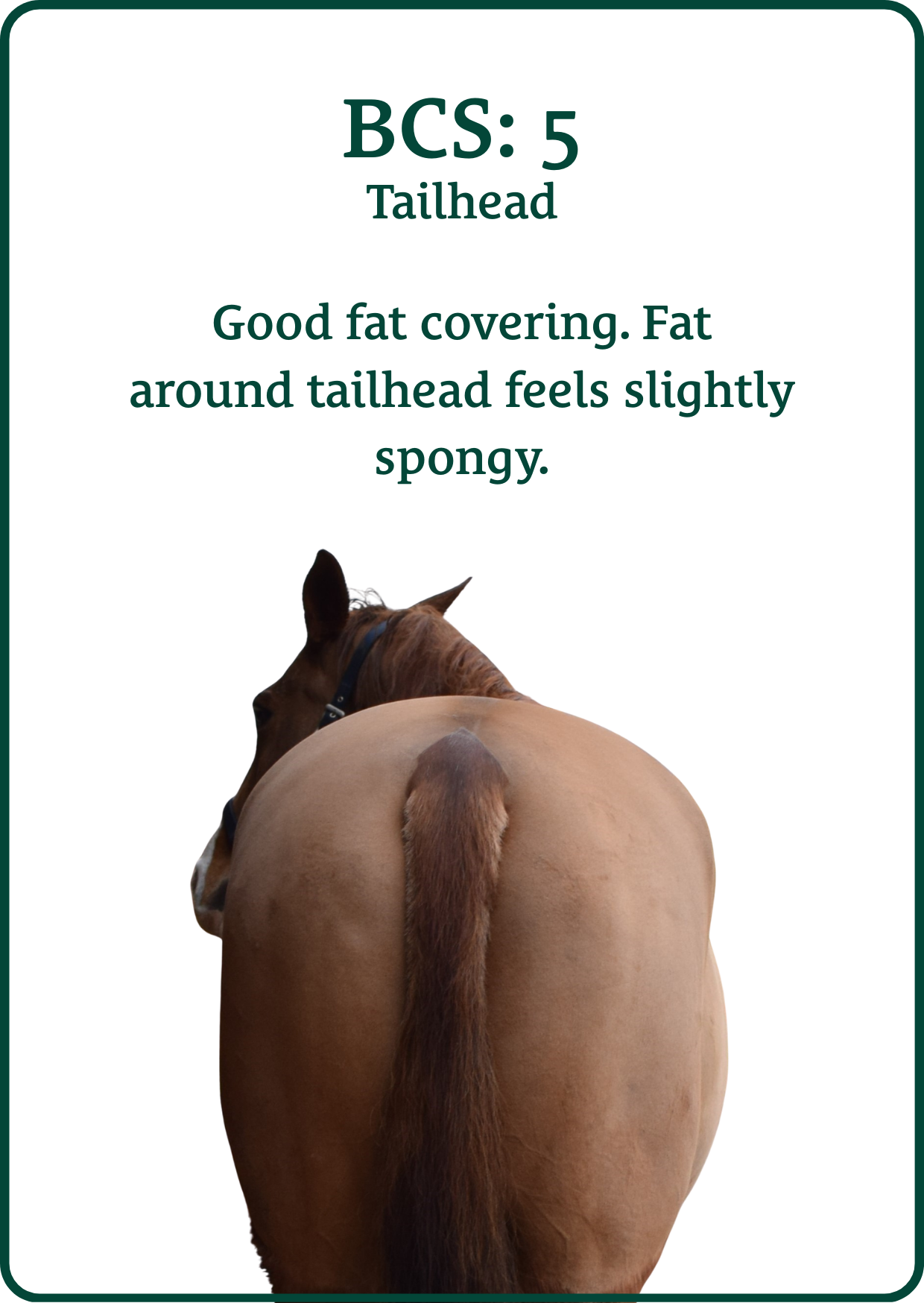
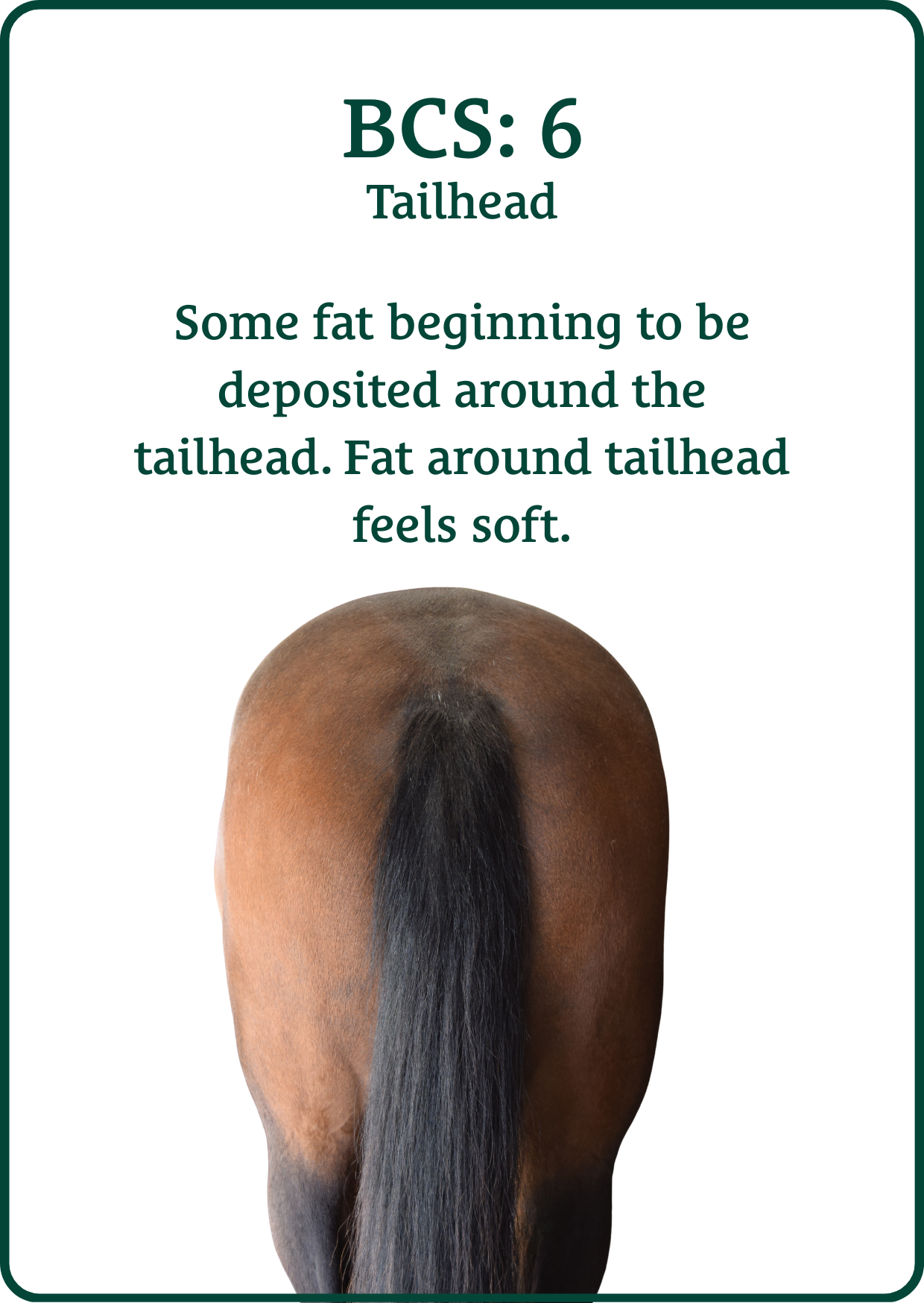
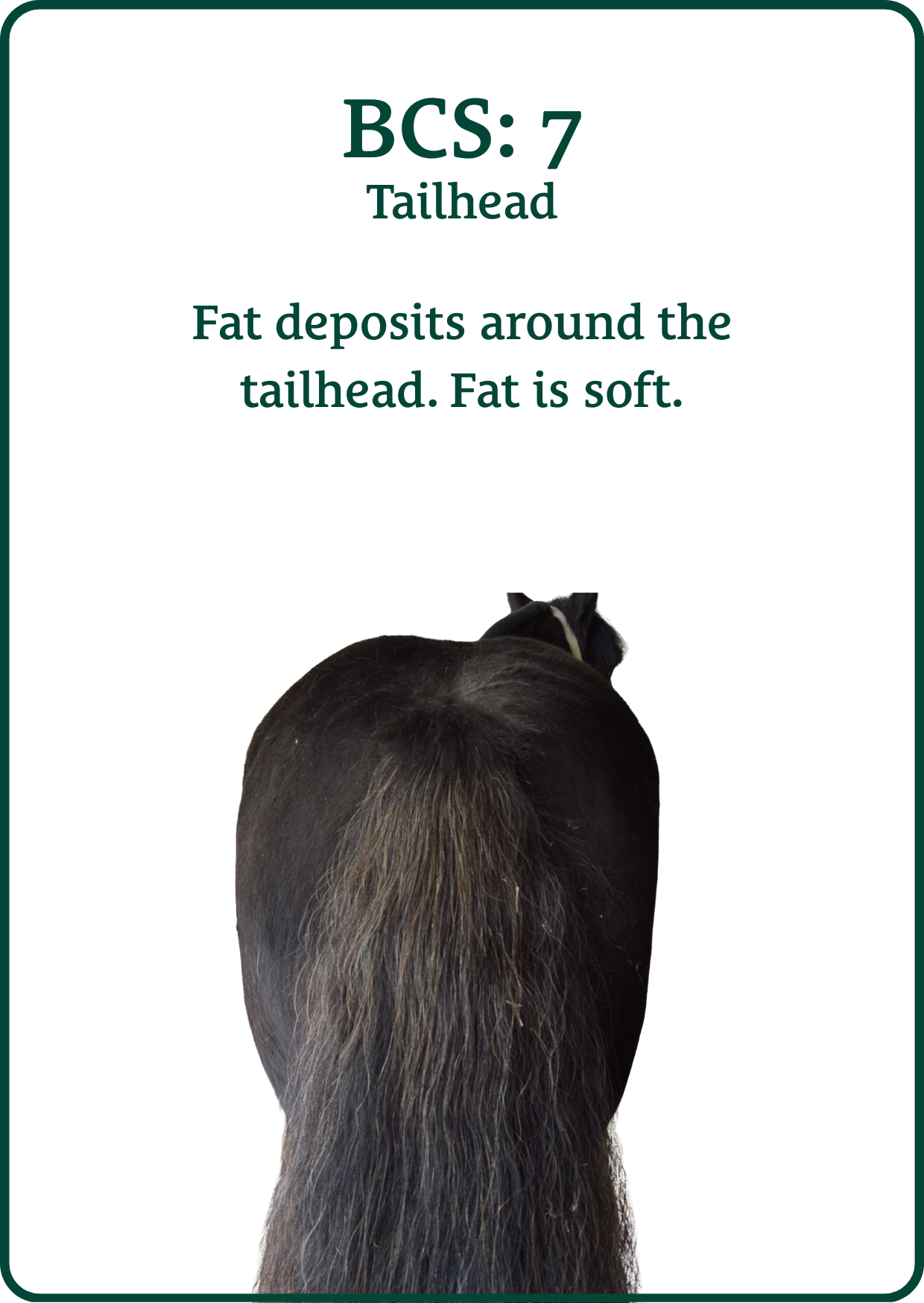
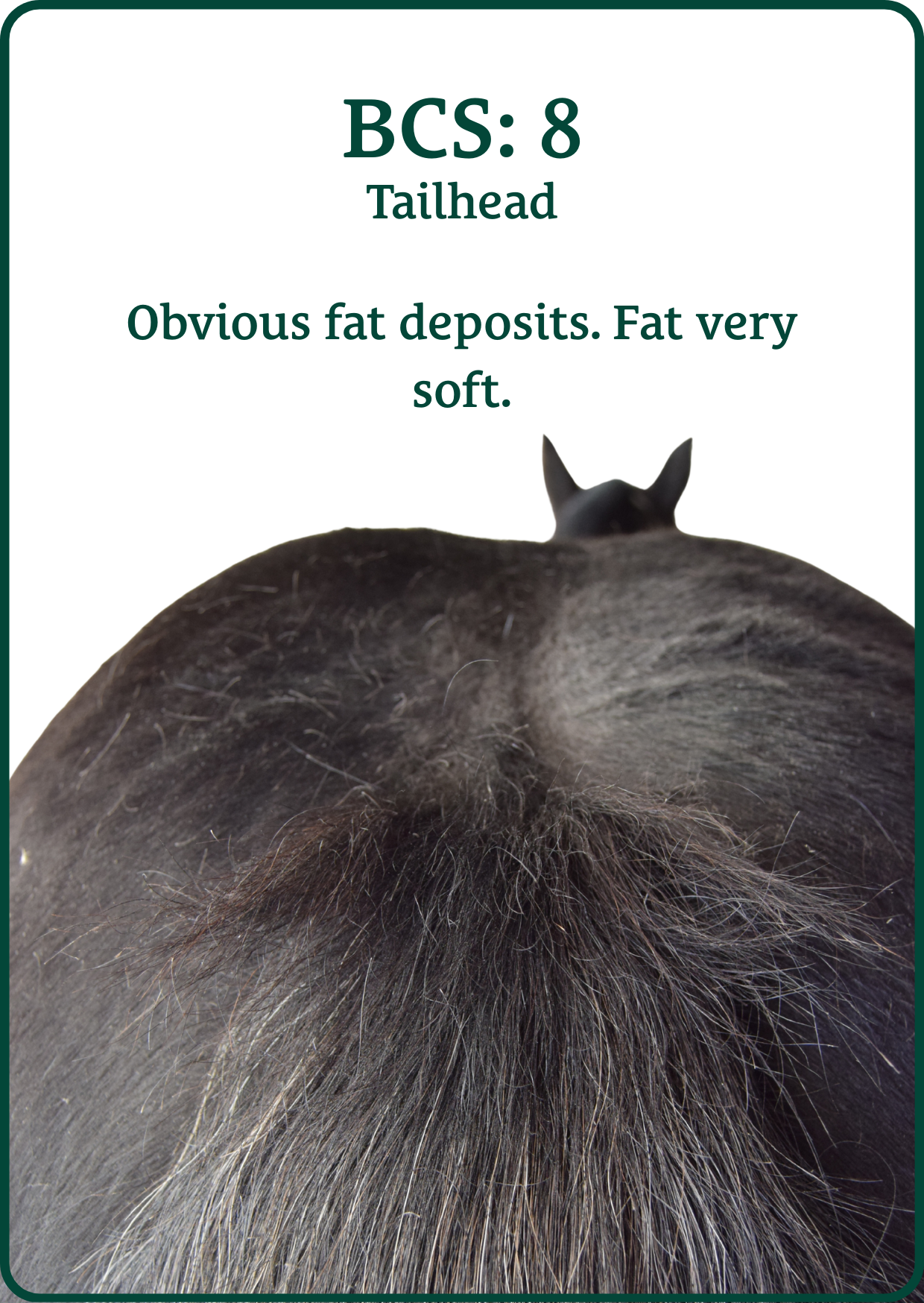
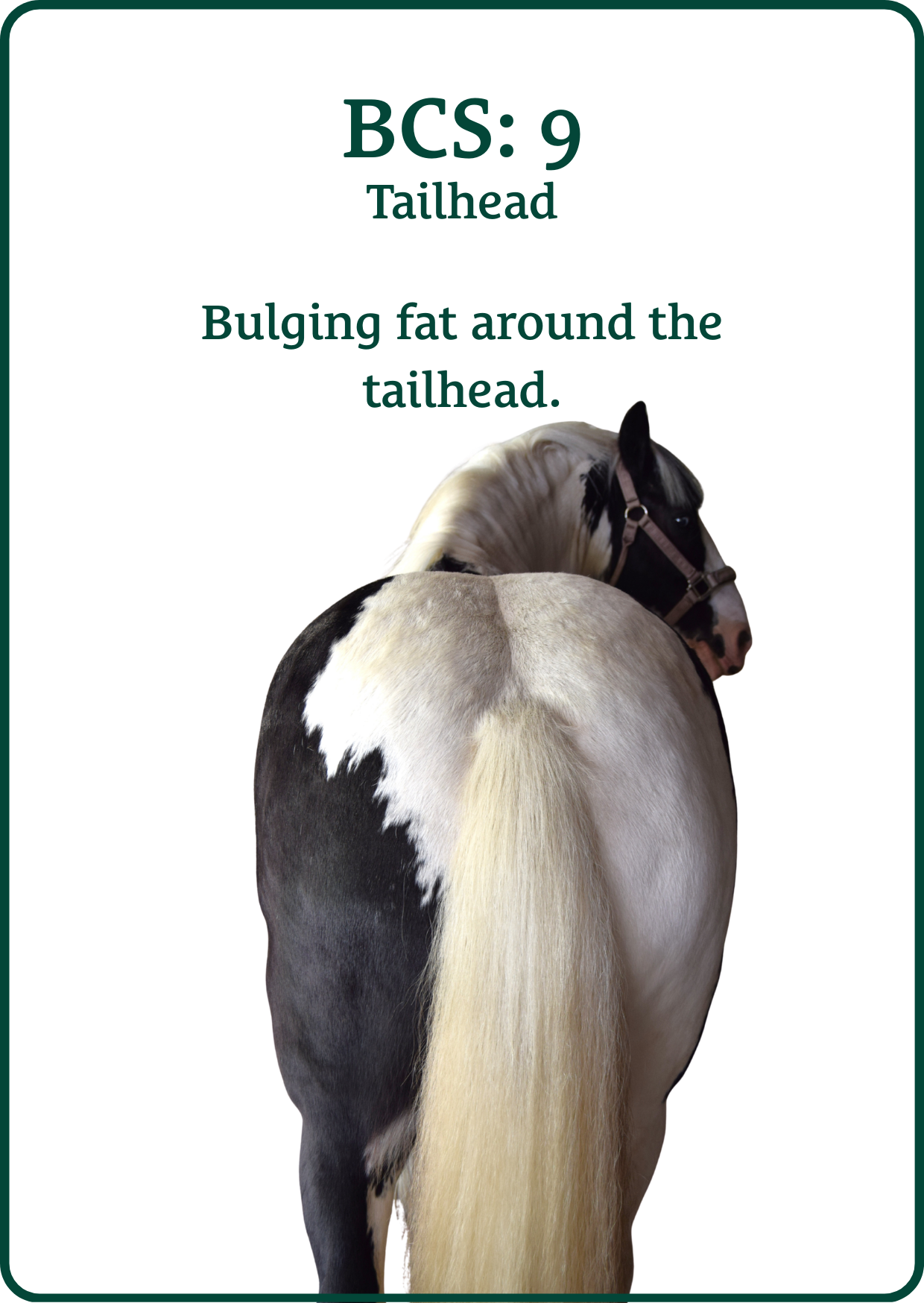
*Score descriptions adapted from Henneke et al (1983)
Remember
Body condition scoring, whichever scale you use, is an assessment of fat, not muscle which means it’s possible for horses in ‘ideal’ or overweight condition to be under muscled. SPILLERS offer weigh clinics run by experienced nutrition specialists who can help you get to grips with body condition scoring, including how to differentiate between muscle and fat. If you’re interested in booking a feeding clinic and having the horses at your yard weighed you can fill in the form HERE