
Grazing Management

When it comes to restricting your horse’s calorie intake there are many options available and which one’s best suited to you and your horse will depend on your individual situation and what your yard set up will allow you to do. Here we look at the science and practicalities of strip grazing, track systems and grass free turnout as options for managing your horse’s access to grass.
The battle of the bulge is something many horse owners struggle with. Milder winters and heavy summer rain change grass growing conditions which makes weight management extra challenging! Juggling horses with work and family, a lack of safe hacking and individual turnout paddocks means horses may be moving and working less than years ago too. With calorie intakes rising and calorie usage decreasing our horses are getting increasingly expanding waistlines.
As grass is the major contributor of calories in most leisure horses’ diets, restricting its intake is fundamental to any weight management program. It's also essential to reduce grass intake for horses prone to clinical conditions such as laminitis, Cushing's (PPID), EMS & PSSM.
There are various ways to reduce intake of the green stuff including the use of:
- A grazing muzzle
- Strip grazing
- Turning out on a bare/sparse paddock
- Co-grazing with sheep
- Rotational grazing
- Reducing time out at pasture or increasing the stocking density
Whichever method you use it’s important to consider the welfare implications as well as how effective it will be at shedding the pounds. Stabling your horse or pony 23 out of 24 hours may help keep their waistline in check, but it won’t make for a fulfilling happy life which is where systems that provide a more enriching environment are gaining popularity.
Latest research has also raised concerns about restrictive grazing methods that allow for compensatory grazing or “binge” eating such as removing a grazing muzzle and then allowing access to grass or turning out for short periods where they can eat huge amounts in a concentrated time.
See our separate page on Grazing Muzzles here.
Strip grazing – is it effective?
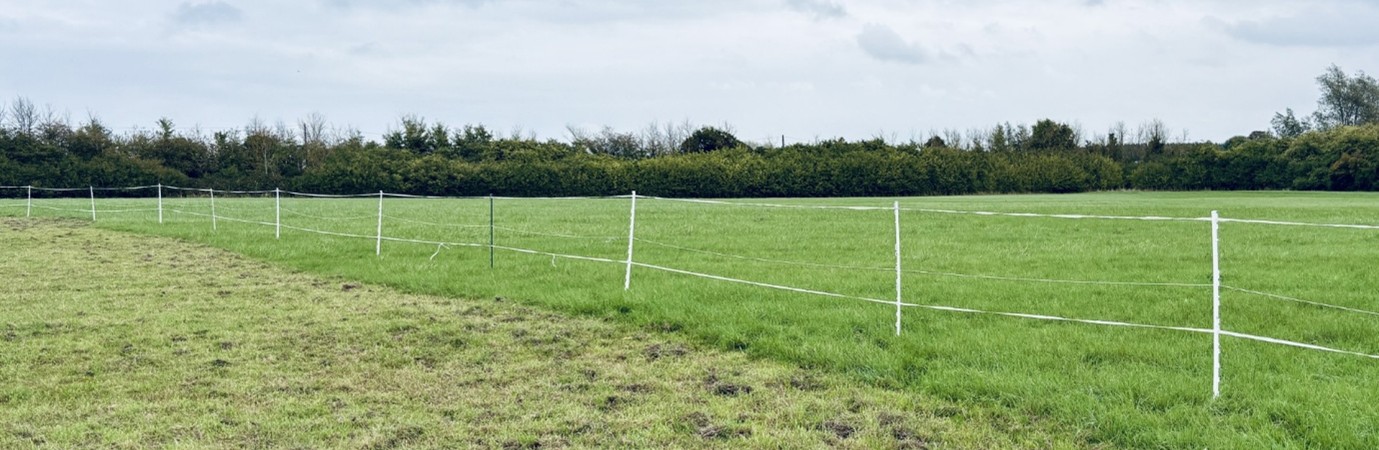
Strip grazing involves sectioning off a smaller section of the horse’s field using electric fencing in order to restrict access to too much grass. The fence is moved a little each day to provide gradual access to fresh grazing. Strip grazing can be time consuming to set up, but research has shown it’s worth considering if your horse is prone to piling on the pounds.
A recent study* found that strip grazed ponies gained 3-4 times less weight over a 28-day period than ponies given free access to restricted grazing (essentially strip grazed in a small paddock vs free access to a small paddock) and did so at a more consistent rate. Further analysis of the data revealed that strip grazing prevented rapid weight gain by providing gradual access to grazing of decreasing nutritional value while those with access to their whole paddock ‘gorged on the good stuff’ in the first two weeks.
In practice, how far you should move the fence, and whether a back fence may be beneficial, will depend on factors including:
- the size of the field
- how many horses are turned out in it
- the quality and quantity of grass available
- the rate of grass growth
Equipment List:
- Electric fencing tape –with a suitable break point - avoid electric ‘string’, it’s not very visible to horses
- Electric fencing posts
- Electric fence energiser –mains, solar, battery or dual powered
- Electric fence tester
- Spare posts, tape and batteries
- Gate handles and anchors may be useful
- Consider using a warning sign to prevent accidental human touch
Strip Grazing Top Tips:
- Always make sure your fence is electrified and check it is working daily.
- Keep spare equipment - you never know when you might need to repair the fence.
- Keep water buckets away from the fence and remember to move the water if you are using a back fence.
- Poo pick daily to help keep your pasture healthy.
- Avoid moving your fencing when the horse is in the field.
- Look out for cheating! Some horses and ponies will lean over or poke their head under the fence to eat more than their daily allowance.
- Strip grazed paddocks need time to recover and may require additional pasture management.
- Avoid over-grazing to reduce the risk of sand colic and pasture damage.
- In smaller paddocks keep a close eye on herd dynamics as horses down the pecking order may not have room to escape more dominant herd members
For more info on the details of the latest research click through to our SPILLERS Science blog update Here, references can be found below.
Track Systems
Although research is limited so far, initial studies into these ‘paddock paradises’ have shown positive results. This more creative approach to paddock layout and management is increasingly popular, partly in response to better recognition of equine behaviour and mental wellbeing.
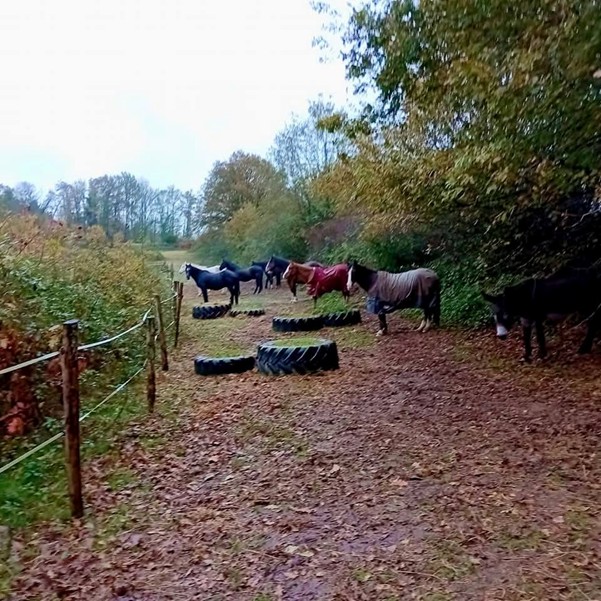
Essentially a track system is a paddock configuration which instead of the usual oblong or square paddock places an inner fence, usually electric, a few metres away from the existing outer fence making a track around the outside. Rested areas in the middle may be useful for grazing for horses who don’t need restricted grazing, could be harvesting as hay or saved for use as ‘standing hay’ for winter grazing.
Many owners and yard managers have set up grazing systems that go far beyond the traditional square grass paddock which can just encourage horses to stand in one spot and eat. Tracks encourage more movement and foraging behaviour to try and emulate a more natural environment. These systems are being used more commonly and the horse’s increased movement and time taken interacting with their environment can decrease eating time and help maintain healthier weights or reduce weight gain and consequently the risk of laminitis.
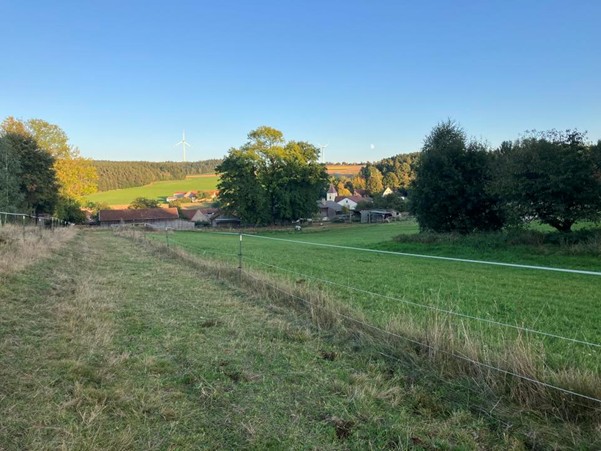
When designing your track do plenty of research and avoid overly complicated tracks or areas where horses may become cornered by others. Adding enrichment such as logs, trees, mounds, multiple feeding stations, scratching posts, rolling areas etc are great ideas to keep the herd occupied or moving more. Even adding trotting poles is a simple way to add variety to their environment. Planting herbs and bushes (check they are not poisonous) or the placing of hay in and around bushes can encourage natural foraging behaviour. You may also find adding all weather surfaces or mats helps prevent poaching the ground in certain areas. Placing water troughs at one end of the track system will encourage walking throughout the day for a drink.
If setting up a track system consider what type of horse you have and how many horses you are turning out. The more horses you have, the wider you will need to make the track to avoid dominant horses cornering the more submissive ones. You will also need to think about how much grass you provide on the “track”. Consider the overall size of the grazing area, leaving too much grass may still provide excess grazing for some, especially those overweight or at higher risk of laminitis.
You may decide to have a dirt or woodchip track and supply suitable supplementary forage or provide enough grass to sustain your horse(s) at an ideal body weight. Another option is to combine your track system with a strip grazing method where you move the inner fence allowing access to more grass in a controlled way. Any paddock left inside the outer track can be used to graze horses who maintain a healthy weight on more grass. Once they’ve eaten down this area there will be less grass available for the good doers too.
So when considering what you can do in order to slim your horse down or stop them gaining weight in the first place, why not think about setting up a track system if you can?
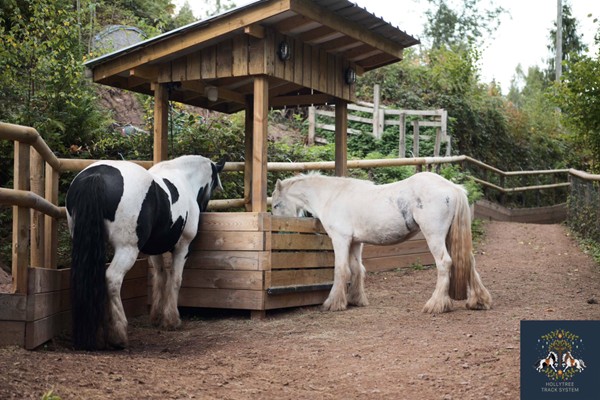
Grass Free Grazing or ‘Dry Lots’
Limiting access to grazing doesn’t always have to mean reduced turnout. All weather paddocks are great but expensive to install - although there are plenty of variations so it may be worth doing some more homework into options. Alternatively, look at existing areas such as secure yards, pathways between fields, barns and indoor schools to see if they can be made safe and usable.
Be creative with the space you have available and think of ways you can reduce your good doers time at grass but still keep them enriched and happy. Sometimes making the hard decision to move yards to somewhere with facilities better suited to your horses’ needs is the best option.
*References
Longland, AC, Barfoot, C, Harris, PA. Strip-grazing: Reduces pony dry matter intakes and changes in bodyweight and morphometrics. Equine Vet J. 2021; 00: 1– 8. https://doi.org/10.1111/evj.13416
Longland, AC, Barfoot, C, Harris, PA. Strip grazing: Changes in biomass, nutrient content and digestibility of temperate, midsummer pasture by strip-grazed or ‘free’-grazing ponies, over 4 weeks.
Journal of Equine Veterinary Science, 131 p.104957.
https://www.sciencedirect.com/science/article/abs/pii/S0737080623007736