
Grazing Muzzles

Grazing muzzles can be an emotive subject but are becoming increasingly popular and can be a super useful tool for managing grass intake without restricting a horse’s freedom. Horses have evolved to move and graze with their heads down out in the fresh air and socialise, and muzzles can allow horses more time in the paddocks – rather than being restricted to a stable – which is hugely beneficial for their welfare.
The effectiveness of grazing muzzles will vary between brands/ types and individual horses or ponies and the type of grass they are on! Research using one muzzle in the UK found they can reduce grass intake approximately 80%, regardless of the season. For some horses and ponies using muzzles in winter may still be useful if the grass remains long enough.
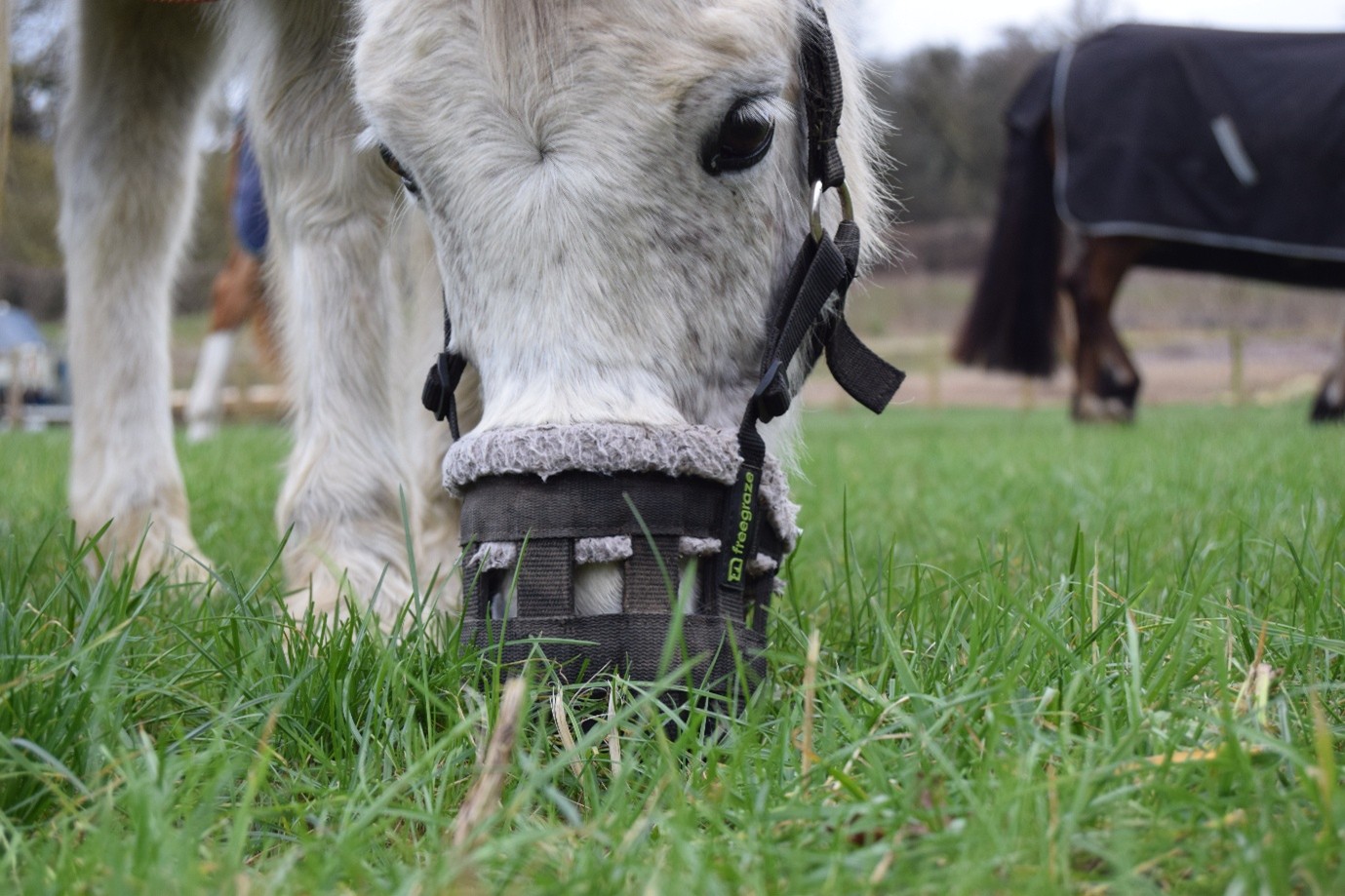
Results vary between individuals so it’s important to continue to monitor your horse’s weight, body condition and behaviour. Some horses may still gain weight if only wearing a muzzle for part of their time at pasture so consider non-grass turnout or stabling for the remainder of the day. Turning out for short periods without a muzzle or allowing free access to grazing after removing a muzzle could lead to your horse gorging. In fact, research has shown that ponies may consume almost 1% of their bodyweight (dry matter) in just 3 hours!! This could be two-thirds of the total daily forage allowance for those on a diet!
There are many different styles of muzzle to choose from. One size/ type does not fit all so you may need to experiment to find the most suitable option for your horse. Do some research and try to find one which fits your horse’s head shape well and doesn’t rub.
Managing grass intake: what else can help?
Grazing muzzles are just one tool in your weight-management toolkit. Strip grazing, track systems, hay soaking and controlled turnout can all play an important role in helping good doers maintain a healthy body condition.
Explore: SPILLERS Slimmers’ Hub
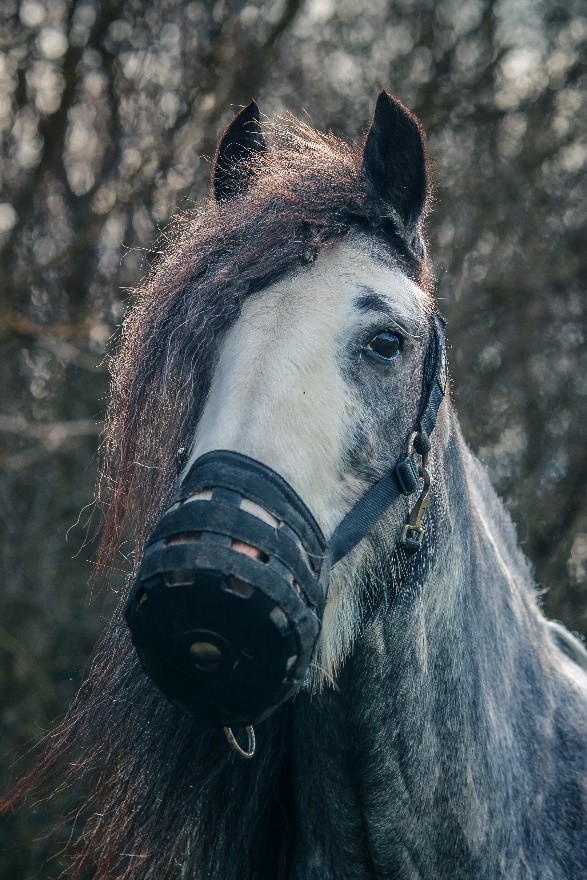
Make sure it fit’s correctly, using the manufacturer’s instructions to help you. For close fitting muzzles with a central access hole, there should be a gap of approx. 25mm between the base of the muzzle and the horse’s nose. There also needs to be a gap around 12mm around the edge of the muzzle to allow for movement of the jaw. Once you’re happy with the fit, spend some time watching your horse grazing and make adjustments as necessary.
Grazing Muzzle tips
• Always introduce your horse/ pony to wearing a muzzle gradually.
• Do not leave your horse/ pony unsupervised until you are confident they are happy to graze and drink whilst wearing it. You may need to help some learn by poking grass through the holes.
• Don’t leave muzzles on 24/7. Horses should have time to socialise, scratch and interact with their herd mates without the muzzle on.
• Watch for significant signs of frustration or bullying/ changes in herd dynamics.
• Monitor your horse’s teeth for signs of wear (ask your equine dental technician or vet to check too) and check their face for rubs or signs of the muzzle being ill-fitting.
• Remember that the grass needs to be long enough to ‘poke through’ the muzzle so your horse can eat it but not be so long it is ‘flattened’ by the muzzle. In either situation your horse may not be able to eat at all.
• Look out for objects around the field where the horse may catch their muzzle on.
• Some are Houdini’s at removing them and may need them to be attached to headcollars or wrapped into a top plait over the poll area.
Join the Slimmers’ Club Community
Looking for real-life experiences, muzzle recommendations and practical management ideas? Members of the SPILLERS Slimmers’ Club Facebook group regularly share their favourite grazing muzzle brands, fitting tips and success stories.
Join the conversation: SPILLERS Slimmers’ Club Facebook Group