
Is your horse underweight?
While equine obesity is a major welfare issue, thankfully we see few on the other end of the spectrum. However, caring for a "poor doer" can be just as challenging and deeply worrying for horse owners. Seeing your horse struggle to maintain their weight through the changing seasons can leave you feeling anxious and unsure of what changes to make for the better.
At SPILLERS, we believe that every horse deserves a carefully considered diet which is suitable for their individual needs and circumstances. Getting your horse to a healthy weight shouldn’t involve simply filling their buckets with the nearest conditioning feed. Understanding the science behind safe weight gain helps you tailor a management plan that works for you and your horse.
Here we take a look at how to correctly identify if your horse is underweight and establish practical steps to build healthy, lasting condition.
Looks Can Be Deceiving!
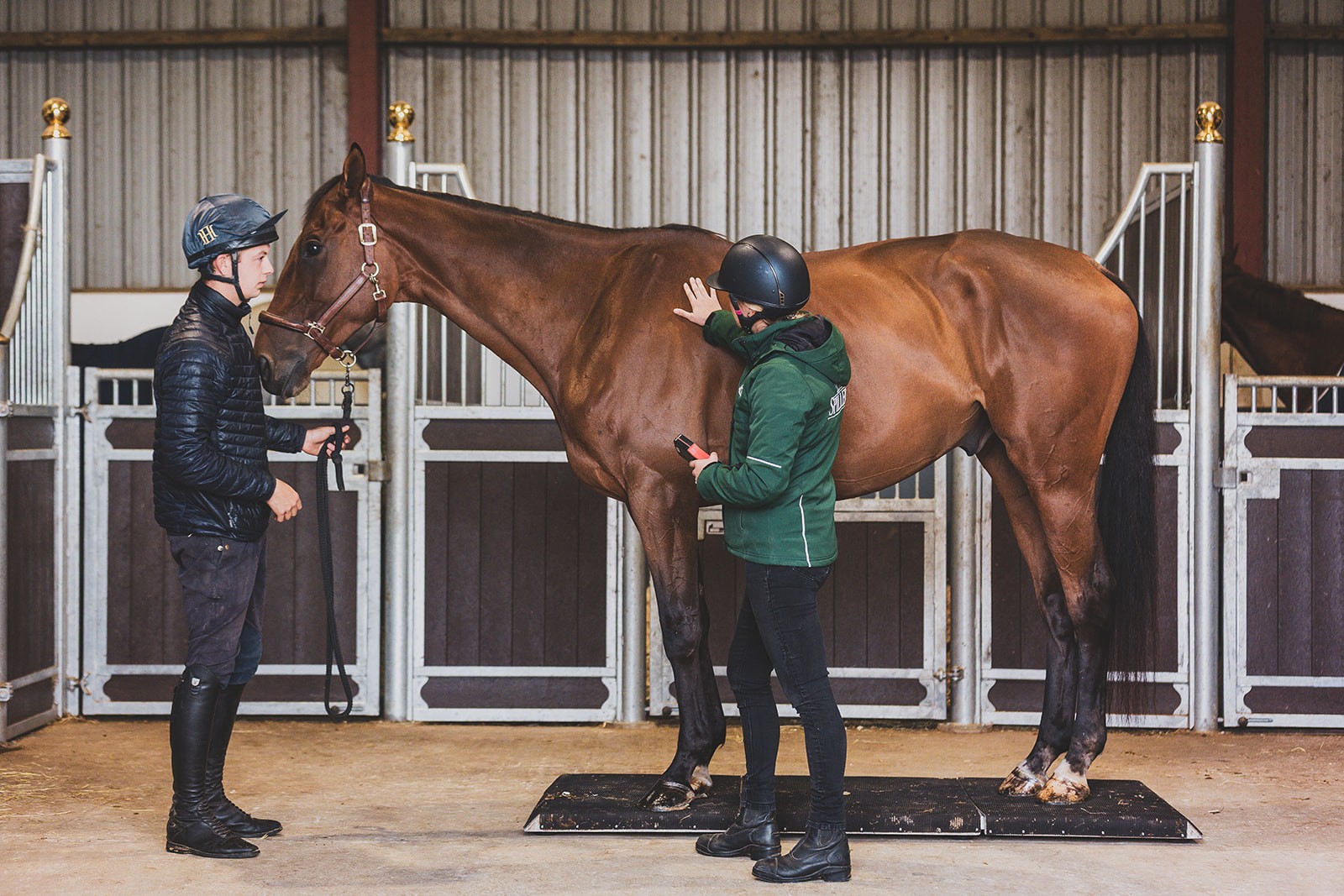
Just as with overweight horses, a simple visual check of your horse is not a fully reliable way to assess their body fat. It’s not uncommon for our nutrition team to see a woolly Shetland who looks ‘fine’ but once they get their hands into their thick winter coat realise there’s in fact very little body fat over their round barrels. On the flip side, we might see ‘fit looking’ natives but we’re still unable to feel their ribs due to excess fat coverage.
Winter coats and rugs can hide a multitude of sins so it’s important to remove rugs regularly and have a good feel of the horse underneath to identify gradual weight loss before it becomes problematic. Seasonal fluctuations are natural, and wild horses will naturally lose some weight through winter ahead of piling the pounds back on again the following spring.
However, for a poor doer, we want to prevent them from dropping too far into the "underweight" category where their health and performance could be compromised.
Methods for Assessing an Underweight Horse
To monitor your horse's progress objectively and without bias, we recommend using a combination of hands-on tools.
1. Body Condition Scoring (BCS)
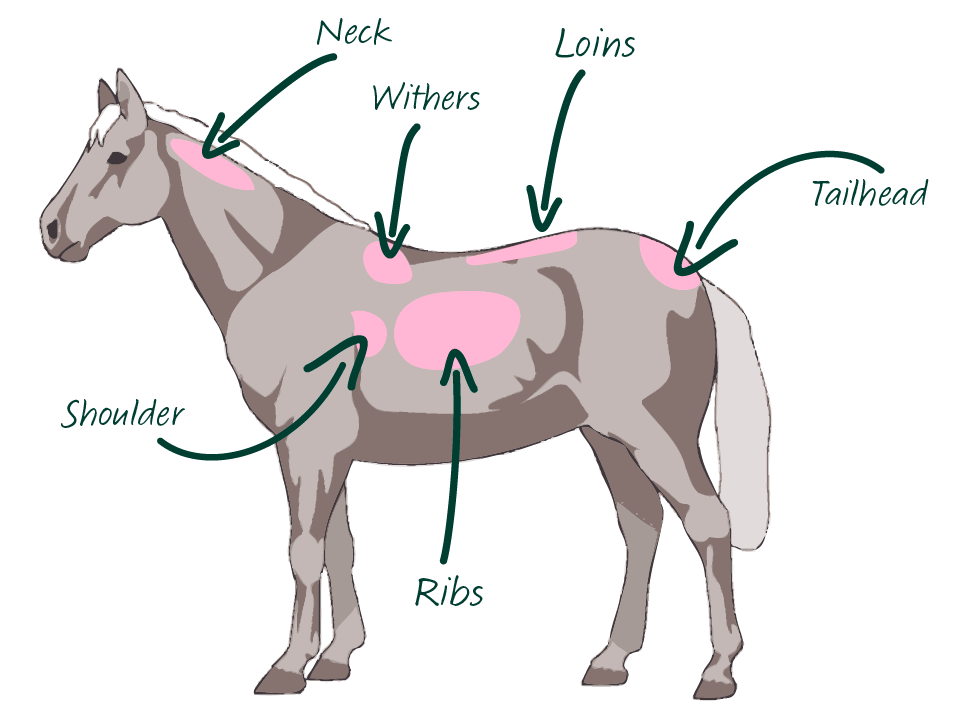
Body condition scoring is a highly practical method of assessing body fat. At SPILLERS we recommend using the 1-9 scale, where a score of 5 is considered ideal. Horses typically store external body fat in six areas (see image) and to body condition score accurately each area should be assessed individually, by feel and eye, and an average score taken.
Horses and ponies scoring 4-6 are considered in the healthy range – with a 4 perhaps being ideal for a racehorse at peak fitness and 6 absolutely fine for a healthy horse over the summer months. A score of 7 or above is obese, and a horse scoring below 4 is considered underweight.
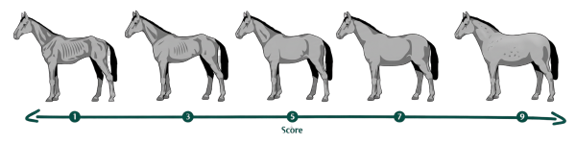
Table of Contents
What does an underweight horse (BCS 3) look like?
A horse scoring a 3 will look visibly underweight. Their neck will look narrow and weak, with prominent shoulders and an angular wither and hind quarters. The spine will be slightly raised and several ribs visible but not drastically so.
Tip: Try to condition score your horse at least once every two weeks. Feeling those subtle changes early on allows you to adjust their diet before excessive weight loss occurs.
2. Weigh Tapes
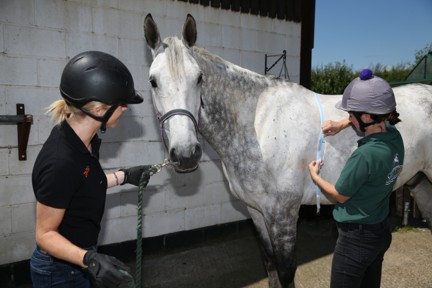
A weigh tape is a fantastic tool for tracking trends. While it may not give you an exact reading of your horse’s actual weight, it is highly sensitive to gradual changes when used consistently – we’d suggest weekly. Tips for accuracy:
- Always measure your horse stood square on a flat, level surface.
- Pass the tape over the base of the withers and bring it diagonally underneath, just behind the elbow/ front of the girth area. If the tape is completely vertical, it is too far back.
- Always use the same tape and try to measure at the same time of day to avoid differences caused by "gut” fill.
- Pull the tape flat so it is taught rather than tight, and it isn’t pinching or squeezing the horse’s skin at all.
Nutritional Strategies for Safe Weight Gain
If your horse is underweight, the temptation is to immediately reach for high-calorie "conditioning" feeds. However, this may not always be the best strategy. In severely underweight or emaciated horses, we recommend speaking to a nutrition advisor – appropriate feeds should be introduced very slowly to those who have been ‘starved’. Don’t expect overnight results either, be realistic, it could take 3 to 10 months to safely return them to an ideal weight.
Here are some general principles to help guide your journey:
Rule out Clinical Issues First
Sudden or unexpected weight loss in any horse warrants a call to your vet to ensure no health issues are to blame. Ensure your horse's teeth are checked regularly by a vet or qualified equine dental technician - difficulty chewing is a common cause of weight loss. Ensure your worming programme is up to date and monitor your horse for any signs of discomfort which may suppress appetite.
Reduce Stress
Assuming your horse is healthy, assess their whole management, training and environment aren’t a cause either. Sometimes moving your horse to a quieter stable on the yard where they’re more settled can be a simple fix. Equally a ‘cheeky’ herd member can impact the appetite or forage access of those down the pecking order. Re-evaluate your horse’s workload/ routine and make travelling as stress free as possible too.
Forage is the Foundation
Forage (hay, haylage, or grass) provides essential fibre to maintain hindgut health. Among other things, it stimulates chewing to produce saliva (which naturally buffers stomach acid), and acts as an internal radiator to keep your horse warm.
- Feed ad-lib forage wherever possible.
- Remember not all forage is equal – sometimes it may look fantastic but be low in calories/ protein. Without analysis you’ll never truly know if your poor doer is eating calorific forage.
- If your horse has poor teeth or struggles to chew long-stem forage, you may need to replace some or all of it with a high-fibre hay replacer.
Choose "Sympathetic" Energy Sources
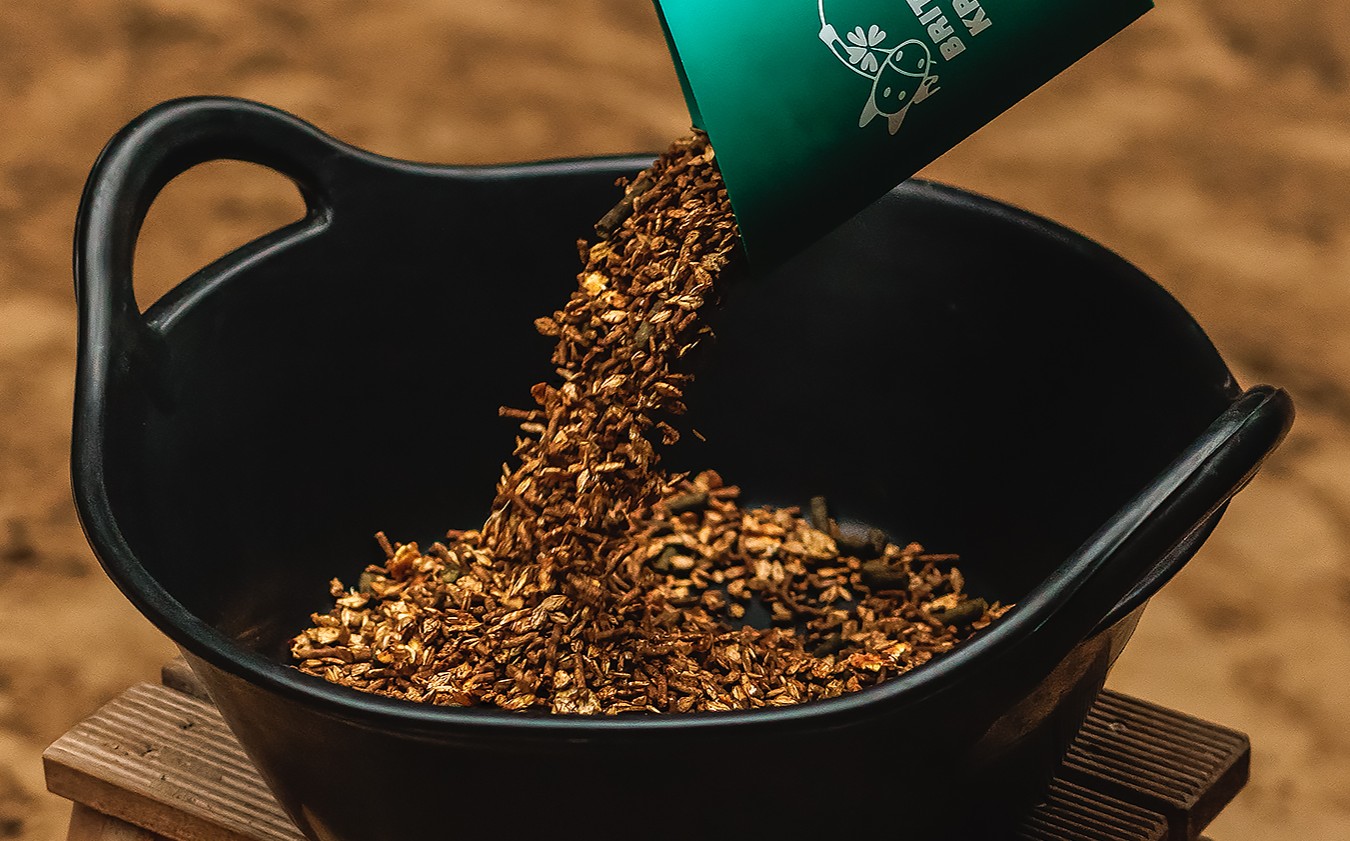
Calories and energy are the same thing – to understand further read our Truth About Calories Blog. To gain weight, your horse needs to consume more calories than they need. However, calories come from different sources which can have an impact behaviour, so the source of those calories matters:
- Fibre and Oil (Non-Heating): Fibre is digested slowly in the large intestine, oil in the small intestine but both provide slow-release energy. They are the ideal choice for sharp, excitable horses, those prone to gastric ulcers or laminitis and many seniors.
- Cereal Starch: Highly digestible but can cause excitability ("fizz") and digestive upsets if fed in large quantities. Avoid high-starch feeds for sensitive individuals.
Utilising Oil for Bonus Calories
When looking to boost the calorie density of your poor doer's ration, oil-based feeds can be incredibly useful. Oil is energy dense – meaning it’s high in calories - and it’s also starch-free.
Fun fact - 300ml of oil provides roughly the same amount of digestible energy as 1kg of oats!
If you choose to add oil on top of their current diet, remember these points:
- Feed up to: 100ml of oil per 100kg of bodyweight daily (e.g., 500ml per day for a 500kg horse).
- Introduce slowly: Add oil gradually at a rate of 100ml per week to allow their digestive system to adapt (which can take up to 12 weeks).
- Balance with Vitamin E: High-oil diets must be balanced with extra Vitamin E. Because of this, choosing a feed that already contains high levels of added oil is often much less complicated than adding oil on top of a standard ration. We’ve done the hard work for you – see below!
The Truth About Sugar Beet
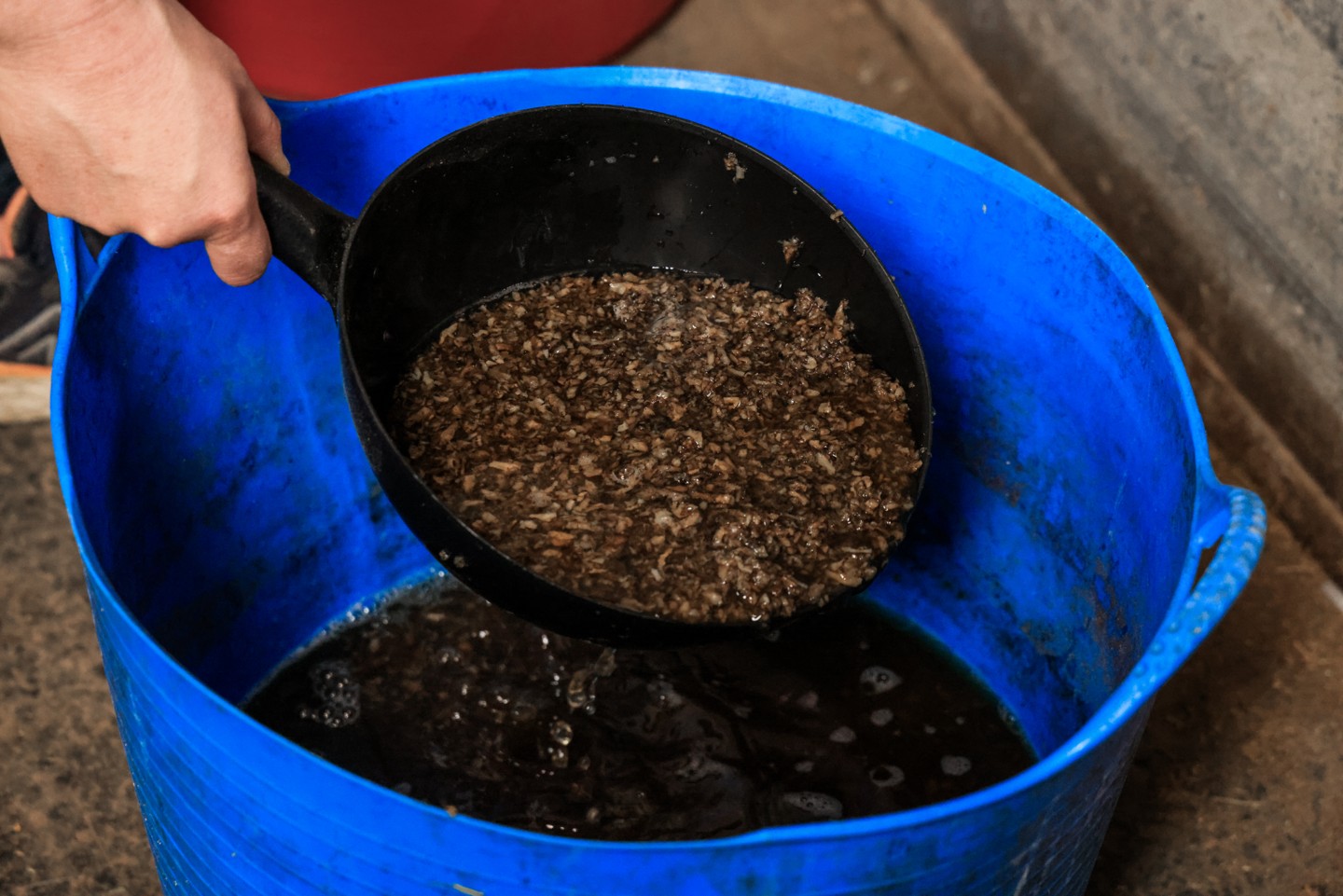
Sugar beet is high in calories, low in starch, and highly digestible. However, because we have to use so much water to soak it safely, it is very easy to overestimate how much you are actually feeding.
- Soaked sugar beet is approximately 80% water. This means a scoop of dry Horse & Pony cubes can actually contain up to 5 times more calories than a scoop of soaked sugar beet!
- Always weigh your sugar beet before soaking. A 500kg horse needs to consume at least 1kg (dry weight) per day of sugar beet to make a significant contribution to their calorie intake. You may be surprised how large their feed volume becomes from a relatively small amount.
We have formulated a range of calorie dense feeds designed to help your poor doer build healthy condition:
Our Recommended SPILLERS Conditioning Range
Ulca Fibre
Conditioning Fibre
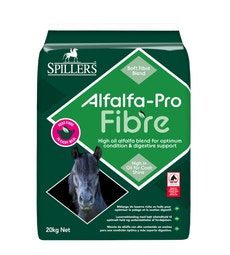
Alfalfa-Pro Fibre
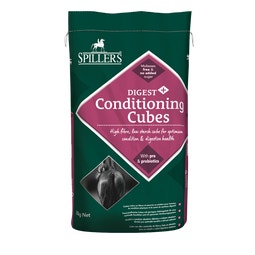
Digest+ Conditioning Cubes
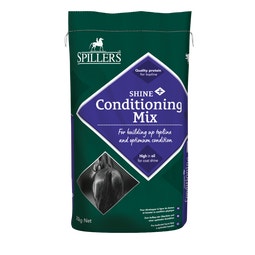
Shine+ Conditioning Mix
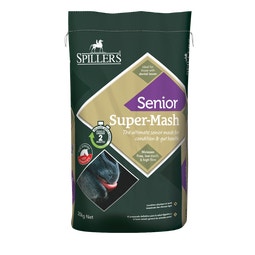
Senior Super-Mash
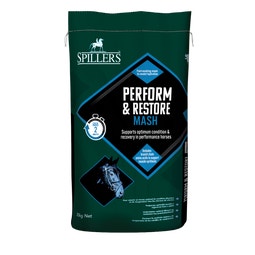
Perform & Restore Mash
Practical Tips for Tempting Fussy Eaters
Poor doers are often leaner as they’re also fussy eaters, which can make feeding time a battle of wits. Consider these simple ideas to encourage them to finish their feed:
- Keep meals small: Large, overflowing bowls can "over-face" a sensitive horse and put them off eating. Feed a maximum of 2kg per meal (dry weight) for a horse, and divide their daily ration into 3 smaller meals if necessary.
- Offer them a buffet: Some horses dislike having different feeds and textures mixed together in one bowl. Feeding individual feeds separately can help you distinguish which elements they consistently prefer.
- Try warm feeds: For horses with sensitive teeth, particularly in winter, adding warm water to mashes or cubes can be comforting – like us, some don’t like icy water.
- Natural temptations: Add small amounts of grated apple or carrots, choose feeds with tempting flavours, or even add a splash of apple juice to their bucket. Herbs like fenugreek (which smells of curry!) have been shown to be a favourite at tempting reluctant feeders.
- Powder problems: For some horses added supplements can put them off their meals. Adding unpalatable powders can be detrimental to calorie intake, so ask yourself, do they really need them or are there better options?
- Plan for travel: For those competing or training regularly, make sure you take the water they’re used to from home including their ‘normal’ buckets. Plan feeds for those who aren’t big forage eaters.
- Doctor Green: Lush grass is nature’s best calorie provider. Not all horses can have unrestricted access to grazing, but for poor doers who can try to ensure they have first choice to the best paddocks.
Need a Helping Hand?
Every horse’s journey to a healthy weight is different. If you are worried about your horse's weight, need help calculating feeding rates, or would like a completely tailored diet plan, our dedicated nutrition advisors are here to support you.
Get in touch with our SPILLERS Care-Line on 01908 226626 or fill in our online consultation form for free, friendly, and expert advice.