
Hay Soaking

The science of hay soaking
The question of how long hay should be soaked to reduce the water soluble carbohydrate (WSC) or ‘sugar’ content (and sometimes whether it should be soaked at all), often results in conflicting advice and unfortunately, the answer isn’t set in stone. But here’s what we do know….
• Sugar losses are highly variable and unpredictable
• Sugar losses are influenced by the temperature of the water and the length of soak
• Sugar losses do not seem to be influenced by the grass species or the initial sugar content of hay
• Soaking increases microbial contamination but the relevance of this is still not fully understood
• Soaking causes some loss of vitamins, minerals and soluble protein which means feeding a balancer is especially important for those fed soaked hay. That said, forage should never be relied upon to provide a balanced diet anyway, regardless of whether you feed soaked hay, restricted rations or feed plenty of dry hay!
• Soaking results in a loss of dry matter. This is complex but essentially, due to the loss of nutrients into the water your hay net will contain less ‘hay’ after you’ve soaked it.
With the above in mind, SPILLERS recommends:
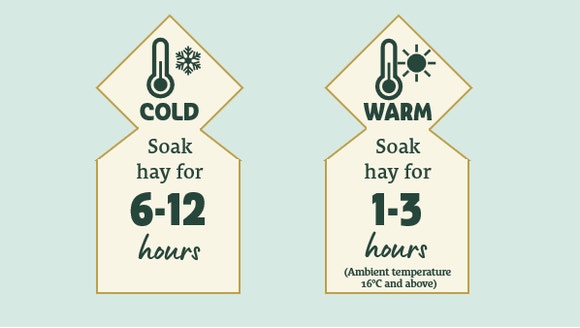
This advice helps strike a balance between promoting WSC losses and maintaining hygiene. Increasing the amount of hay you soak by 20% will help to compensate for the loss of dry matter and ensure you don’t inadvertently restrict your horse/ pony’s forage intake too severely.
Here’s the detail:
Soaking hay helps to reduce the WSC or ‘sugar’ content and of course, less sugar means fewer calories! As the initial sugar levels vary greatly and losses from soaking are highly variable, unfortunately soaking doesn’t guarantee suitability for laminitics. E.g. if the hay starts with a WSC level of 20% and soaking creates a loss of 25% the hay will still contain 15% WSC which is higher than recommended for laminitics.
SPILLERS has carried out a series of hay soaking studies and the advice provided is based on findings from our research and researched published by others. One study published by Longland et al (2014) in partnership with SPILLERS found:
- Soaking for 1hr in water at 8°C resulted in an average WSC loss of 12%.
- Soaking for 16hrs in water at 8°C resulted in an average WSC loss of 30%.
- Soaking for 1hr in water at 16°C resulted in an average WSC loss of 28%.
- Soaking for 16hrs in water at 16°C resulted in an average WSC loss of 46%.
In another of our studies, we soaked 9 different hays for 20 mins, 40 mins, 3 hours and 16 hours at 8°C and found:
- On average soaking for 20 mins only reduced WSC by 3.5%
- Only 2 hays contained <10% WSC after 16 hours of soaking
- 2 hays contained >16% WSC after 16 hours soaking
What do we mean by Dry Matter?
Hay, haylage and all other feeds, will contain some water. Hay usually contains around 10-15% water, so for every 10kgs of hay you weigh out, roughly 1.5kg will be water, leaving 8.5kgs of dry matter – or actual hay.
Due to a loss of nutrients (and therefore dry matter) into the water, each haynet will contain less ‘hay’ and more water post soaking. For example, a net of hay weighing 8kg may contain approximately 7kg of dry matter or ‘hay’ before soaking and only 5.5kg after soaking! As a guide, we advise you increase the amount of hay you weigh out by 20% before soaking (unless you are feeding ad lib).
Forage only diets, regardless of whether they include grazing, soaked hay, dry hay or haylage, are unlikely to provide a balanced diet so feeding a balancer is sound advice for all horses and ponies who maintain weight easily on forage alone. See our balanced diet page for more info!
Hay soaking tips:
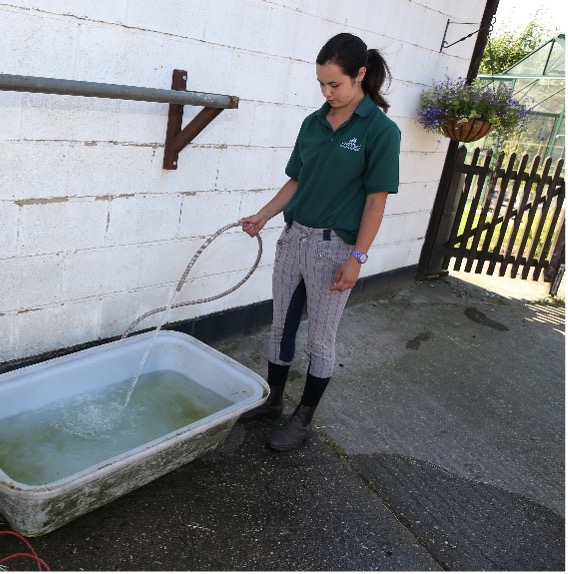
Always use fresh water - water is precious but using fresh water for every soak is important as it helps to ensure maximum WSC losses. The concentration of ‘sugar’ in the water needs to be lower than the concentration of sugars in the hay. Re-using hay soaking water may also be unhygienic, especially in hot weather and can also affect palatability.
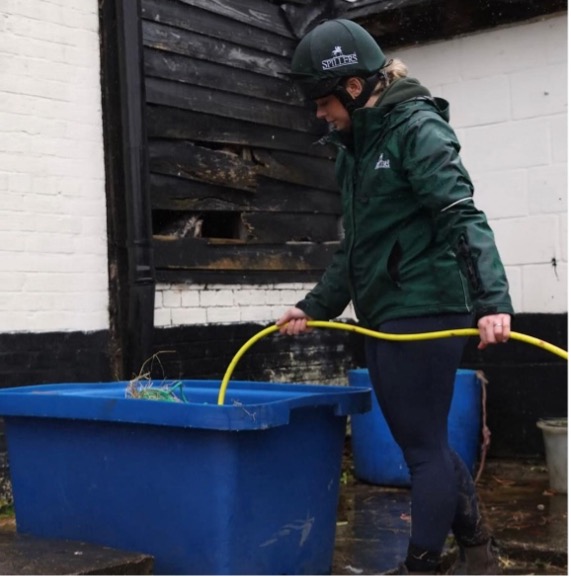
Soak your hay out of direct sunlight during hot weather. Soaking causes an increase in microbial contamination which is likely exacerbated in hot weather, although the potential implications of this are still not fully understood. While some owners have been soaking hay for long periods without any concerns for years, we recommend reducing the soaking time in warm weather. Hopefully this cautious approach balances WSC losses and maintaining hygiene.
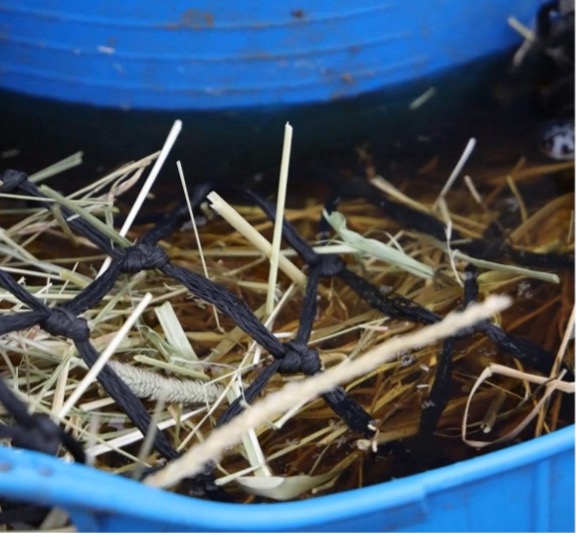
Fully submerge the hay in the water – dunking it, throwing buckets of water over it and spraying it will only wet the outside. You need to properly soak the hay whether you’re soaking to remove dust or reduce WSC levels.
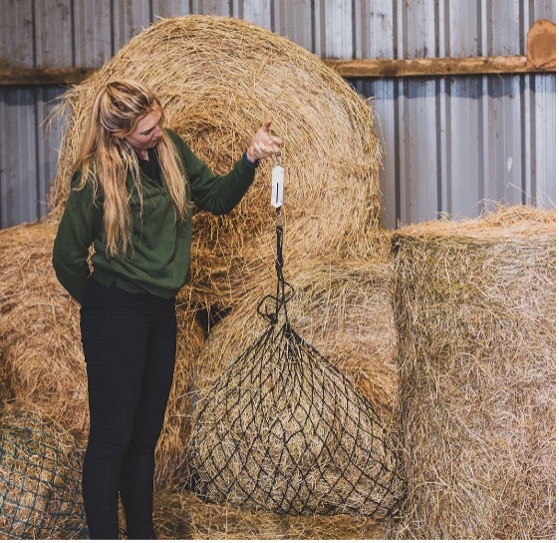
Weigh your hay before soaking – most horses on restricted rations need a minimum of 1.5% of their bodyweight in forage per day (dry matter). To account for the fact hay contains up to 15% water, weigh out 1.8% of their bodyweight in dry hay per day to meet their minimum forage needs if they have no access to grazing. If soaking, start with an extra 20%, so weigh out 2.1% of their bodyweight per day.
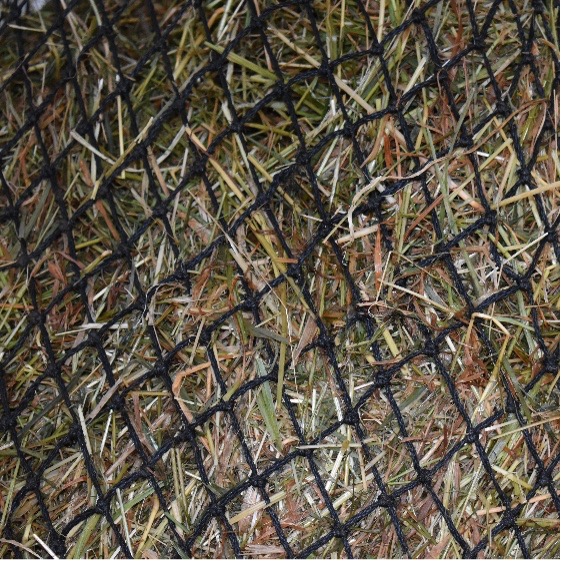
Feed hay immediately after soaking to help maintain hygiene and palatability. Leaving hay to dry means any dust particles may become airborne and leaving it to drain for a few hours may make it less palatable too.
Forage analysis
Ideally have your forage analysed rather than relying on feeding soaked hay, especially if your horse/ pony is prone to laminitis. Forage for laminitics should contain less than 10-12% NSC (starch + WSC) on a dry matter basis but as UK pastures are consistently very low in starch, testing for WSC is often sufficient. Make sure the lab you choose will test your sample for water soluble carbohydrate using the wet chemistry method (as opposed to the NIR method). Consider the practicalities of this if you’re getting new batches of hay regularly, as by the time you get results back from the lab you could be due a new delivery. Also remember the results are only an indicator of the sample you send off and perhaps don’t represent the whole batch. However, if you’re lucky enough to have a barn full of hay to last you several months, forage analysis provides a valuable guide to the nutritional value of your batch.
Soaking to reduce dust
All hay (and haylage) contains a degree of tiny airborne dust particles, mould spores and yeasts small enough for the horse to inhale which collectively, are referred to as ‘respirable particles’. Soaking causes these particles to swell and stick to the hay so they are ingested rather than inhaled, soaking for just 20-30 minutes should be sufficient.
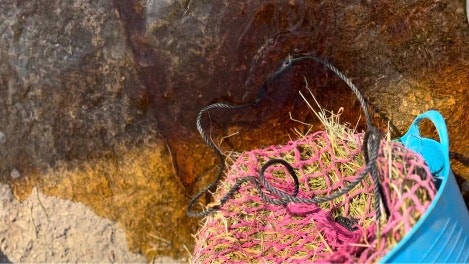
Steaming Hay
Steaming your hay is by far the superior option if you’re concerned about respiratory health but it has little effect on WSC levels. Although not a practical solution for many owners, soaking followed by steaming helps to achieve the best of both worlds if you are trying to reduce the level of ‘sugar’ in your hay and improve hygienic quality. Always use a commercially produced steamer, homemade ones rarely maintain temperature and may become a breeding ground for bacteria rather than help! Did you know straw can be steamed before feeding to improve the hygienic quality?
References:
Caroline McG. Argo, Alexandra H.A. Dugdale, Catherine M. McGowan (2015) Considerations for the use of restricted, soaked grass hay diets to promote weight loss in the management of equine metabolic syndrome and obesity. The Veterinary Journal 206 (2). https://doi.org/10.1016/j.tvjl.2015.07.027
Krishona Lynn Martinson, Marcia Hathaway, Hans Jung, Craig Sheaffer (2012) The Effect of Soaking on Protein and Mineral Loss in Orchardgrass and Alfalfa Hay. Journal of Equine Veterinary Science 32 (12).https://doi.org/10.1016/j.jevs.2012.03.007
Longland, A.C., Barfoot, C. and Harris, P.A. (2011), Effects of soaking on the water-soluble carbohydrate and crude protein content of hay. Veterinary Record, 168: 618-618. https://doi.org/10.1136/vr.d157
Longland, A.C., Barfoot, C. and Harris, P.A. (2014), Effect of period, water temperature and agitation on loss of water-soluble carbohydrates and protein from grass hay: implications for equine feeding management. Veterinary Record, 174: 68-68. https://doi.org/10.1136/vr.101820
M. Bochnia, C. Pietsch, M. Wensch-Dorendorf, M. Greef, A. Zeyner (2021) Effect of Hay Soaking Duration on Metabolizable Energy, Total and Prececal Digestible Crude Protein and Amino Acids, Non-Starch Carbohydrates, Macronutrients and Trace Elements. Journal of Equine Veterinary Science 101. https://doi.org/10.1016/j.jevs.2021.103452
Moore-Colyer MJS, Lumbis K, Longland A, Harris P (2014) The Effect of Five Different Wetting Treatments on the Nutrient Content and Microbial Concentration in Hay for Horses. PLoS ONE 9(11): e114079. doi:10.1371/journal.pone. 0114079
Moore-Colyer M, Longland A, Harris P, Zeef L, Crosthwaite S (2020) Mapping the bacterial ecology on the phyllosphere of dry and post soaked grass hay for horses. PLoS ONE 15(1): e0227151. https://doi.org/10.1371/journal. pone.022715