Identifying an Overweight Horse

Equine obesity is one of the most important global welfare issues. While it’s thought around 30-50% of the total equine population may be obese, in some groups, obesity rates may be as high as 70%. Simply recognising and accepting that your horse is overweight is the first step towards making essential changes in the way you manage your horse and helping keep their waistline in check.
In a recent survey*, we found many horse owners struggled to correctly identifying whether a horse was truly overweight or not. We’ve become used to seeing overweight horses with comments such as ‘he’s always been a good doer’, ‘that’s just her shape’ or ‘but he’s a cob, they’re meant to be solid’ casually justifying obesity. For many reasons there can be real bias and emotional denial when it comes to assessing our own horses.
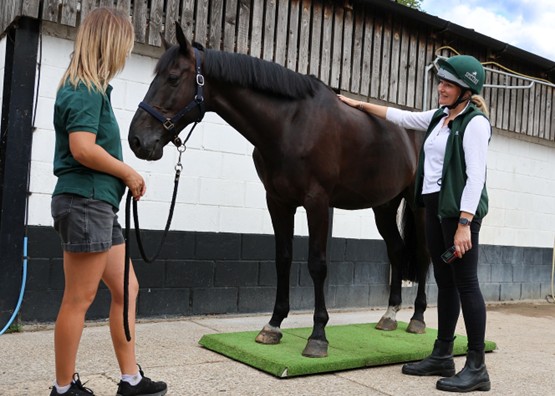
We like to see our beloved pets round and healthy and in excellent condition. But ‘condition’ can mean different things to different people and some see slim, fit horses as too lean. However, when it comes to diet, ‘condition’ simply means fat coverage and ‘conditioning’ feeds are designed to promote weight gain or maintenance in those with high energy (calorie) requirements – the exact opposite of what you’re looking for if your horse is prone to piling on the pounds! A preference for ‘roundness’ could mask the all-important truth that really, they’re just carrying excess weight rather than having a truly developed topline through correct work.
Regardless of your horse’s breed, keeping them at a healthy weight is essential for long term wellbeing and reducing the associated risk of injury or disease. So how do we correctly identify a healthy weight for our horses without bias?
Looks can be deceiving!
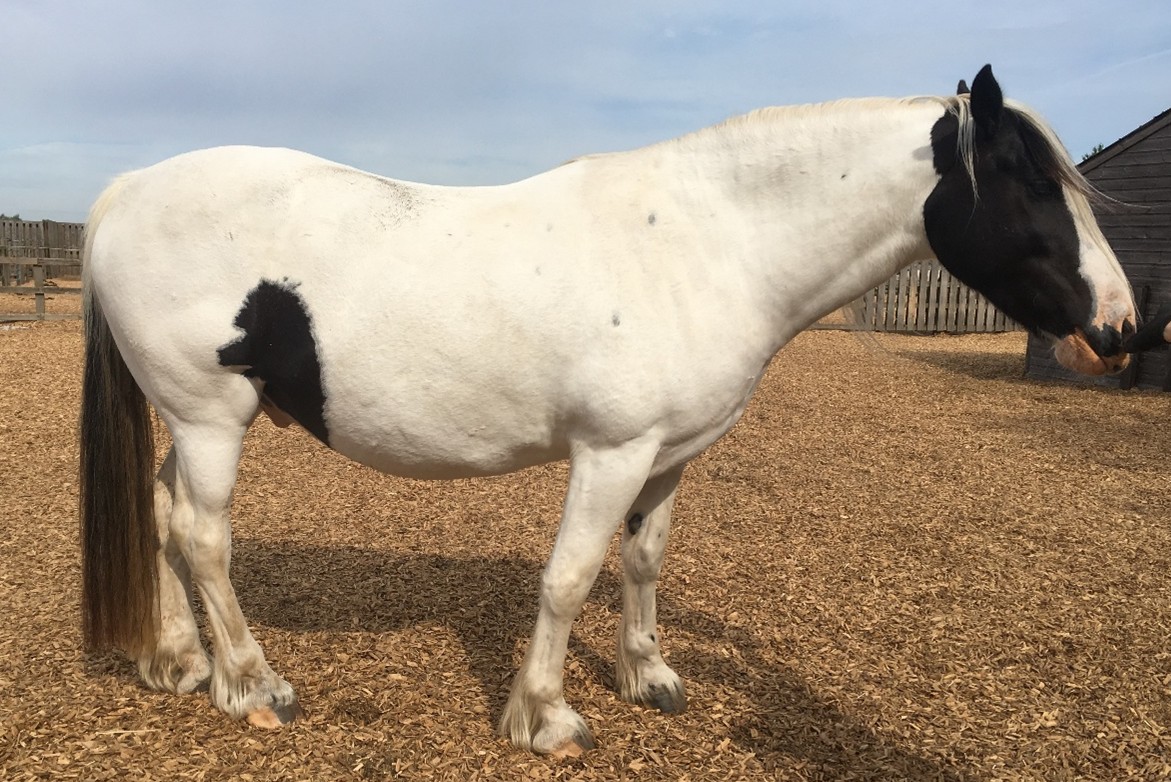
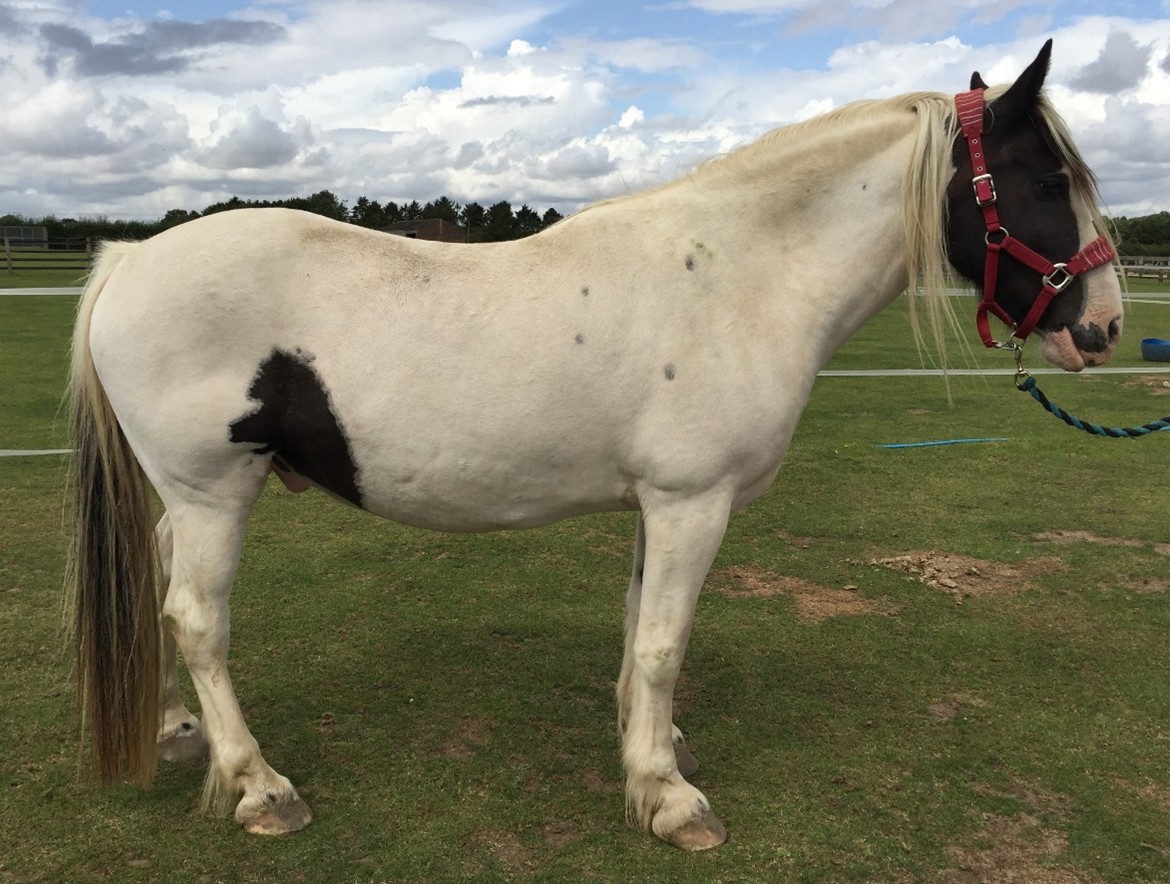
A visual assessment of your horse is not a reliable indicator of their body condition. A horse with well sprung ribs may naturally have more of a barrel appearance, as can horses who haven’t been ridden and lack core muscles but they may in fact carry very little body fat. Equally, some will appear relatively ‘fit’ but may carry a lot of excess fat over the ribs, have a cresty neck or fat pads around the tailhead. To truly assess body fat, you need to get your hands on your horse and feel for fat coverage. Some horses are deceptive to look at!
Seasonal fluctuations in body condition are natural, especially for natives, with the excess fat gained in spring and summer serving as a reserve for when food (under natural conditions) is in short supply over the winter months. However, domestication has meant they rarely need this buffer as food is plentiful all year round. It’s really important to try and replicate nature and use the winter months to help weight loss in good doers.
Like people, horses gain excess weight when they consume more energy (calories) than they burn. Wherever possible, preventing excess weight gain is by far the best strategy but if your horse has piled on the pounds, you are certainly not alone.
Restricting energy (calorie) intake is the key to weight loss and whilst the theory may sound simple, we know that taking control of your horse’s waistline can be far from easy in practice. There’s no single recommendation for all and the most suitable diet and management will vary between individuals. We hope our Slimmers’ hub provides you with plenty of information to help you make the best decisions for your individual horse and circumstances. Of course, should you have any further questions or would like a tailored diet plan, especially if you have a lamintic, then don’t hesitate to contact our nutrition specialists on our Care-Line who will be happy to advise.
Methods for Assessing your horse’s condition
Body Condition Scoring
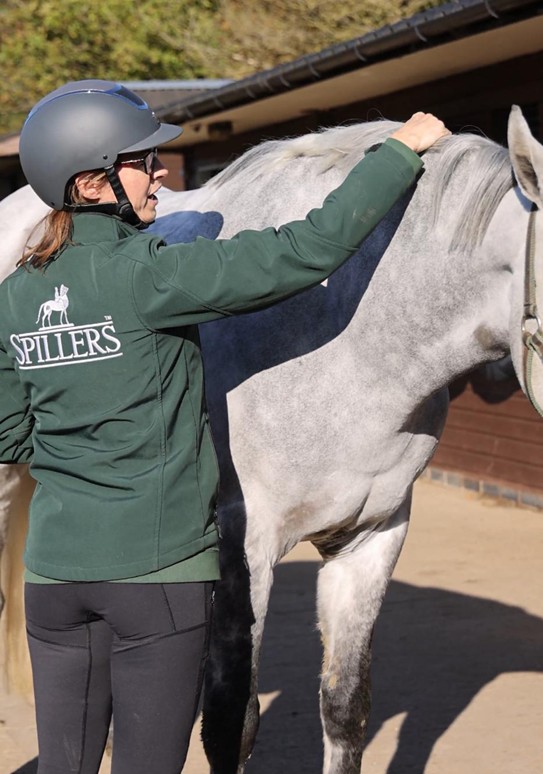
Body condition scoring is a practical method of assessing body fat by eye and, more importantly, by touch. Several areas of the body where fat is most commonly laid down are scored using a numerical grading system, most commonly a 1-9 or 0-5 scale. SPILLERS recommend using the more widely validated (scientifically tested) 1-9 scale, but whichever system you use, the important thing is to apply it consistently. On the 1-9 scale, six areas are given an individual score and the average is the overall score given to your horse.
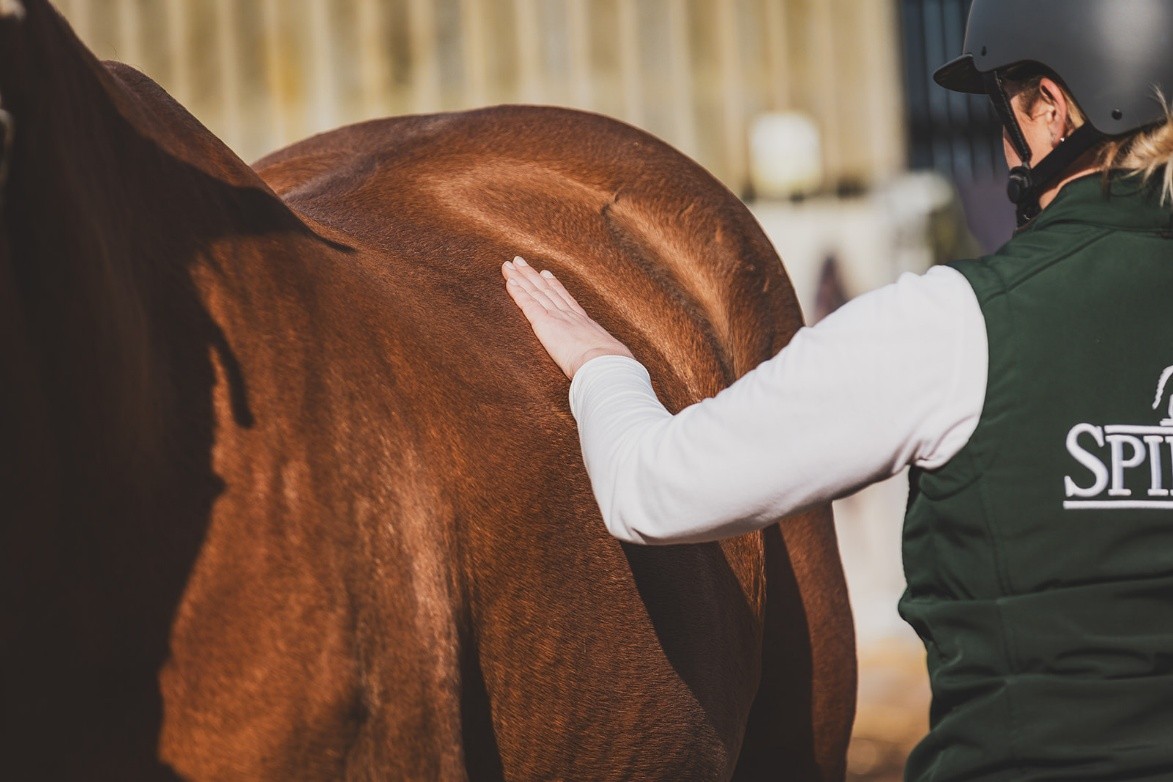
A body condition score (BCS) of 5 on the 1-9 scale is generally considered ideal while a score of 7 or above is considered obese.
What does the ‘perfect 5’ look like?
| Description | |
| Neck | Neck is even all the way down and blends smoothly into the body. |
| Withers | Withers are rounded over the bone structure, not angular. |
| Shoulder | Shoulder blends smoothly into the body with no bulge. |
| Ribs | Ribs can be easily felt but not seen. |
| Loins/ back | Back is level. |
| Tailhead | The horse should be round over the tailhead from behind, not heart shaped or angular, and fat around the tailhead feels slightly ‘spongey’. |
For more detailed descriptions on how to body condition score correctly and to see examples of a range of horses on the scale please click through to our more detailed Body Condition Scoring page.
How fat is fat?
Obesity is described as the accumulation of fat to the point at which it has a negative effect on health and welfare. As mentioned, horses and ponies with a body condition score (BCS) of 7 out of 9 and above are considered obese. At a BCS of 7, more than 20% of bodyweight is likely to be fat but in very obese horses, fat may account for more than 30% of their bodyweight!
Weigh tapes
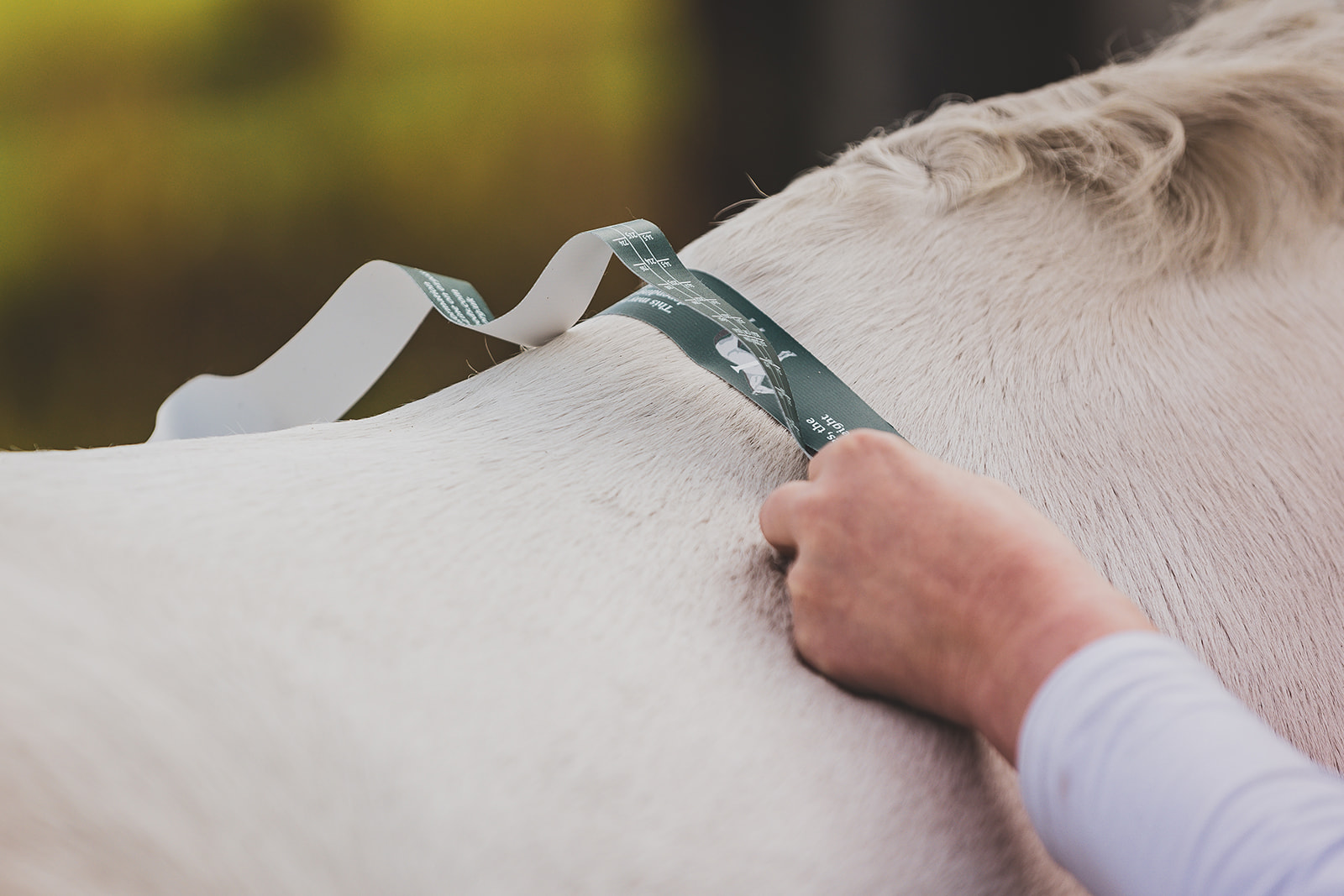
Most owners don’t have the luxury of regular (if any) access to a weigh bridge, making a weigh tape a more practical option. Although they may under or over-estimate the horse/ pony’s actual weight, if used correctly and consistently, they can be a useful way of tracking gradual changes.
Tips for using a weigh tape
Make sure your horse is stood as squarely as possible on a firm, level surface.
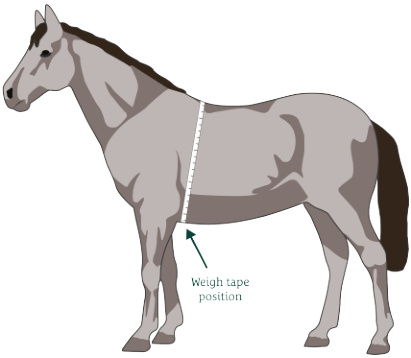
Place the weigh tape over the horse’s back at the base of the withers.
Next, bring the tape underneath the girth area just behind the foreleg and elbow. Make sure the tape is taut against the skin – no gaps or pinching.
Check your weigh tape is correctly positioned. It is likely it will be on a slight angled line (/). If it is on a vertical line, the tape has been positioned too far back and will give an inaccurate reading.
Always use the same weigh tape to help improve accuracy when comparing measurements over time.
Try to monitor your horse’s weight weekly, ideally at the same time of day as changes in gut fill can affect the result – this is why most of us prefer to stand on the scales first thing in the morning!
Remember weigh tapes are not accurate for pregnant mares and foals/ youngstock (especially those under 6 months of age) nor for tiny breeds of ponies.
Body Condition Index - Assessing Body Fat
The Body Condition Index (BCI) is a method of assessing and monitoring body fat, similar to the Body Mass Index (BMI) used in humans. Horses and ponies with a BCI of 18-22 are likely to be overweight, whereas those scoring more than 22 are likely to be obese. The BCI was developed in 2015 but thanks to new research*, the new version provides greater accuracy. This latest research found the BCI to be more reliable than body condition scoring when completed by inexperienced assessors.
A mathematical equation using five body measurements – height, heart-girth, belly-girth, length and neck circumference - is used to calculate the horse’s final BCI score. While this might sound complicated, our easy-to-use tool does all the maths for you; all you need to do is enter your horse/ pony’s measurements into the calculator at the bottom of this page. If you’re unfamiliar with, or feel less confident in body conditioning scoring, the new BCI might be just thing for you!
BCI vs BCS
The BCI is more objective as it uses measurements.
The BCI was primarily developed to help owners identify horses and ponies likely to be overweight or obese whereas body condition scoring is suitable for assessing those who are underweight, lean and ‘ideal’ too.
Body condition score can be slow to change initially in very overweight/ obese horses and ponies on a restricted diet, despite them losing internal fat, so it may not be the ideal way of monitoring early progress.
Research has found the BCI to be more reliable than body condition scoring when completed by inexperienced assessors.
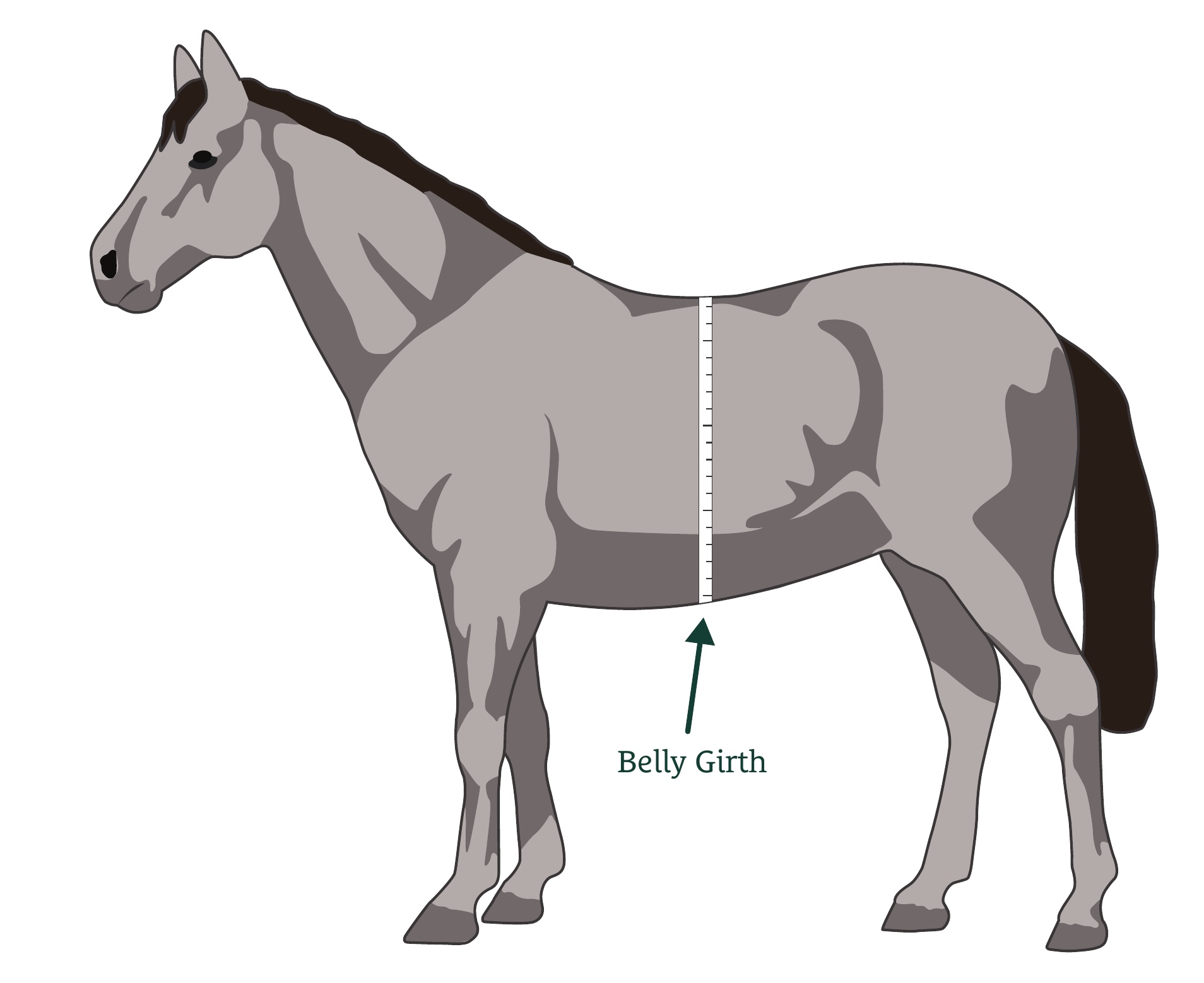
Belly Girth
Measured around the widest point of the trunk (belly), belly-girth can be a very sensitive indicator of generalised fat loss in response to changes in diet. This perhaps makes it one of the most useful weight monitoring tools for overweight horses and ponies.
Simply measure the same point of their trunk, at the same time each day and keep a record of the length to monitor for any increase or hopefully decreases!
Heart girth
Heart girth is measured as the horse/ pony breathes out by passing a tape measure immediately behind the base of the withers and the elbows.
Tip: monitor belly girth and/ or heart girth weekly.
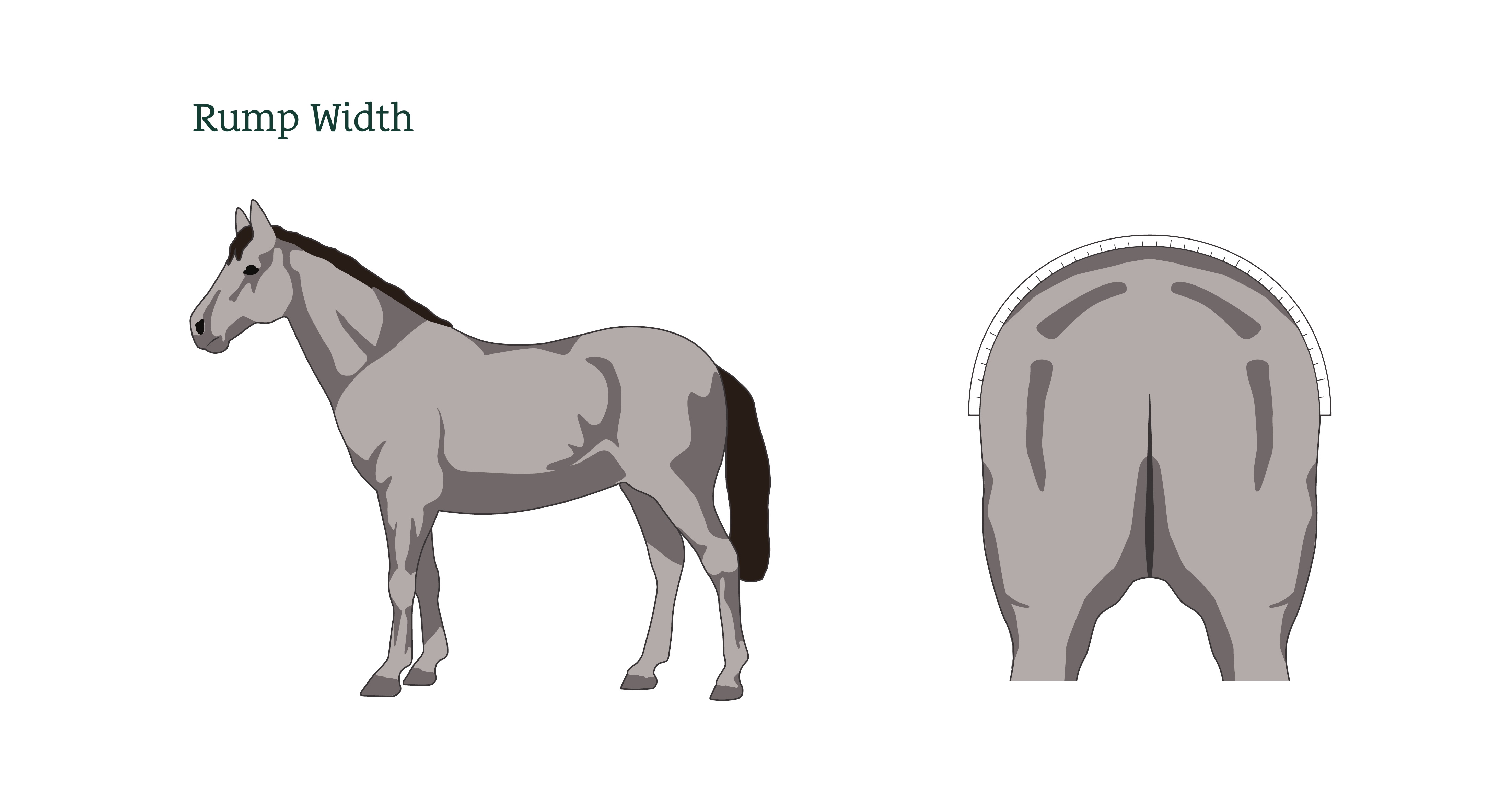
Rump width
Measured from the point of one hip to the point of the other.
Cresty Neck Score (CNS)
Excess fat along the crest may be associated with insulin dysregulation and is a risk factor for laminitis. The CNS was developed to objectively assess fat deposits along the neck. On a scale of 0-5, a score of 3 or above has been found to be linked to an increased risk of laminitis.
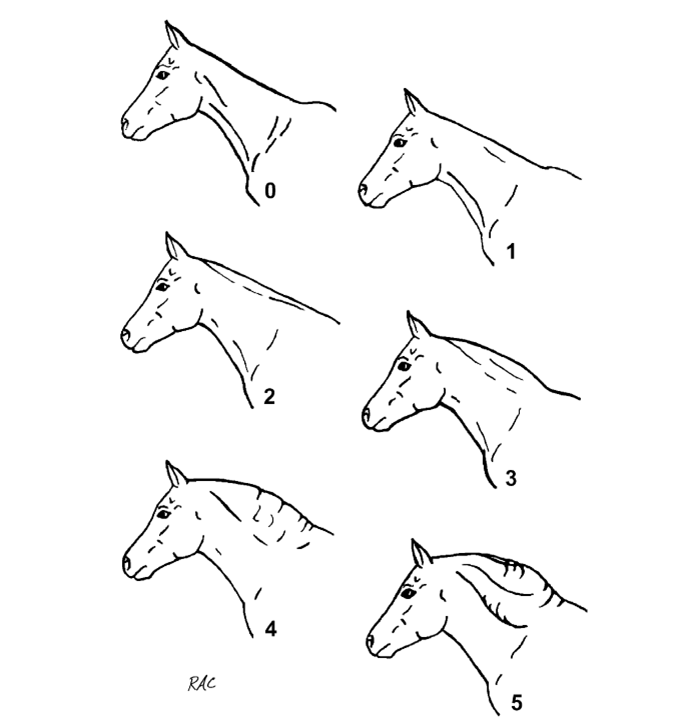
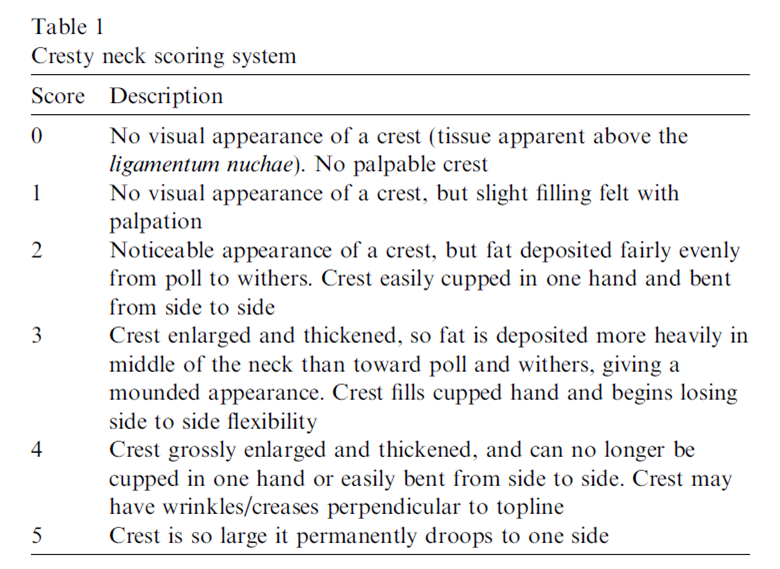
Reprinted from Carter RA, Geor RJ, Burton Staniar W, Cubuitt TA, Harris PA: Apparent adiposity assessed by standardised scoring systems and morphometric measurements in horses and ponies. Vet J 2009, 179:204-210, Copyright 2009, with permission from Elsevier
*Potter SJ, Erdody ML Bamford N, Knowles E, Menzies-Gow N, Pippa K. Morrison P, Mc. Argo C, McIntosh BJ, Kaufman K Harris PA, Bailey SR (2023) Development of a body condition index to estimate adiposity in ponies and horses from morphometric measurements Equine Veterinary Journal in press.
Finally, did you know?
Together with collaborators around the world, we’ve been working hard to improve our understanding of equine obesity for over 20 years! Highlights from scientific studies include:
- Developing a number of now commonly recommended methods for monitoring condition such as the cresty neck score and belly girth/rump width measurements.
- Producing the evidence to support the recommendation that horses and ponies with a BCS of ≥7/9 should be considered obese which has now become the globally accepted definition.
- Developing the body condition index (BCI)
- Validating Deuterium oxide dilution (a specialist clinical test) as the gold standard method for determining total body fat percentage in ponies. This has since been used in several studies which has helped to further our understanding of obesity.