What’s inside the bag? An inside look at horse feed formulation
Scroll through your TV guide and you’ll likely come across a ‘how it’s made’ or ‘what’s inside’ style documentary about some of the nations’ favourite foods. As conscientious horse owners or carers, we all want to know the feeds we give to our horses are safe, manufactured by reputable companies and fit for purpose. It’s been said many times that good nutrition is all about balance and for good reason. But as you scoop your horse’s feed into their bucket, have you ever wondered how it provides a balanced diet, or how you can check the credentials of the company making it?
Who’s making my horse feed?
It’s a legal requirement for all animal feed and supplement manufacturers to be registered with their local authority. The manufacturer’s registration/ approval number, sometimes called an establishment number, must be included on the label. Surprising as it may sound, our team occasionally come across feeds and supplements (legally speaking a supplement is a feed) manufactured in unauthorised premises. If you can’t find the approval or establishment number on the pack/ label don’t be afraid to contact the company responsible – it’s a legal requirement for their contact details to be on there too. For added reassurance, consider choosing a BETA NOPS (British Equestrian Trade Association, Natural and Other Prohibited Substances) approved feed, even if you’re not competing under affiliated rules – only authorised manufacturers are eligible for accreditation!
You can also check whether companies are accredited to independent, voluntary quality schemes such as the Universal Feed Assurance Scheme (UFAS) which is relevant to mixes, cubes, fibre blends/ ‘chaff’, mashes, balancers and supplements. Accredited companies are audited annually to ensure their products are manufactured legally and to consistent quality standards. FEMAS (Feed Materials Assurance Scheme) is another common scheme, but it applies to single feed ingredients such as straight cereals, forages and salt licks. UFAS and FEMAS accredited companies will include their unique registration number on their packaging/ label.
Starting feed formulations
Before creating a formulation or ‘recipe’, a nutritionist will start by thinking about the type of horse/ pony the feed is intended for, their nutrient and energy (calorie) requirements and the potential contribution made by forage. For example, a 500kg horse in light work has the same requirement for vitamins and minerals regardless of whether they are a good doer or a poor doer but:
Feeds for poor does need to provide additional calories for condition alongside vitamins, minerals and quality protein
Good doers require essential nutrients to balance forage with limited calories
Horses on restricted forage diets may need their balancer to provide higher levels of vitamins, minerals and amino acids (especially lysine) than good doers given unlimited access to forage
How do feed companies choose ingredients?
Once the specification has been set, it’s time to think about how to deliver it! In balancers for example, the key ingredients are vitamins, minerals and those rich in protein and essential amino acids (the building blocks that make up proteins). However, some will also contain added functional ingredients such as glucosamine for joint support or pre and probiotics to support digestive health. Although we tend to think of all these things as ‘ingredients’, legally speaking, some are classed additives which is why you won’t find vitamins, minerals or probiotic live yeast in the list of ingredients.
Soya bean meal is an excellent source of protein for horses, both in terms of quality and quantity.
Sunflower seed meal is another valuable protein source. Each ingredient has its own nutrient profile – the key is understanding each one and knowing how to combine them to deliver the right balance of nutrients in the finished product.
A bit like making a cake, you need a combination of wet and dry ingredients to form a pellet. Molasses is well-known for enhancing palatability, but it also helps to ‘bind’ ingredients together and make a strong pellet. Remember most balancers (and other feeds) containing molasses are low in sugar!
With the exception of true feed allergies, which are very rare, horses respond to nutrients, not ingredients. Companies may choose to manufacture ‘free from’ feeds to offer customers more choice, but it certainly doesn’t mean the excluded ingredients are ‘bad’ or harmful to horses, nor should they be marketed as such.
At SPILLERS all the ingredients we use have been safely fed to horses for decades, and all our feeds are BETA NOPS approved.
Quick links
Understanding feeding rates
Nutrients are normally declared on a % or per kilo basis but the level of nutrients (and calories) your horse actually consumes from any feed will depend on how much of it they eat. This means the feeding rate is a big consideration when it comes to formulating (and choosing) any feed – for one thing, it dictates how concentrated the vitamins and minerals need to be to provide a balanced diet. For example, to provide 1000iu of vitamin E per day, a product will need to contain:
10,000iu of vitamin E per kilo if it is to be fed at 100g per day
2,000iu of vitamin E per kilo if it is to be fed at 500g per day
250iu of vitamin E per kilo if it is to be fed at 4kg per day
Most pelleted feed balancers are designed to be fed at 100g per 100kg of bodyweight per day, equivalent to just 500g for a 500kg horse. Because of this, the level of vitamins, minerals and protein will be significantly higher when compared to a mix or cube on a kilo for kilo basis. The low feeding rate also means the energy (calorie), fibre, starch and sugar content is far less relevant. Think of it like chocolate and money – 100g of milk chocolate contains around 550 calories but if you can limit yourself to one or two small squares it won’t ruin your diet. If someone offered to give you 10% of their savings, would you prefer they had £10 or £1,000 in the bank?
How can you design a balancer without knowing what’s in my forage?
With frequent reminders about the variability in forage and the need to make changes gradually, you could be forgiven for wondering how an off the shelf product can meet the requirements of your individual horse. However, nutritionists will carefully consider the variability in forage and how much of it will be eaten to help ensure that potential shortfalls in vitamins and minerals are accounted for without oversupplying to anywhere near harmful levels.
Although some of the nutrients in forage can be hugely variable – the WSC or ‘sugar’ content for example may range from <10% to >30% in grass and hay - the potential for vitamins and minerals to be under or oversupplied is less variable. For example, forage typically exceeds iron requirements, even if fed in smaller amounts, while levels of copper and selenium in grass and hay are typically low.
While the tolerance for most potentially harmful vitamins and minerals is quite high, there are a few exceptions including vitamin A, iodine and selenium. In some cases, the balance between minerals (not just the total amount supplied) is also very important – for example the ratio of zinc to copper in the total diet.
All in all, feeding the recommended amount of suitable balancer is a convenient, effective and importantly safe way to ensure good doers receive a balanced diet.
Read more: Forages and how much to feed
Delivering nutrient promises
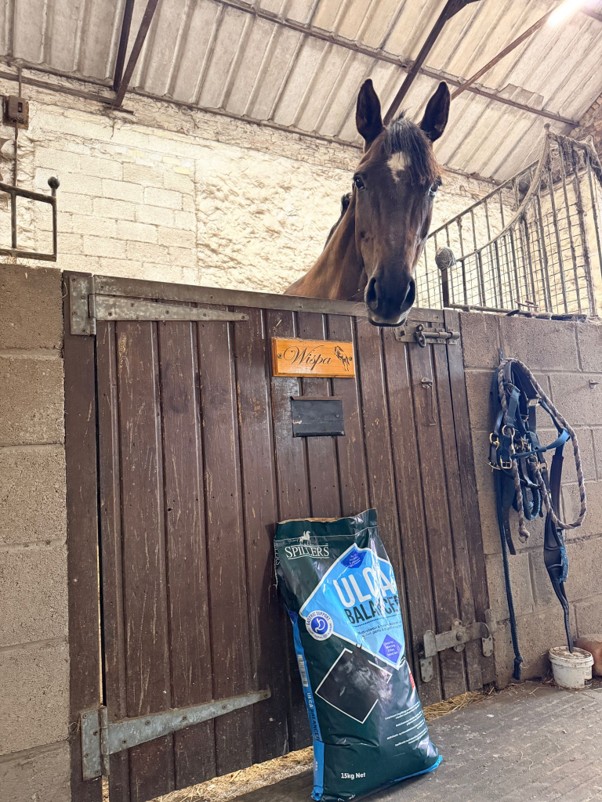
Reputable manufacturers complete nutritional testing on raw materials (ingredients) and finished products throughout the year to help ensure what’s inside the bag delivers the nutrients declared on the outside (this is one of many processes reviewed as part of annual UFAS audit). Feeds can be selected for random testing by Trading Standards at any time to ensure compliance with feed law. Manufacturers must also be able to prove feed additives such as vitamins and minerals have been included at the declared level.
Summary
Feeding the recommended amount of a suitable feed with added vitamins and minerals is convenient, effective and importantly safe way of providing your horse with a balanced diet. If your horse maintains weight easily on forage alone, a balancer is often the ideal solution. For added reassurance that your feed is produced legally and to consistent standards, look for accreditation to voluntary quality schemes such as UFAS. And if you’re competing under affiliated rules, ensure all feeds, supplements and treats are BETA NOPS approved.
Author
Written by: Sarah Nelson
Product Manager, SPILLERS
Author summary:
Sarah joined the SPILLERS team as nutrition advisor in 2009 and is now responsible for the technical management of all SPILLERS products, including feed formulation and labelling. She also works closely with our Science & Nutrition Director, Dr Edd Knowles and former Science Director (current Scientific Advisor), Dr Pat Harris, to translate the results of our research into practical, evidence-based advice.