Forage Management

In the UK ‘preserved forage’ usually refers to hay or haylage, sometimes wrapped hay and straw too. But what is the difference between them all and how should you choose which to feed a good doer?
Hay
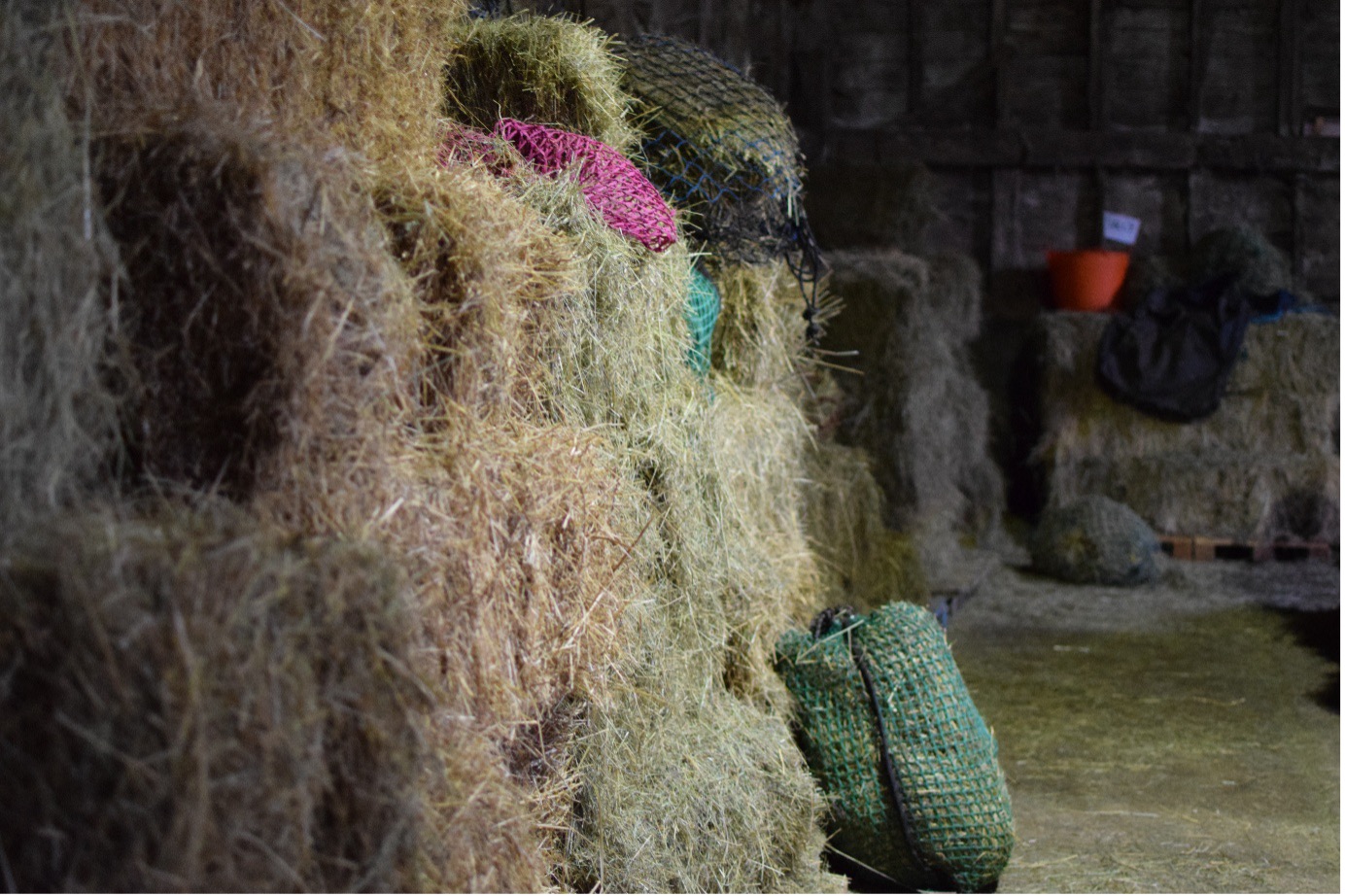
Hay is effectively preserved grass through drying. Various grasses can be included in the mix but typically hay will be classed as seed or meadow hay. Traditionally meadow hay includes a blend of grasses on established paddocks, whereas seed is a single type harvested specifically to be used as horse (or other animal) feed.
In either case, once the grass plant is deemed to have reached maturity, it will be cut and left to dry in the sun (hopefully) for a few days, being regularly turned and then baled once dry. In ideal harvesting conditions, it will have dried without getting damp from rain which can cause mould and make the hay dusty. It should contain little to no undesired other plants, and be green, not overly coarse and fresh smelling. Hay should contain just 10-15% water but nutritionally can vary depending on numerous factors including the stage of growth, soil type, field features and even time of day. Some hay will be low in calories and sugar, while other batches may be high in one or both.
Well made hay can technically be fed straight away as it should need no extra drying time. However, as UK harvesting weather is variable usually the safest option is to wait a few weeks. Hay should be stored in a dry shed and used as required.
Haylage
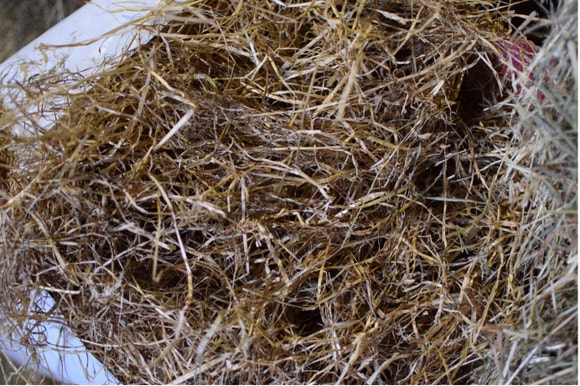
Haylage can also be categorized as seed or meadow but will be cut under different circumstances. Usually, it is cut earlier in the growth stage, so farmers have time to grow a second or even third crop. It will be cut and wrapped in plastic while still moist which preserves the crop but means the forage needs time to ‘ferment’ before it can be safely fed. Typically horses owners wait up to 3 months before feeding haylage.
The water content of haylage can vary greatly, typically between 25-45% meaning it contains less fibre per kilogram weighed and the variation makes it more difficult to know exactly what you’re feeding. Contrary to popular belief, haylage is not automatically higher in calories or sugar than hay. It will depend entirely on the growing conditions and time of harvest although average figures for calories do tend to trend slightly higher than average hay. The benefit is that it is (or at least should be) dust free and more suited to horses prone to dust allergies and can be stored outside. Once opened, a bale should be fed within 5 days. Bales with damaged/ ripped plastic should not be fed, neither should any showing signs of mould or damp.
Wrapped Hay
Wrapped hay should be as the name suggests, simply wrapped hay. So late cut grasses, left to dry and then wrapped rather than baled and should be dust free. Without a forage analysis it can be tricky to know just how ‘dry’ the final product is, and caution should be taken to allow it to preserve long enough.
Straw
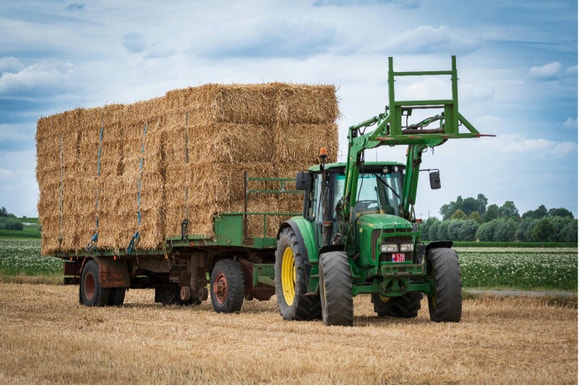
Straw has had mixed press in the past. But recent research has shown that it’s a great option for good doers as it’s lower in calories, sugar, higher in fibre and takes longer to chew. This not only extends eating time providing more enrichment but can help horses feel fuller for longer and reduce those on restricted rations from getting so ‘hangry’ as the amount of forage fed may not need such drastic limiting compared to hay alone. Oat, wheat and barley straw are all suitable provided it is of good hygienic quality. Straw should be avoided for those with dental issues or those prone to colic.
Any straw fed should be introduced gradually to allow the digestive system time to adapt and prevent risk of gorging on new feeds. It can be fed up to 50% of the diet mixed with hay, haylage or grass. Did you know straw can be steamed before feeding to improve the hygienic quality?
How much forage should I feed?
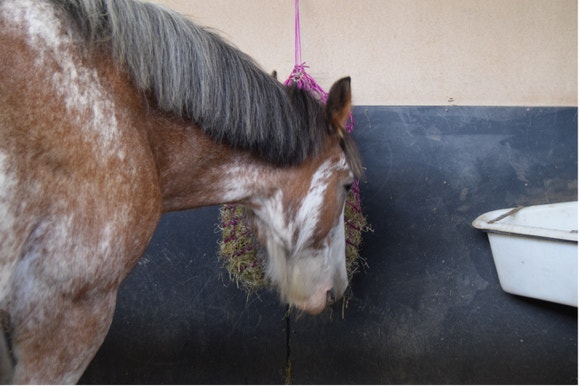
This is a very difficult question to answer and will depend on a number of factors including how much your horse weighs, their body condition, how sensitive they are to changes in diet/ management, the nutrient content of the forage provided and, of course, whether they have access to grazing.
Total daily forage intake should not be restricted to less than 1.5% of their current bodyweight by dry matter. Dry matter refers to what is left of the hay after the water content is removed. Assuming hay has a water content of 15% then for every 10kgs of hay you weigh out only 8.5kgs is actually hay.
For a 500kg horse they need a minimum of 7.5kgs of dry matter per day. If your horse has no access to grazing, you will need to weigh out 9kg of hay to make up for the water content and ensure they have the 7.5kgs.
If you are soaking hay for an hour or longer the hay will lose some of the dry matter - up to 20% maybe lost during the soaking process. So, to ensure your horse still ends up with a minimum of 1.5% of their bodyweight in dry matter you would need to weigh out 11kgs before soaking.
Desired dry matter intake | As fed feeding rate - % current bodyweight *Kgs per day to weigh out for a 500kg horse | |||
| Dry hay | If soaking hay (1 hour or longer) | Haylage (70% dry matter) | Haylage (60% dry matter) | |
1.5% bodyweight (Minimum recommended daily intake – may be ideal for those needing to lose weight) | 1.8% 9kgs | 2.1% 11kgs | 2.1% 10.5kgs | 2.5% 12.5kgs |
2% bodyweight (Recognised maintenance intake) | 2.4% 12kgs | 2.9% 14.5kgs | 2.8% 14kgs | 3.3% 16.5kgs |
2.5% bodyweight (Desired amount for underweight horses/ ponies) | 2.9% 14.5kgs | 3.5% 17.5kgs | 3.6% 18kgs | 4.2% 21kgs |
Practically, most horses spend some time in the paddocks grazing and whilst it can be very hard to calculate exactly how much grass your horse will consume during a day in the field, we should apply logic when working out their hay rations. If a horse spends 8-10 hours in the field (e.g. is out most of the daytime) then we’d suggest you feed half of their hay ration overnight. This accounts for the horse eating half of their required ration while grazing and half through forage in the stable. While many horses may eat this amount of hay in the stable far quicker than we’d like this is where you have to get creative in slowing them down by double netting or using multiple small holed nets or other slow feeding products.
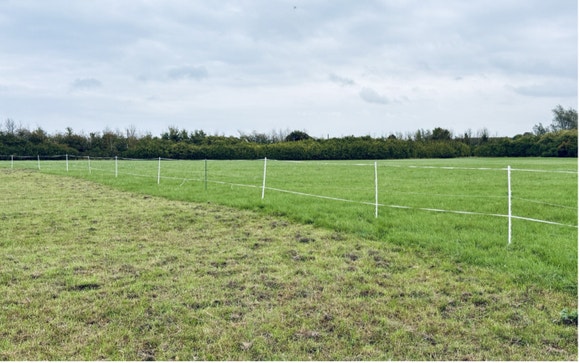
Those not on restricted rations (for weight management) would ideally have ad lib hay – i.e. as much hay as they will eat without wasting it. Recent data showed that almost a third of hay ends up on the muck heap. Not only is this costly but also wasteful, especially during times when hay maybe of short supply! So, be mindful of how much hay your horse is wasting in the stable and try to supply what they will eat rather than an excessive supply which gets trampled into the bedding.
Weight management support from other owners
Looking for real-life feeding ideas, straw-mixing tips or haylage experiences from other owners of good doers? The SPILLERS Slimmers’ Club Facebook group regularly shares practical forage-management advice and success stories.
Join the discussion: SPILLERS Slimmers’ Club Facebook Group
Hay vs haylage
For good doers ideally feed a low WSC hay.
Although haylage is not automatically higher in calories or sugar, it may be more palatable and softer and so be consumed more quickly. It also has higher and more variable water content - typically anywhere between 25-45% water - which means unless you have it analysed, it can be difficult to know how much your horse is eating on a dry matter basis (remember, the water content doesn't count towards your horse's forage intake). For those on a weight management programme this makes it more difficult to know and control how much they are eating.
As haylage has a higher water content your need to weigh out more haylage than hay to provide the same amount in dry matter. We usually suggest a weighing out 11kgs of haylage to provide 8kgs of dry matter.
For horses with respiratory issues haylage or short soaked hay are a better choice than dry hay. See our hay soaking page for more details
Consider having your forage analysed
Looks can be deceptive - even mature hay may be higher in calories and/ or WSC than you suspect. Forage analysis is the most reliable way of assessing the nutrient value of any hay/ haylage but may be a less practical option if frequently sourcing forage from different batches and/ or suppliers (although nutritional value can also vary even between bales from the same batch).
Avoid long periods without forage
Naturally horses will graze for approx. 18 hours of the day. They do rest and sleep at night so are inbuilt to would go a few hours through the night with an empty stomach. Feeding little and often throughout the day is best practise for replicating nature. A few hours overnight without food mirrors their normal grazing pattern. For those on restricted rations:
- Divide hay/haylage/straw into as many small servings as possible – if your horse doesn’t have access to grazing overnight, make the last serving as late in the evening as possible
- Try splitting rations between multiple, double-layered, small-holed haylage nets
- Multiple small holed nets part filled take longer to eat than full nets.
- Consider using 'slow feeders'
Keep good doers occupied
Restricted diets don’t need to mean reduced enrichment. Feeding strategies such as straw inclusion, multiple small-holed nets and slow feeders can help extend eating time, support digestive health and reduce boredom.