

Module 5: Senior Feeds Training
When does a horse become senior?
Like humans, horses will age at different times and show varying signs. Some more common ones could include:
Signs of Ageing in Horses
Every horse is an individual, and owners know their horses best. Hopefully, by careful observation, they will pick up the signals in time to make any necessary changes to keep their horses thriving.
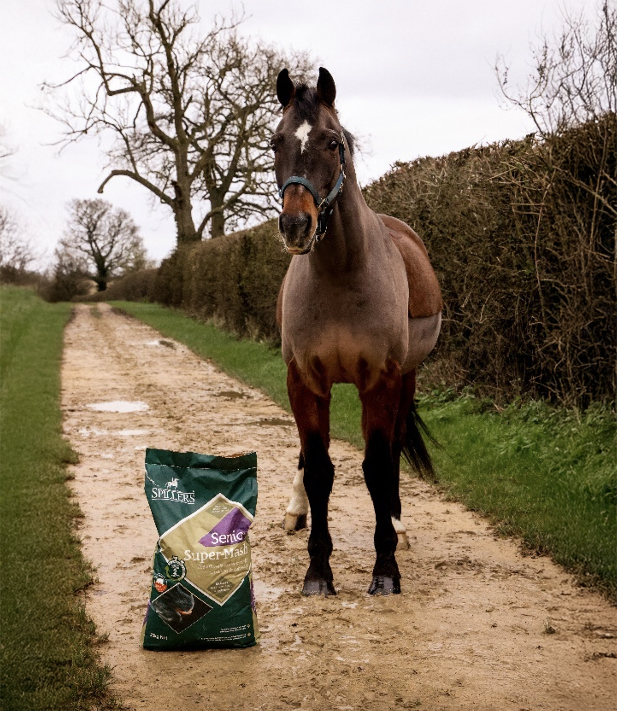
How do ‘senior’ feeds differ?
Senior feeds are carefully formulated to take into account the additional needs of ageing horses.
They may contain higher levels of specific nutrients to support immune or respiratory health or include extra protein to help delay natural muscle loss.
Senior feeds are often made with smaller particle sizes to make them easier for ageing teeth to chew and mashes are a popular choice too.
Some may also contain functional ingredients to support joint or digestive health.
Senior considerations
Not all senior horses are retired and shuffling around the field. Some may need to be retired in their teens, and some 30-year-olds may still be in light work.
Some may have been poor doers their whole lives and others may still be holding onto fat bulges. Others may have been in great condition then unexpectedly lose weight over winter for the first time. It is important to establish which category the individual fits into to establish what their calorie (energy) requirements are.
Those showing signs of stiffness may benefit from a feed or supplement containing joint support while those with dental issues may benefit from digestive support or mashes being included in their diet.
Senior poor doers
Senior horses who are poor doers, like younger horses, have increased calorie requirements to help them maintain a healthy weight.
This may include senior specific or other appropriate conditioning feeds.
Questions should be asked to established if the weight loss is new or normal for the individual. Owners with horses experiencing unexpected or sudden weight loss should be advised to consult with their vet or dental technician to check there’s nothing clinically amiss.
Feeds should be chosen based on other factors - e.g. is the horse prone to laminitis, Gastric Ulcers, excitability - rather than selecting senior feeds due to their age alone.
Ensure all parts of the diet are higher calorie, i.e. recommend conditioning chaffs and mashes alongside conditioning compounds.
Poor doers should have access to ad lib forage and/ or good grazing where possible.
Senior good doers
Regardless of age, excess weight on joints is not to be promoted. With senior horses it’s even more important to reduce the load through their limbs which may make them less comfortable due to increased risk of stiffness or arthritis with age.
Senior science has shown overweight horses to be at increased risk of metabolic disorders such as laminitis or insulin dysregulation.
Overweight or seniors prone to gaining weight easily do not need higher calorie senior feeds, simply because they’re older. However, many do require increased nutrients to support the body as it ages.
Just because a senior horse is doing ‘too well’ and doesn’t need extra calories, doesn’t mean the quality of their diet should be compromised.
Forage replacers
For senior horses losing weight even on a larger amounts of hard feed our first recommendation would be to check they’ve had their teeth checked recently.
Dental discomfort (or joint pain in the jaw or neck) can reduce the appetite and slow clewing rates, leading to loose droppings and/ or a reduction in absorption of food amongst other things, well before a horse shows signs of quidding.
If a horse is eating large amounts of hard feed and still losing weight, it’s possible they are no longer eating enough forage and or grass.
Hay/forage replacers are ideal for those who no longer consume enough forage to maintain a healthy weight.
Practically forage replacers should replace forage like for like. E.g. 1kg of forage replacer (by dry weight) will replace 1kg of forage.
Our Range
Senior Super-Mash
Senior Complete Care Mix
Senior Conditioning Mix
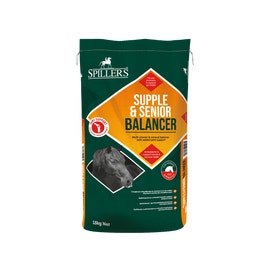
Supple & Senior Balancer
Remember
All changes in diet should be made gradually.
The recommended amount of feed should be divided into meals of no more than 2kg for horses, less for ponies and foals.
- Advise customers to contact our friendly nutrition team for specific advice, especially for those prone to or suffering from nutrition related clinical conditions such as laminitis, PPID (Cushing’s syndrome) tying up, colic and gastric ulcers.
Congratulations
You have now completed Module 5: Senior Feeds and should have a basic understanding of how to choose a diet for a senior horse.
You can now move on to the next topic in Module 5: Stud feeds