
Grazing

Most of us are guilty of eating more than we need to at one time or another and this can be the case for horses too. Grass presents two hidden dangers for good doers – calories AND sugar. Although it’s excess calories that leads to weight gain, high intakes of water-soluble carbohydrate or ‘sugar’ from grazing increases the risk of insulin dysregulation and laminitis, especially for good doers and natives. On this page we clarify some facts around grass, sugar and calories.
How much do horses eat?
Although individual requirements vary, total forage intake for most overweight horses and ponies, should not be restricted to less than 1.5% of their bodyweight* per day. As you might expect, how much they would actually like to eat varies between individuals and the type of forage, with studies quoting that intake typically varies between 1.5-5%* bodyweight per day.
Ponies are renowned for being grass guzzling machines and research carried out in partnership with SPILLERS showed that ponies may consume almost 5% of their bodyweight* in grass per day – a whopping 12.5kg* per day for a 250kg pony! Similarly, a different ‘SPILLERS study’ found stabled ponies given free access to a low calorie short chopped fibre feed as total forage replacer could also consume 5% bodyweight/ day*. Intake in horses is generally considered to be lower and may be closer to around 2-2.5% bodyweight/ day* but again, there will be exceptions! Another SPILLERS research partnership has also shown that ponies may consume almost 1% of their bodyweight in just 3 hours out at pasture - which means free access to grazing for short periods could be counterproductive.
Of course, whether your horse gains weight is not all about how much they eat, it’s dependent on the number of calories they consume. Even some hays fed at just 1.5% bodyweight*/ day can provide more calories than some horses and ponies need - remember not all hays are equal!
*dry matter intake
Nutrient variability
Most of the calories in grass come from sugar and fibre. The nutrient content and in particular the WSC or ‘sugar’ content is highly variable and can be affected by many factors including the health of the soil, sunlight, rainfall, temperature, grass species, stage of growth and how well the pasture is managed. If this wasn’t enough of a challenge, the sugar content can also be very hard to predict and, in some cases, may fluctuate by the hour!
In general, conditions that promote photosynthesis but inhibit growth will increase WSC levels for example, sunny days in combination with drought, cold temperatures or mineral deficiencies in soil. On the other hand, conditions that promote growth but limit photosynthesis e.g., a warm cloudy day combined with fertile, well-watered soil can reduce WSC. Due to reduced sunlight, WSC levels may be lower and less variable on cloudy/ overcast days
Sources of sugar
Forage and grass are the largest source of sugar in the horse’s diet. The different terms used to describe sugar often cause confusion. Grass includes simple sugars and fructan or ‘stored sugar’. Collectively, simple sugars and fructan are described as water soluble carbohydrates or ‘WSC’. Grass may contain up to 15% simple sugars, the majority of which is sucrose (the main form of sugar in molasses and the same sugar you put in your tea!) and up to 35% WSC on a dry matter basis. This means a 250kg pony living out at grass 24/7 may consume almost 2kg of simple sugars and almost 4.5kg of WSC every day from grass alone! In comparison, the recommended amount of a balancer (for the same sized pony) containing 5% sugar provides just 12.5g of sugar.
For more information on sugar read our blog here.
Although it has been suggested that naturally ingested grass fructan may not be as risky as once thought, there is currently insufficient evidence to rule it out as a risk factor for laminitis and insulin dysregulation. This is why we advise having your hay/ haylage analysed for WSC using the gold standard wet chemistry method (rather than near-infrared spectroscopy or the ‘NIR’ method) if you are concerned about the ‘sugar’ content.
Long vs short grass
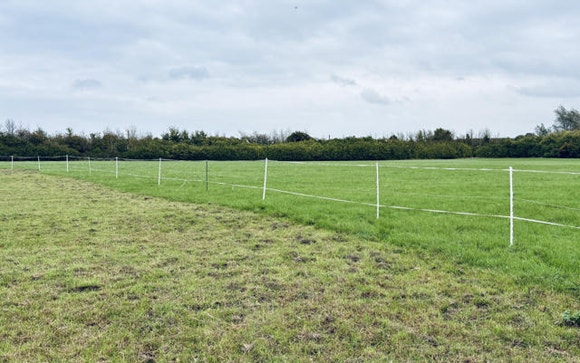
While the question of long vs short grass often sparks much debate, restricting the amount of grass your horse eats is often the best practical advice (this applies to restricting calorie intake too!).
Grass goes through various stages of growth and in general, the energy (calorie), protein and sugar content declines with maturity while the fibre content increases. However, this doesn’t automatically mean that long grass is safer than short. Although longer grass may contain a lower percentage of sugar, it’s much easier for them to eat and so they can end up eating far more of it and consume more sugar and calories overall than when they’re having to work harder to eat the short sugary spikes.
Night vs day
Grass will continue to photosynthesis and in turn, produce sugar, whenever the sun is shining. When the soil temperature is consistently above 5°C, fructan (stored sugar) will be used to fuel growth overnight, which means provided it’s warm enough, WSC or ‘sugar’ levels are likely to reduce overnight and be lowest at dawn. That said, good doers and those at risk of laminitis are still likely to need their grass intake restricted, especially at certain times of year. Turning out for a few hours very early in the morning, perhaps in a grazing muzzle, may be ideal for some laminitics but not always possible for owners to manage in practice.
Grass species
While some species of grass e.g., perennial ryegrass, tall fescue and meadow fescue are known for accumulating high levels of WSC, several environmental factors may have greater effect on the ‘sugar’ content than either the species of grass or the stage of growth. In fact, all cool season grasses (those that grow in temperate climates), including ‘lower sugar’ varieties such as timothy and cocksfoot (also known as orchard grass) may contain more than 20% WSC in the right conditions.

The perils of frosty grass
While frosty grass per se isn’t a problem, the combination of cold temperatures and bright sunlight e.g., sunny frosty mornings, can cause high levels of WSC to accumulate, presenting a hidden danger for those at risk of laminitis. Grass can’t grow when the soil temperature is below 6°C but it will begin producing sugar when the sun comes out. So, if it’s been too cold for the grass to grow overnight, WSC levels will not have reduced before sugar production begins again. Frosty grass on an overcast day doesn’t present the same risk, this is because grass will photosynthesise at a slower rate (and in turn produce less sugar).
The calorie content
Calorie intake from pasture will depend on the calorie level of the grass and how much of it is eaten. While it may come as no surprise that spring grass may contain the same number of calories as a racing or conditioning feed, don’t assume that winter grazing is calorie free. Well managed winter pasture may still provide the same amount calories as competition feed if the weather is mild. On the other hand, mature, brown grass may contain a similar level of calories to hay (or less!) but may easily exceed requirements if there is enough of it available.
Grass intake (dry matter) | Total daily ‘calorie’ intake (MJ DE) for a 500kg horse* | |
Grass containing 7 MJ DE/kg | Grass containing 12 MJ DE/ kg | |
1.5% bodyweight | 52.5 | 90 |
2% bodyweight | 70 | 120 |
3% bodyweight | 105 | 180 |
5% bodyweight | 175 | 300 |
*The published energy (calorie) requirement for a 500kg horse in light work is approximately 84 MJ DE/ day. Anything in red exceeds the daily calorie requirement for light work.
Did you know?
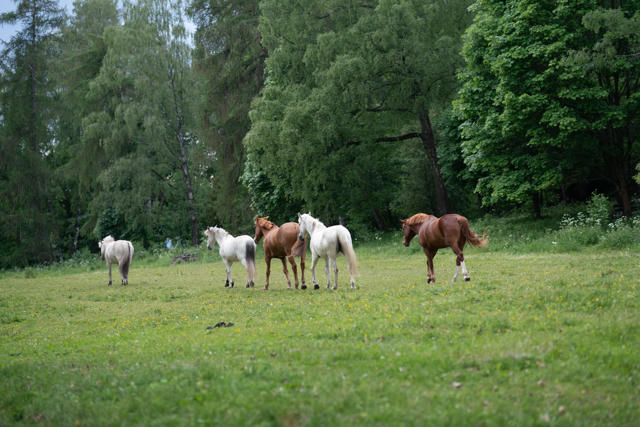
A 250kg pony living out 24/7 may consume enough energy (calories) to fuel a 500kg racehorse!
In one study*, ponies turned out for 23 hours/ day for six weeks gained 16% of their bodyweight – equivalent to an 11 stone human gaining almost 2 stone!
Dealing with the challenges of grass
Unfortunately, it’s impossible for owners to measure the calorie or sugar content of their grass, or how much of it their horse is eating. The thing you have greatest influence over, and in many cases the only thing you can influence, is the amount of grass your horse has access to.
Make restricting access to grazing your number one priority and for those that are very overweight and/ or at risk of laminitis:
- Consider complete removal from grazing for those at very high risk, especially during high-risk periods such as spring and autumn.
- Consider turning out very early in the morning and bringing in by mid-morning at the latest.
- Try turning out on cloudy days or shaded pastures where possible.
- Avoid turning out on recently cut stubble.
- Avoid turning on sunny frosty mornings.
- Seek advice from a nutrition advisor, especially if your horse/ pony is severely insulin dysregulated.
There’s no single most effective method or combination of methods as this will vary depending on your individual horse/ pony and your yard environment. Monitor their weight and be prepared to adapt your management if needed. Click through our Slimmers’ pages for more information on: