
Cutting Calories

Have Clear Weight Loss Goals
Safe weight loss takes time so be patient and realistic. Aim for a reduction of approximately 0.5-1% of bodyweight per week (2.5-5kg for a 500kg horse) after the first week. Greater losses in the first week are common and likely to be the result of reduced gut fill - you may have experienced something similar if you have ever been on a diet. Be consistent and keep a record of progress.
Forage First
Be mindful of excessively cutting back on forage. Horses are grazers after all and their digestive systems have evolved to need a constant trickle of fibres. Horses and ponies shouldn’t have rations restricted below 1.5% of their bodyweight (by dry matter) - see our Forage page for help with managing their daily intake.
Count droppings
Counting droppings can be a useful way of monitoring forage intake, especially if your horse has access to grazing and/ or you don’t know how much he weighs. If you’re reducing forage to help weight loss, count how many droppings your horse normally does and then aim to reduce the droppings by a third initially and never by more than half if moving from unrestricted forage.
Work with Nature
It’s often said that summer bodies are made in winter, but slimming good doers down is about more than aesthetics. Seasonal weight loss is natural and allowing good doers to slim down over winter months helps to prevent further/ excess weight gain when the warmer weather and better grazing returns. Healthy horses are far better at regulating their body temperature than we are. Healthy horses in mild climates with natural coats can regulate their body temperature while using little or no additional energy at temperatures around 5-25°C!
Avoid over-rugging to encourage your horse to use some of their own reserves for keeping warm as nature intended. Consider the actual environmental temperature – maybe check a weather app – make decisions on how warm your horse feels rather than how warm (or not) you feel. Just because it’s January and you have a coat on doesn’t mean your efficient good doer needs a cosy rug. Remember not to feel their extremities to assess them - feel under their armpit rather than nose or ears.
The ponies on Dartmoor and Exmoor are a good example of natural trends – many will be far leaner at the end of winter than most of us are accustomed to seeing. Some will end winter at a body score of just 2! Slimming good doers down to leaner score of 4.5 over the winter months can help to prevent excess weight gain in the spring, while going into winter at a BCS of 6 is acceptable for most good doers (and may be ideal for poor doers) provided they are not laminitic and will lose weight in the months ahead.
Calories in winter forage
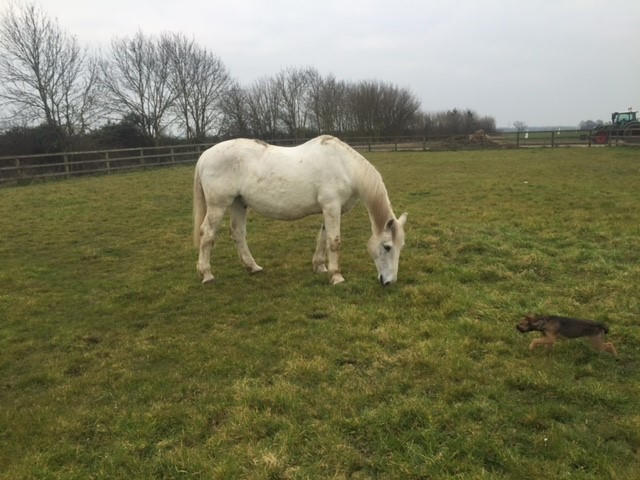
Grass will continue to grow for most of the year if conditions are favourable, all be it far more slowly in winter months. Even though long, mature, ‘dead’ pasture may be far lower in calories per kilo than short spring grass if there is enough of it available it can still easily exceed the total calories requirements for good doers. While grass restriction may be something most associate with spring and summer, you may need to consider strip grazing or using a grazing muzzle in winter months too depending on conditions. You can find more detailed information on both HERE.
Cut calories, not nutrients!
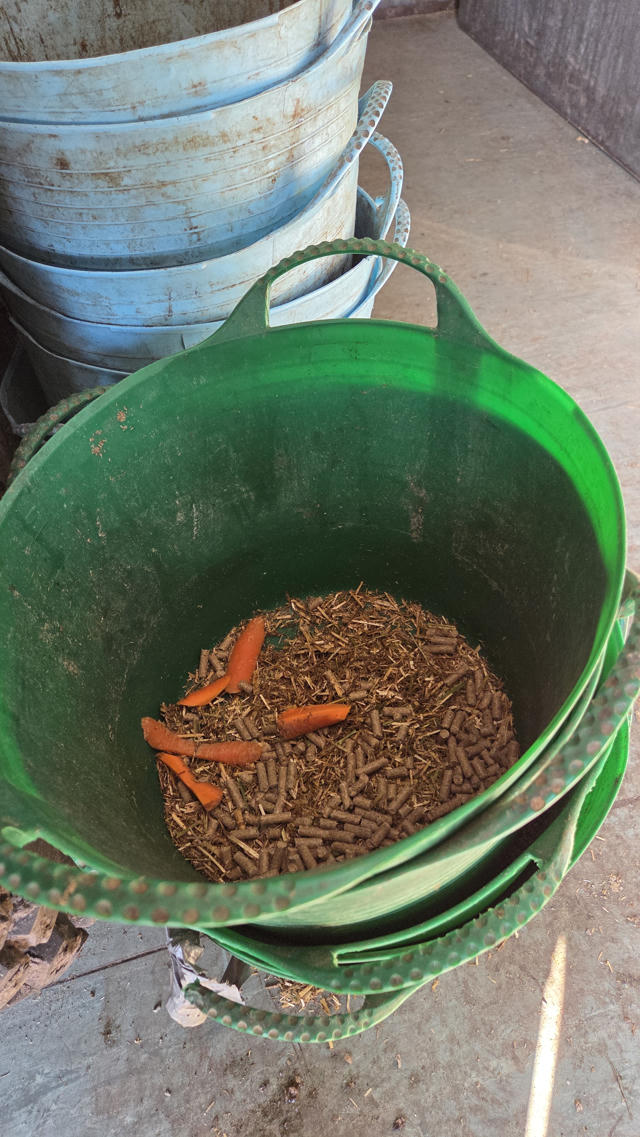
Small bucket feeds shouldn’t just be token gestures! Forage only diets may be lacking in key nutrients including lysine, copper, zinc, selenium and vitamin E, especially for horses on restricted forage rations. Essential vitamins and minerals support your horse’s overall wellbeing including skin, coat, hooves, immunity and respiratory health among other vital bodily functions. Feeding a handful of chaff or cubes won’t ensure a balanced diet but balancers are nutrient dense and small amounts supply all the necessary vitamins, minerals and quality protein required but with negligible levels of calories, starch and sugar.
Balancers which are high in lysine may be of particular benefit for horses and ponies on calorie restricted diets. Lysine is an essential amino acid (building block of protein) and plays a key role in supporting muscle and topline. If protein and in particular lysine requirements are not met, the body will need to break down lean tissue (muscle) to meet requirements. In addition to compromising your horse’s topline, burning muscle instead of fat slows metabolism. See our Balancing the Diet page for more details.
Dieting pitfalls
The aim of dieting, for horses and humans, is to lose excess fat although inevitably, some of the weight lost will be muscle. However, this will be exacerbated if protein and amino acid requirements are not met as mentioned above.
Fat can’t be converted to muscle – fact!
Unfortunately, the idea of turning fat into muscle really is too good to be true, for horses and humans! Although muscles need energy (calories) to fuel work and in turn ‘grow’, don’t fall into the trap of overfeeding in an attempt to build topline. True topline can only be developed through correct work, diet alone won’t help.
Did you know?
Horses have around 700 skeletal muscles (those used for movement and posture).
Skeletal muscle accounts for approximately 40-50% of the horse’s bodyweight (discounting water).
Top Tips for managing good doers – mares and youngstock:
Monitoring the mare’s waistline
Ideally, if your mare has piled on the pounds, try to achieve a healthy body condition prior to covering/ insemination. While weigh tapes are useful for tracking changes in bodyweight prior to conception, they’re not accurate in pregnant mares. Regardless of whether she’s in foal, regular body condition scoring is the best way of assessing whether the mare’s energy (calorie) requirements are being met (or exceeded!). Use stud specific balancers rather than stud cubes and mixes for those prone to piling on the pounds. Stud feeds are formulated differently to standard feeds. Ideally, they should be introduced in the 8th month of gestation, fed throughout the last trimester of pregnancy, during lactation and for youngstock up to 2 years of age.
The growing foal
The aims for rearing any foal should be:
- A gradual increase in height and weight (although some variation such as a degree of plateauing over winter is natural).
- To avoid rapid growth rates.
- To avoid rapid compensatory growth spurts e.g., it's common for weanlings to plateau or lose weight at such a stressful time, don't panic, allow them to continue slowly growing once they've adjusted to life without mum and settled into their new routine or herd.
- To maintain a healthy weight, neither too fat nor too thin. Like children, foals can grow like weeds and look tall and leggy, then fill out, then grow again. Assuming they are not too poor this is perfectly normal.
Did you know?
A newborn foal will weigh approximately 10% of its mature bodyweight, although there is some variation between breeds. Draught foals for example weigh around 7% of their mature bodyweight at birth whereas birth weight is around 13% of mature weight in Shetlands. By 12 months of age, a foal will have reached approximately 90% of their mature height and 60-70% of their mature bodyweight.
Is exercise worth it?
While we’re often advised to ‘eat less and move more’, calorie restriction is the main requirement for weight loss. In 2019, researchers found that while 25 minutes of low intensity exercise (5 minutes of walk, followed by 15 minutes brisk trot, followed by 5 minutes of walk), five times per week didn’t result in additional weight loss versus dietary restriction alone, it did improve insulin sensitivity. This is important, because reduced insulin sensitivity is a risk factor for laminitis.
Even small amount of exercise may be beneficial to your horse’s health. If possible, put a structured exercise plan in place and be consistent with their work. Ensure it’s appropriate for their current status and keep it varied and interesting - ask for help from a trainer if you’re unsure. If your horse is unable to work or has been retired, movement and in hand exercise can still be useful for many other reasons such as enrichment and muscle health etc.
Carrots and treats
While of course every extra calorie adds up as owners we still want to be able to reward or treat our horse with a juicy carrot or tasty SPILLERS treat. Individually, most treats won’t cause any harm, but any treats should be given in careful moderation to good doers. Read more about enrichment HERE.
Did you know?
One apple contains approx. 20g of sugar, whereas one carrot only contains 4g!
Choose your horses treats wisely and of course, make sure they’re safe to feed to horses and ponies.
Response to dieting
Some horses are described as ‘living on fresh air’ and while we all know this is impossible, research published in 2012 was the first to prove that some horses and ponies are genuinely weight loss resistant. In this study, twelve overweight horses and ponies managed under the same conditions were randomly assigned to one of two strict weight loss diets (both diets were almost identical in terms of calorie content) for 16-weeks. Weekly weight losses were approximately 3 times higher in those that were ‘diet sensitive’ vs those that were ‘diet resistant’, showing some need stricter management than others. Dieting is hard work, and not all good doers are genuinely weight loss resistant but even if they are, weight loss is still achievable. If despite your best efforts, your horse/ pony doesn’t seem to be losing weight, contact a nutrition specialist.
Don’t forget – not all weight loss strategies maybe suitable for seniors, if in doubt head over to our Super Senior pages or call our Care-Line on 01908 226626 to speak to our nutrition specialists for more tailored advice.